

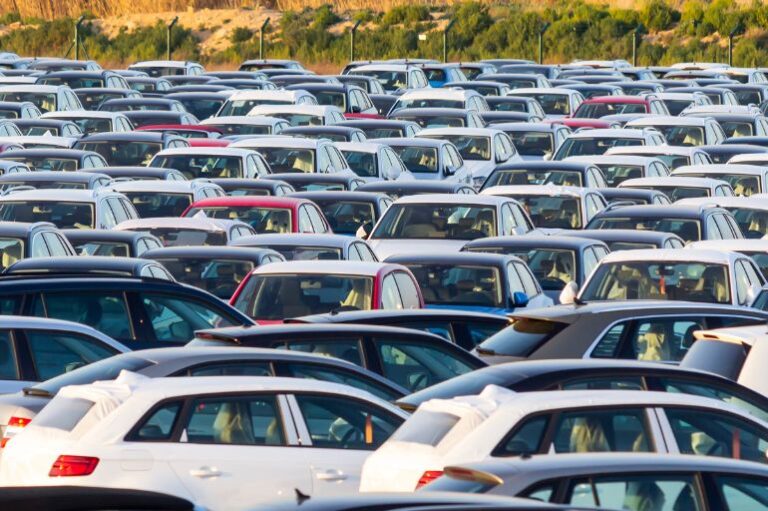
Australia’s new vehicle market opened 2026 on steady ground, with 87,092 new vehicles sold in January, a marginal increase of 0.3 per cent compared with the same month last year, according to the latest VFACTS data released by the Federal Chamber of Automotive Industries (FCAI).
FCAI chief executive Tony Weber described the result as a stable start to the year, noting that demand remained consistent across key segments.
“January’s figures show a market that is stable, with Australians continuing to purchase vehicles that meet their needs for work, family and lifestyle,” Weber said.
From a fleet perspective, fleet sales accounted for 49.31 per cent of total new vehicle sales in January 2026, reinforcing the sector’s ongoing influence on overall market performance. Within that figure, one result stood out sharply: deliveries to rental fleets increased by 47 per cent compared with January 2025.
Rental demand spikes in peak season
January is traditionally the busiest period for rental fleets in Australia, driven by domestic tourism and peak holiday travel. However, the scale of the increase in vehicles delivered to rental operators this year is unusual.
This reflects discussions Fleet News Group has had with some of the newer OEMs, particularly those under pressure to meet sales targets set by overseas parent companies. For these brands, rental fleets represent a fast and accessible pathway to volume.
This approach is not new. Historically, many emerging brands have used rental channels to establish an on-road presence and build awareness quickly. However, the January data highlights the potential risks of relying too heavily on this strategy.
Balancing volume and long-term value
While rental deliveries can deliver short-term sales momentum, excessive stock flowing into rental fleets at discounted pricing can have longer-term consequences. Large volumes of ex-rental vehicles returning to the used market can place downward pressure on resale values, which in turn affects whole-of-life costs for other fleet buyers.
For corporate and government fleets, residual value certainty is a critical input into procurement decisions. If a model’s used-market performance is undermined by aggressive rental activity, it can deter other fleets from purchasing, even if the vehicle performs well operationally.
This dynamic places a premium on disciplined channel management, particularly for new entrants seeking to build sustainable fleet portfolios rather than short-term registration wins.
Broader market trends remain steady
Beyond fleet and rental activity, the January results showed continued shifts in powertrain mix. Petrol vehicle sales declined by 14 per cent, while electrified vehicles continued to gain ground. Plug-in hybrid sales rose sharply, with 5,161 units sold, representing 5.9 per cent of the market and a 170.5 per cent increase year-on-year. Hybrids accounted for 17.4 per cent of sales, while battery electric vehicles held 8.4 per cent market share.
Toyota retained its position as market leader, followed by Mazda and Kia, while SUVs continued to dominate overall volumes.
What it means for fleets
For Fleet Managers, the January figures reinforce two key themes heading into 2026: the market remains broadly stable, but how manufacturers chase volume matters. Rental fleets will always play a role in the ecosystem, particularly in peak travel periods, but sustained oversupply can reshape residual values and influence fleet buying behaviour well beyond the rental sector.
As more new brands enter Australia, fleet buyers will be watching closely to see which manufacturers prioritise long-term fleet confidence over short-term sales acceleration.
- Hyundai STARIA Load vs Toyota HiAce: Which van suits fleet operations?
 The Hyundai STARIA Load and Toyota HiAce are two established choices for fleets requiring a practical commercial van with close to a one-tonne payload. The STARIA Load offers diesel and petrol-hybrid powertrains, relatively compact exterior dimensions and car-like driving characteristics. The HiAce provides a larger cargo area, a higher Gross Vehicle Mass and a strong
 - Pajero Is Back: Mitsubishi Revives an Australian 4WD IconMitsubishi has confirmed the Australian range and specifications for the all-new Pajero, with the returning nameplate bringing a 2.4-litre turbo-diesel engine, seven drive modes, a 3.5-tonne towing capacity and a choice of five- and seven-seat configurations. The Mitsubishi Pajero will return to Australian showrooms in December 2026, reviving one of the brand’s best-known nameplates after
- Jaecoo Strengthens the J7 Line-UpJaecoo Australia is rolling out its MY27 J7 range, with the midsize SUV continuing to offer both petrol and plug-in hybrid powertrains as the brand broadens its appeal to Australian buyers. The updated line-up includes the petrol-powered Ridge AWD alongside three Super Hybrid System – PHEV variants: the Track SHS-P, Summit SHS-P 2WD and Summit
- Nissan Patrol Enters a New EraNissan has confirmed key Australian specifications for the new-generation Y63 Patrol, with the large SUV gaining a new twin-turbo V6, increased towing capacity, a revised chassis and a broader six-grade line-up. The new Patrol will arrive in Australia in early 2027, replacing the long-serving Y62 and introducing significant changes to the powertrain, suspension, cabin technology
- Hyundai Gives Palisade More Off-Road BiteHyundai will add a new Palisade XRT Pro variant to its Australian range from September, giving the large SUV more ground clearance, all-terrain tyres and a locally developed suspension tune. The XRT Pro is Hyundai Australia’s first model to use the XRT Pro designation. It sits alongside the existing Palisade Elite and Calligraphy variants, but differs through