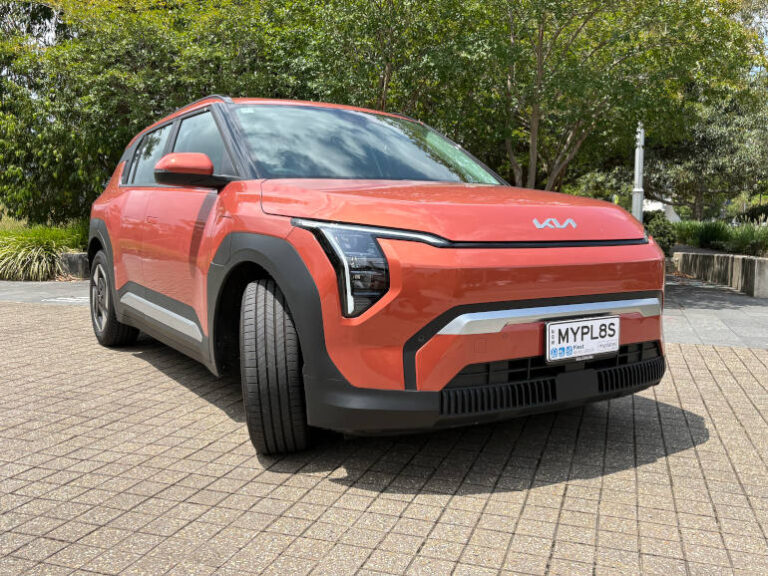
The Kia EV3 Air might sit at the smaller end of the SUV spectrum, but it’s a good example of how “small” has grown in 2026. In this base model, the EV3 Air presents as a genuinely practical option for fleets, and organisations looking to reduce emissions without compromising usability.
It’s well suited to a single driver or shared-driver environment, but there’s also enough space to handle weekend family duties. That balance is important for fleets, particularly where vehicles double as employee benefits. Beyond space, the real conversation for fleets is about whole-of-life costs, sustainability and how the vehicle works as a mobile workplace — and that’s where the EV3 Air starts to stand out.
Whole-of-life costs
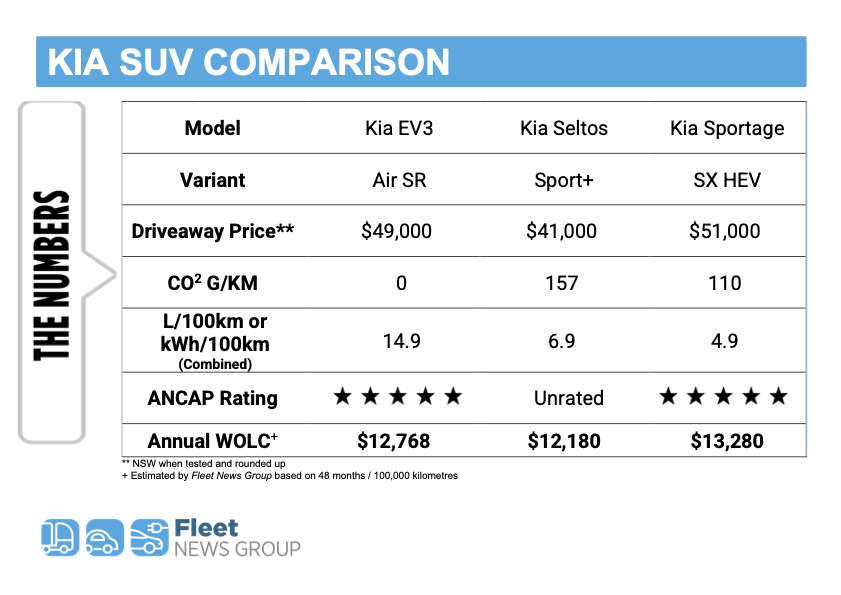
When assessed over a four-year, 100,000km term, the EV3 Air compares well against other Kia SUVs commonly selected by fleets. Against petrol alternatives like the Kia Seltos, the EV3 is only marginally more expensive overall. Compared with a hybrid Sportage, the EV3 comes out cheaper, driven by significantly lower energy and servicing costs.
Residual value remains the main challenge. As with most EVs, long-term resale is still affected by limited market data and ongoing concerns around battery longevity. That said, improved battery testing and greater transparency are gradually increasing confidence in the used EV market. Servicing costs are lower than ICE vehicles, while tyre costs remain comparable thanks to the Air’s 17-inch wheel and tyre package.
Interior: designed to work
Inside, the EV3 Air clearly caters to drivers who spend time working from their vehicle. The centre console layout allows a laptop to be set up securely, effectively turning the cabin into a mobile office. Combined with Vehicle-to-Load (V2L), drivers can power laptops and devices directly from the vehicle’s battery — a practical advantage for field-based roles.
The panoramic display integrates a 12.3-inch digital instrument cluster, a dedicated climate screen and a 12.3-inch infotainment display. Kia has retained a mix of physical and digital buttons for key functions, making the system easier and safer to use while driving. Wireless phone charging, USB-C ports front and rear, and useful storage solutions are all included, even in this base Air trim.
Exterior and design longevity
Externally, the EV3 follows Kia’s established electric design language seen across the EV range. The styling is clean and inoffensive, which is a positive for fleets focused on broad driver acceptance and future resale. It may not excite everyone, but it avoids polarising design cues and should age well as it moves into the used market over the next five to ten years. That matters when vehicles are cycled through multiple owners.
Key specifications: EV3 Air SR
- Drivetrain: Front-mounted electric motor, FWD
- Output: 150kW / 283Nm
- Battery: 58.3kWh lithium-ion
- WLTP range: up to 436km
- DC fast charging: 10–80% in ~29 minutes (350kW charger)
- Cargo capacity: 460L rear + 25L front storage
- Towing: up to 500kg braked
- Safety: AEB with junction assist, lane keep and follow assist, blind-spot collision avoidance, rear cross-traffic alert
Fleet assessment
Using a best-value framework that weighs whole-of-life cost, work space ergonomics, sustainability, driveway appeal and manufacturer commitment to fleet, the EV3 Air performs strongly. Within Kia’s own SUV line-up, it presents as the most balanced option when all factors are considered.
For fleets transitioning to electric vehicles, or for novated lease buyers wanting a practical and cost-effective EV, the Kia EV3 Air demonstrates that compact doesn’t mean compromised — and that an entry-level EV can still meet real-world fleet requirements.