

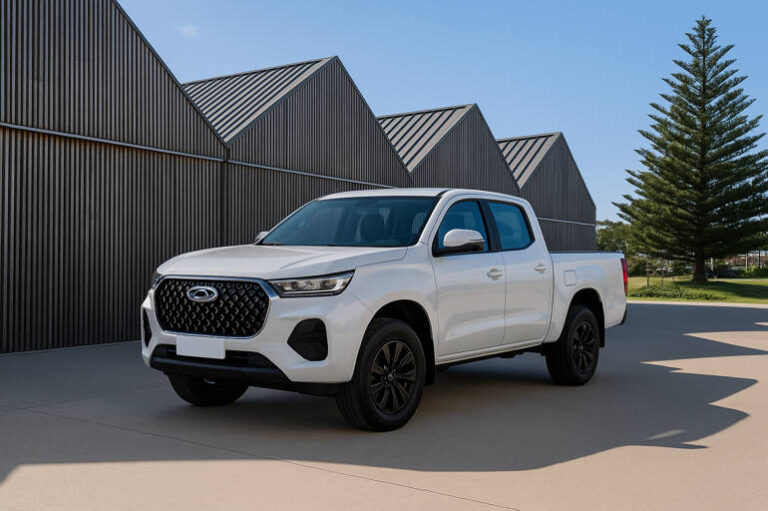
Chery is preparing to shake up the Australian ute market with a brand-new model, and fleet buyers are firmly in its sights. Due to arrive in late 2026, the yet-to-be-named ute is being designed with Australian conditions and fleet applications in mind.
Chief Operating Officer at Chery Motor Australia and New Zealand, Lucas Harris, told Fleet News Group the ute represents a major step in the brand’s local growth.
“The platform is brand new and developed with Australia as a primary market alongside China,” Mr Harris said. “That means we’ve been able to provide direct input on how the ute should be designed for local needs.”
Built for Work as Well as Play
Unlike some competitors who focus on lifestyle buyers, Chery is making sure the new ute works as a genuine tool of trade.
“We’ve shown our R&D teams how Australian fleets use their vehicles – from small builders to large utilities,” Mr Harris said. “That’s shaped decisions like making cab-chassis and removable tray options available, ensuring aftermarket compatibility for bull bars, canopies and other equipment, and offering a range of trim levels from basic workhorse to premium variants.”
This focus on flexibility means the ute won’t just be a weekend adventurer. It’s being engineered to carry tools, tow trailers and slot into service body applications that matter to fleet operators.
Powertrain Options on the Table
Chery is still finalising engine choices, but the line-up is expected to include both petrol plug-in hybrid and diesel plug-in hybrid variants.
“The diesel PHEV is the one I get really excited about,” Mr Harris said. “It could be a unique proposition, combining the low-end torque that diesel buyers expect with the efficiency and smooth driving experience of a plug-in hybrid.”
Such a combination would be a strong fit for fleets balancing heavy-duty use with emissions targets under the National Vehicle Emissions Standards (NVES).
Designed for the Australian Market
Size-wise, the ute will sit on the larger side of the segment – but not in the oversized US truck category. Mr Harris says it’s being shaped to compete directly with the big-selling dual-cabs that dominate fleet procurement.
Just as importantly, aftermarket suppliers are being engaged early in the process.
“We’ve started discussions with Australian accessory makers,” Mr Harris said. “Not because we want a cut of their business, but because we want our ute to be easy to adapt for different jobs. There’s no point launching a ute if the equipment fleets need isn’t available.”
What It Means for Fleets
For fleet managers, the ute’s development signals Chery’s serious intent to move into the business and government fleet market. With sales growth pushing the brand into Australia’s top 10, adding a ute alongside SUVs and hybrids could give fleets a wider set of options – particularly those looking for lower-emission work vehicles.
Chery plans to release more details on specifications and pricing closer to launch, but Harris is clear:
“Our focus is on making sure the ute is fit for purpose. We know fleet buyers won’t compromise on that.”