

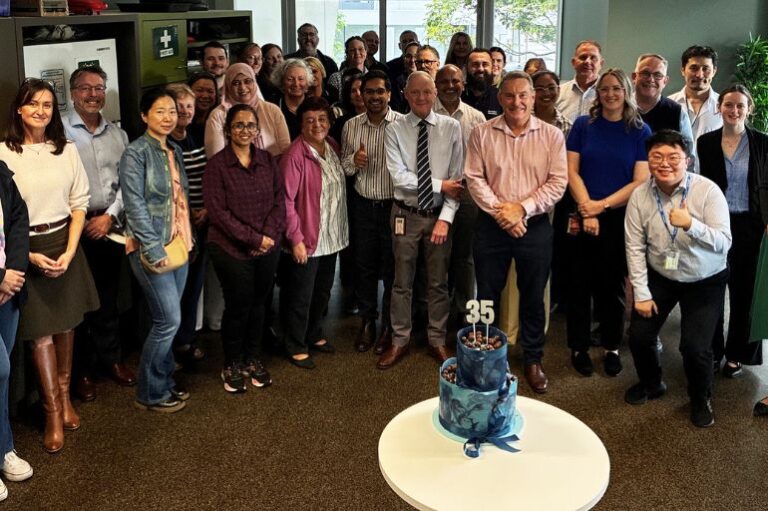
QFleet is celebrating 35 years of supporting Queensland Government services, growing into a centralised fleet operation managing more than 11,000 vehicles across the state.
Established on 1 July 1991, the government’s fleet management business provides vehicle leasing, fleet management and advisory services to agencies whose work depends on reliable transport.
Its vehicles support community health nurses, child safety and housing officers, QBuild tradespeople, youth justice staff and other public servants. In the past year alone, public servants travelled more than 156 million kilometres in QFleet vehicles.

Three decades of fleet support
Over its 35-year history, QFleet has purchased more than 112,000 vehicles through local suppliers, repurposed or sold 87,995 used vehicles and authorised and administered more than two million vehicle services and repairs through local businesses.
The centralised model supports aggregated procurement, whole-of-government reporting, coordinated maintenance and insurance management. QFleet also manages supply arrangements for vehicles, fuel, tyres and associated fleet requirements.
Alongside everyday operations, it has helped agencies respond to disasters and emergencies through vehicle deployment, repurposing and guidance on managing urgent fleet requirements.
Housing and Public Works Minister Sam O’Connor said QFleet played an essential role behind frontline services.
“Workers like first-responders, community health nurses and even schoolteachers in remote areas, rely on QFleet vehicles,” he said.
“QBuild workers helping communities recover from natural disasters use QFleet-supplied vehicles to get them and their equipment onsite.
“QFleet is one of those divisions that sit behind the frontline – but without which the frontline couldn’t do its work.”
Modernising fleet management
General Manager Vince White, who joined QFleet in 2020, has led a focus on modernising systems, improving customer experience and supporting lower-emission transport.
“Since joining QFleet, the business has undergone significant infrastructure change replacing the 25-year-old fleet management system with a new contemporary fleet management system,” Vince said.
That work has included an online portal for ordering vehicles and the MyQFleet analytics and reporting application, developed in response to customer feedback and growing agency requirements.
“It combines business analytics, data mining, data visualisation, data tools and infrastructure, and best practices to help QFleet customers make more data-driven decisions.”
QFleet’s services also extend to specialised vehicles and modifications that help agencies meet particular operational needs.
“In addition to leasing a range of fit-for-purpose vehicles, we custom-build vehicles to support education and health services, we undertake vehicle modifications for wheelchair access and much more.”
A practical approach to lower emissions
QFleet purchased its first battery electric vehicle, a Mitsubishi i-MiEV, in September 2010, followed by its first plug-in hybrid, a Mitsubishi Outlander PHEV, in January 2016.
In 2026, approximately 40 per cent of its fleet comprises battery electric, hybrid or plug-in hybrid vehicles.
Its QFleet Emissions Reduction Strategy 2025–2030 replaces the previous mandated battery electric transition approach with a broader focus on reducing emissions across all QFleet vehicles, including light commercials.
The strategy sets preferred maximum emissions standards for vehicle segments while maintaining a choice of models and configurations to meet agencies’ service delivery requirements.
Despite anticipated fleet growth ahead of the 2032 Olympics, QFleet is targeting a 10 per cent emissions reduction by 30 June 2030 through effective fleet management, improved utilisation and responsible procurement.
For White, the anniversary recognises both the organisation’s history and the people supporting its customers.
“As QFleet’s General Manager, I’m proud to lead this team and build on 35 years of service, innovation and practical support for Queensland Government agencies.”