
BYD is coming hard and fast in the Australian market. From small SUVs to large SUVs, plug-in hybrids, electric vehicles and even the Shark 6 ute, the brand is turning heads and changing minds.
This time I’ve been driving the BYD Sealion 7 Performance AWD, a stylish, powerful and well-equipped electric SUV. But there’s one question I wanted to answer. Is this a sensible choice for a company fleet, or is it better suited to someone looking for a novated lease?
After spending time behind the wheel, I think the answer is pretty clear.
The numbers – Premium vs Performance
The Sealion 7 is available in two variants, Premium Rear-Wheel Drive and Performance All-Wheel Drive. Both use BYD’s 82.56kWh Blade Battery, but there are some important differences.
| Specification | Premium RWD | Performance AWD |
|---|---|---|
| Battery capacity | 82.56kWh | 82.56kWh |
| Driving range (WLTP) | 482km | 456km |
| Maximum power | 230kW | 390kW |
| Maximum torque | 380Nm | 690Nm |
| 0–100km/h | 6.7 seconds | 4.5 seconds |
| Drive system | Rear-wheel drive | All-wheel drive |
| Alloy wheels | 19-inch | 20-inch |
| Kerb weight | 2,225kg | 2,340kg |
| DC charging capacity | 150kW | 150kW |
| AC charging capacity | 11kW | 11kW |
Source: BYD Sealion 7 Australian specifications brochure, 2026. Range figures are WLTP combined-cycle estimates.
From a fleet perspective, the Premium looks like the smarter purchase. It has the same battery, offers more driving range and delivers plenty of power for everyday use.
But if you’re choosing a vehicle through a novated lease, the Performance becomes much more interesting.
Behind the wheel – plenty of performance
The first thing you notice when driving the Sealion 7 Performance is the acceleration. With 390kW and 690Nm available from its dual electric motors, this thing absolutely hammers.
BYD claims 0–100km/h in 4.5 seconds, and I certainly believe it. Even in Normal driving mode, there’s more than enough acceleration to put a smile on your face.
Out on the motorway, the Sealion 7 feels planted, comfortable and quiet. There’s a little road noise from the tyres, but that’s hardly surprising with 20-inch wheels.
The suspension does a good job of keeping everything comfortable without feeling too busy, and the steering is predictable.
My only frustration was the lane-keeping assistance, which can be a little enthusiastic about pulling the steering wheel to keep you centred in your lane.
Otherwise, this is a very enjoyable vehicle to drive. I could happily spend hours behind the wheel.
Inside – a comfortable place to work
Step inside and the Sealion 7 Performance makes a strong impression.
There’s a large 15.6-inch rotating touchscreen, a 10.25-inch digital instrument display, wireless phone charging with ventilation to keep your phone cool, and plenty of storage.
I particularly like the physical switches around the centre console. They’re easy to use, and the transmission selector is simple and intuitive.
The leather seats are comfortable, with heating and ventilation in the front and heating in the rear. There’s also a huge panoramic glass roof that makes the cabin feel even more spacious.
Rear passengers get plenty of room, along with a fold-down centre armrest, cup holders and some handy storage spaces.
For someone spending their working day visiting customers, travelling between offices or commuting, this is a very pleasant environment.
Would a fleet manager approve all these luxuries? Probably not. But as a novated lease vehicle, I can certainly see the attraction.
Driveway appeal – it’s a looker
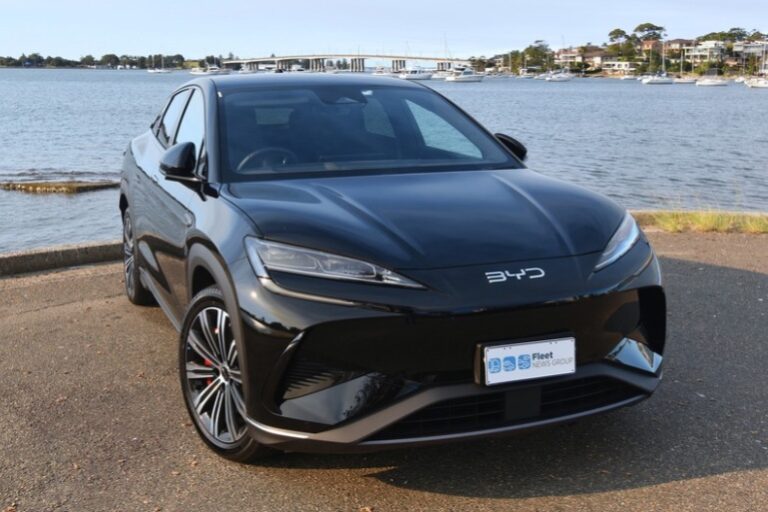
I reckon the Sealion 7 is a good-looking vehicle. The sleek lines, muscular wheel arches, 20-inch alloy wheels and distinctive rear lighting give it a premium appearance.
The black exterior on our test vehicle looked particularly good, and the large rear hatch makes it practical as well as stylish.
It’s certainly something I’d be happy to have parked in my driveway.
Safety and charging – a few things to consider
The Sealion 7 has a five-star ANCAP safety rating and a comprehensive range of driver assistance technology, including autonomous emergency braking, adaptive cruise control, blind spot detection and lane-keeping assistance.
I particularly liked the 360-degree camera system. When reversing, the large display provides a clear view of your surroundings and vehicle positioning. It’s the sort of technology that makes everyday driving easier.
Charging, however, is something buyers need to plan for.
I tried charging the vehicle from a standard household power point, and it was painfully slow. After approximately 15 and a half hours, the battery had only increased from 49% to 75%.
The remaining charging estimate was also surprisingly long.
I eventually headed to a DC fast charger, where the vehicle was drawing around 82–83kW when I checked it. That’s a much more practical solution when you’re on the road.
The lesson? If you’re considering a Sealion 7, having access to a dedicated home charger or reliable public charging will make ownership much easier.
Whole-of-life costs – fleet or novated lease?
This is where the Sealion 7 Performance becomes an interesting proposition.
For a fleet manager, the decision is generally about fit for purpose, whole-of-life costs, safety, efficiency and operational requirements.
The Performance AWD has plenty of equipment and power, but most fleets simply don’t need 390kW or a 4.5-second sprint to 100km/h.
The Premium RWD is likely to make more financial sense for a traditional fleet application. For a novated lease, however, the equation changes.
In the video I considered the Sealion 7 Performance alongside the Kia EV5 GT-Line and Tesla Model Y Premium Long Range AWD. They’re all well-equipped electric SUVs competing for similar buyers.
The whole-of-life cost comparison in our review was tight, with the BYD coming out ahead in that assessment.
And because eligible electric vehicles can benefit from the Fringe Benefits Tax (FBT) exemption under a novated lease, the financial case can become even more attractive. Eligibility depends on the vehicle and lease circumstances.
It’s worth getting a quote and comparing the after-tax cost rather than looking at the purchase price alone.
BYD’s commitment to fleet
BYD has established a dedicated fleet department in Australia, offering services to organisations looking to introduce electric vehicles.
That’s important because fleet buyers need more than a good vehicle. They need ongoing support, reliable servicing and assistance with the transition to lower-emission transport.
With BYD’s expanding Australian model range, fleet managers now have more options when considering electric vehicles for different applications.
The verdict – put it on your novated lease shortlist
I really enjoyed driving the BYD Sealion 7 Performance AWD.
It’s comfortable, spacious, stylish and extremely quick. The interior is well appointed, the technology is impressive and it’s a vehicle I could happily drive every day.
Would I recommend it as a mainstream operational fleet vehicle? Probably not. The Premium RWD is the more logical choice when whole-of-life costs and fit for purpose are the priorities.
But for someone considering a novated lease, the Performance AWD makes a compelling case. You’re getting a lot of vehicle for your money, and the potential tax benefits make it even more appealing.
If you’re shopping for an electric SUV through a novated lease, the BYD Sealion 7 Performance AWD deserves a place on your shortlist.
And if you’re comparing it with the Tesla Model Y or Kia EV5, I’d suggest driving all three before making your decision. You might be surprised which one puts the biggest smile on your face.