

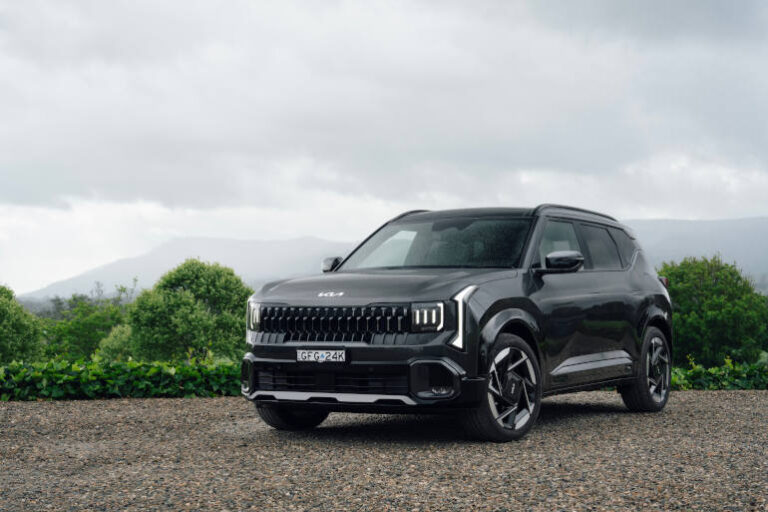
Kia Australia has launched the all-new Seltos, introducing hybrid technology for the first time and giving fleet buyers another electrified option in the competitive small SUV segment.
The second-generation Seltos brings a redesigned exterior, more interior space, improved safety technology and locally developed suspension tuning.
The biggest change is the introduction of a 1.6-litre hybrid powertrain across the range, with combined fuel consumption starting from 5.1L/100km under the WLTP testing standard.
For fleet operators looking to reduce fuel consumption without moving to fully electric vehicles, the new Seltos provides another option for urban and regional driving.
Dennis Piccoli, Chief Executive Officer of Kia Australia, said the new model builds on the reputation established by its predecessor.
“Seltos has built a strong reputation among Australian customers through its combination of practicality, value and versatility. This new generation builds upon those foundations with the addition of hybrid technology, advanced connectivity, greater refinement and a stronger SUV character than ever before.”
Hybrid power with electric all-wheel drive
The new Seltos uses a 1.6-litre petrol-electric hybrid system paired with a six-speed dual-clutch transmission.
Front-wheel-drive models produce a combined 112kW and 265Nm, while the flagship GT-Line introduces an innovative electrified all-wheel-drive system.
Unlike conventional AWD systems, which use a mechanical driveshaft to deliver power to the rear wheels, Kia’s e-AWD technology uses a dedicated rear electric motor.
This arrangement provides additional traction when required and increases combined system output to 126kW.
The Seltos also offers Smart Regenerative Braking 3, which can automatically adjust energy recovery based on traffic conditions and driver behaviour.
More space for drivers and passengers
Built on Kia’s latest K3 platform, the new Seltos is larger than the outgoing model.
Overall length has increased by 45mm to 4,430mm, while the wheelbase has grown by 60mm to 2,690mm.
The additional dimensions provide more passenger room and increased luggage capacity, with 483 litres available behind the rear seats and up to 1,441 litres when the rear seats are folded.
For fleet applications, the additional cargo space and improved rear passenger accommodation should make the Seltos more versatile for employees who regularly carry equipment or passengers.
The cabin also introduces a column-mounted transmission selector, dual-zone climate control, rear USB-C charging ports and wireless Apple CarPlay and Android Auto across the range.
Kia Connect is standard, providing access to connected vehicle functions, while over-the-air software updates are also available.
Safety and Australian suspension tuning
The new Seltos introduces Forward Collision Avoidance Assist 2 across the range, along with a centre-side airbag and an in-cabin safety camera designed to support occupant protection systems.
Depending on the variant, additional technologies include Blind-Spot View Monitor, Surround View Monitor, Highway Driving Assist 2 and Remote Smart Park Assist.
An ANCAP safety rating has not yet been confirmed, with independent crash testing currently underway.
Kia Australia has also completed a local ride and handling development program, led by Chief Ride and Handling Engineer Graeme Gambold.
“Our focus was on delivering a balanced driving experience, combining ride comfort, precise steering response and confident body control across a wide variety of road surfaces,” Gambold said.
Another hybrid option for fleets
The arrival of the hybrid Seltos adds to the growing selection of petrol-electric SUVs available to Australian fleet buyers.
With fuel consumption from 5.1L/100km, improved interior practicality and a broader range of safety and connectivity features, the new model is positioned to appeal to organisations seeking an efficient small SUV without the need for charging infrastructure.
For fleet managers, the key considerations will be whole-of-life costs, real-world fuel consumption, safety performance and suitability for everyday fleet duties.