

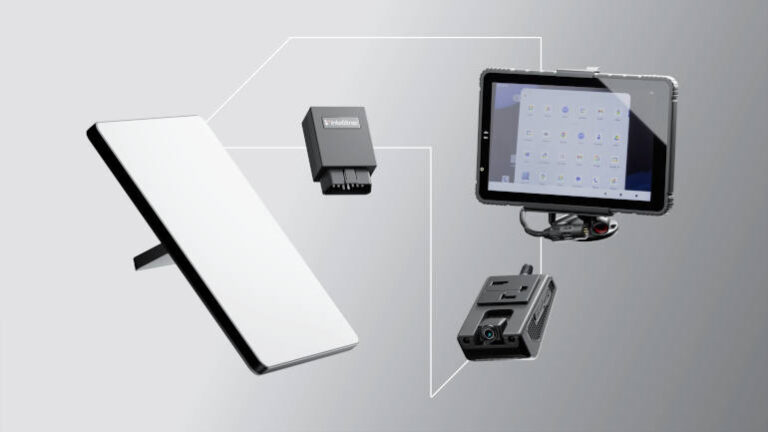
For fleet managers operating vehicles in remote locations, losing mobile coverage can mean losing visibility of vehicles, drivers and critical safety information. Australian fleet technology company IntelliTrac has announced a new satellite connectivity solution designed to keep fleet operations connected when conventional mobile networks are unavailable.
The company has introduced a Starlink Mini connectivity option for its EP23/EP26 Elite telematics range, allowing fleet operators to maintain GPS tracking, driver safety alerts, two-way communications and live dashcam footage beyond traditional mobile coverage areas.
The technology is particularly relevant to fleets operating in mining, agriculture, utilities, construction, road maintenance and local government, where vehicles can spend significant periods working in isolated locations.

Keeping drivers connected is a safety priority
For fleet managers, vehicle tracking is about more than knowing where an asset is located. It is also an important part of managing driver safety, responding to incidents and maintaining communication with employees working alone or in remote environments.
IntelliTrac’s new Starlink interface allows compatible Elite telematics devices to transmit vehicle location and safety information using the Starlink Mini satellite internet system.
The technology supports live location reporting, driving-event monitoring, collision and rollover detection, and optional SOS alerts.
“For a driver working outside mobile coverage, communications are part of the safety system. We want their location, SOS alerts, voice communications and incident video to remain accessible to operations teams whenever a suitable satellite connection is available,” said Dean Calapai, Founder and Global Managing Director of IntelliTrac.
For organisations with remote workers, maintaining this connection could improve incident response by helping operations teams identify a vehicle’s location and receive information about a potential emergency.
More than just GPS tracking
One of the advantages of the new connectivity option is its ability to support several fleet management functions through a single satellite internet connection.
Compatible Android in-vehicle tablets can use Starlink Wi-Fi to operate two-way radio-over-IP and push-to-talk applications.
This allows drivers, supervisors and dispatchers to communicate individually or in groups without relying on conventional mobile voice coverage.
The connection can also support applications such as Microsoft Teams and WhatsApp for messaging, voice calls and video calls.
For fleet operators managing field service teams, the technology can support IntelliTrac’s Hawk, Atlas and Worx applications, including driver identification, pre-start inspections, digital forms, field service management and Chain of Responsibility processes.
This could be particularly valuable for organisations that have moved away from paper-based processes and rely on digital reporting to demonstrate compliance and monitor fleet activities.
Live dashcams beyond mobile coverage
Another feature is the ability to transmit video footage from compatible vehicle camera systems.
IntelliTrac’s Enterprise eight-channel digital video recorder supports remote live video viewing and event-triggered recordings, including 15-second incident clips.
When connected through compatible vehicle networking and Starlink, authorised users can access live footage and incident evidence from vehicles operating beyond mobile network coverage.
For fleet managers, this creates opportunities to improve incident investigations and understand what has occurred when a vehicle is involved in a collision or other safety event.
It could also reduce the need to wait until a vehicle returns to a depot before reviewing relevant footage.
What does this mean for fleet managers?
The introduction of satellite connectivity into conventional fleet telematics systems highlights how vehicle monitoring technology is evolving to support increasingly complex operations.
Many organisations have invested in telematics to improve utilisation, monitor driver behaviour, manage maintenance and strengthen safety processes. However, these systems can have limited functionality when vehicles travel outside mobile coverage.
Satellite connectivity provides another option for maintaining access to operational information.
For councils managing remote road networks, utilities maintaining infrastructure or construction businesses operating across multiple sites, the ability to maintain communication with vehicles could improve operational visibility and support worker safety.
There are also practical considerations before adopting the technology.
Fleet managers will need to assess satellite coverage and connection reliability, hardware compatibility, installation requirements, ongoing connectivity costs and the amount of data required for applications such as live video streaming.
A suitable satellite connection remains essential, and the technology should be assessed against the operating conditions and safety requirements of each fleet.
A new option for remote fleet operations
As fleet management becomes increasingly dependent on real-time data, connectivity is becoming an important consideration when selecting telematics and vehicle safety systems.
IntelliTrac’s integration with Starlink Mini brings satellite internet connectivity to its existing Elite telematics platform, combining tracking, safety monitoring, voice communications and video capabilities.
For fleet managers responsible for vehicles working beyond reliable mobile coverage, it provides another option for keeping drivers connected and maintaining visibility of fleet operations.