

As fleets head into 2026, the challenge is no longer a lack of available technology. According to Grant Andrews, Managing Director at Uniqco, the real issue is how well organisations are structured to use it.
Based on Uniqco’s long-standing experience reviewing fleet maturity across local and state government, Andrews says most Australian fleets remain positioned in the middle of the maturity curve.
“Most Australian fleets are sitting in the mid-range of the maturity curve,” he says. “There have been significant advances in available technology, and many organisations have achieved incremental gains.”
However, those gains are often constrained by internal frameworks rather than technical capability.
Legacy systems continue to cap fleet value
According to Andrews, around 80 per cent of fleets remain limited by corporate IT and financial management environments that restrict integration across systems.
“Around 80 per cent of fleets remain constrained by existing corporate IT and financial management frameworks, which often limits integration.”
Grant Andrews, Managing Director at Uniqco
As a result, fleet data is typically fragmented across asset management platforms, fleet systems, telematics solutions, and safety tools. While these systems may individually deliver improvements, collectively they often fall short of enabling strategic decision-making.
“The result is fragmented or siloed data,” Andrews says. “While these disparate systems have delivered measurable improvements in maintenance compliance — and, in turn, operational efficiency — they tend to cap the overall value that can be realised.”
Data quality and confidence remain major barriers
Looking back at 2025, Andrews says the most significant barriers to deeper technology adoption were structural rather than technical.
“Unless critical datasets can be validated across at least two or three independent sources and interrogated collectively, reporting accuracy is compromised and decision-making confidence remains low,” he says.
This lack of confidence is compounded by limited internal capability. Many fleet teams, Andrews notes, are stretched operationally and lack the time or skills to manage data strategically rather than tactically.
Change management also remains a major hurdle.
“Technology is frequently deployed without the organisational alignment, communication, and leadership support required to embed it into daily workflows,” he says.
Executive understanding still limits investment
Another ongoing constraint is the difficulty fleet teams face in articulating value in terms that resonate with senior executives.
“A lack of understanding at senior executive level around the true cost savings and risk reduction that mature fleet management can deliver continues to restrict investment,” Andrews says.
Without clear visibility of return on investment — particularly where operational data is not linked to financial outcomes — executive teams remain cautious.
“Without that linkage, it remains difficult to quantify savings in a way that resonates with CFOs,” he says, which in turn limits how strategic fleet management can become.
2026 will reward fleets that connect data to outcomes
Looking ahead, Andrews expects fleet technology adoption to remain uneven in 2026. While some organisations will continue to struggle with the same structural constraints, others are well positioned to move beyond compliance-focused use of technology.
“Fleets that have already invested in technologies such as telematics, and are using them correctly, are well positioned to move beyond minimum compliance,” he says.
However, progress will be limited to those organisations that can integrate operational data with financial outcomes and use that insight to inform decisions rather than simply satisfy compliance requirements.
“In short, the opportunity is there,” Andrews says, “but real advancement in 2026 will be limited to organisations that can connect operational data with financial outcomes and use that insight to drive decisions.”
What mature fleets will do differently in 2026
According to Andrews, the most mature fleet operations in 2026 will distinguish themselves through both technology and behaviour.
“The most mature fleet operations will be those that can aggregate and interrogate data across traditionally siloed systems and translate it into clear, credible insights for senior leadership.”
Grant Andrews, Managing Director at Uniqco
Beyond systems, Andrews emphasises the importance of clear processes and accountability.
“Implementing clear fleet standard operating procedures and holding operators accountable for performance is critical,” he says, adding that education, recognition, and reward deliver far more sustainable outcomes than enforcement alone.
Another key differentiator will be the ability to articulate the true cost of disruption.
“When operational impacts are expressed in financial and service terms, they quickly gain the attention of senior management,” Andrews says.
A broader view of fleet risk
Finally, Andrews believes mature fleets will increasingly be expected to articulate a holistic view of fleet risk.
“Mature fleets will be those that can capture and report a total fleet risk profile across consistent categories — financial, safety, environmental, reputational, and service interruption,” he says.
This level of reporting, he notes, does more than identify exposure.
“It clearly reveals the strength or weakness of fleet culture within an organisation.”
For Fleet Managers preparing for 2026, Andrews’ message is clear: technology is necessary, but maturity — across systems, skills, and leadership — is what ultimately unlocks value.
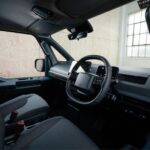
- Kia PV5 review: An electric van that feels ready for work
 The Kia PV5 arrives with an unusual job to do. It has to convince businesses that an electric van can deliver the practicality expected from a commercial vehicle while also offering the quieter, smoother driving experience that comes with an EV. After driving the PV5 at its Australian launch, the first impression is that Kia
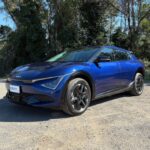
 - Kia EV6 Air review: My heart says yes, but my fleet brain says noThe Kia EV6 is one of those cars I had almost forgotten about. That sounds harsh, because when the EV6 arrived in Australia in 2022 it was one of the most interesting electric cars on the market. It looked different, it drove properly, and when the EV6 GT started lining up against supercars in drag
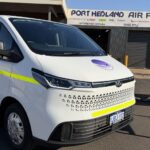
- LDV Deliver 7 LWB Review: After The First 1,890kmWhen Port Hedland Air Freight Director Dominic Barlow needed another van for the business, he wasn’t looking for something to impress on a short test drive. He needed a vehicle that could earn its keep. After buying an LDV Deliver 7 LWB in Perth and driving it 1,890 kilometres north to Port Hedland, he shared
- Geely Starray EM-i review: Big on space, strong on value and easy to live withThe Geely Starray EM-i arrives in Australia with a fairly simple proposition: give buyers the smoothness and convenience of electric driving around town, add a petrol engine for longer journeys, wrap it all in a roomy SUV and keep the price within reach of mainstream buyers. After spending time with the Starray EM-i around Sydney
- Toyota HiLux BEV off-road review: The quiet achiever goes bushThere is something faintly suspicious about climbing a rocky hill in a HiLux and hearing almost nothing. Normally, a serious off-road climb has a soundtrack. There is diesel revving, tyres scrabbling, a little gravel being aggressively relocated and someone in the passenger seat asking whether that rock was meant to be there. The Toyota HiLux