

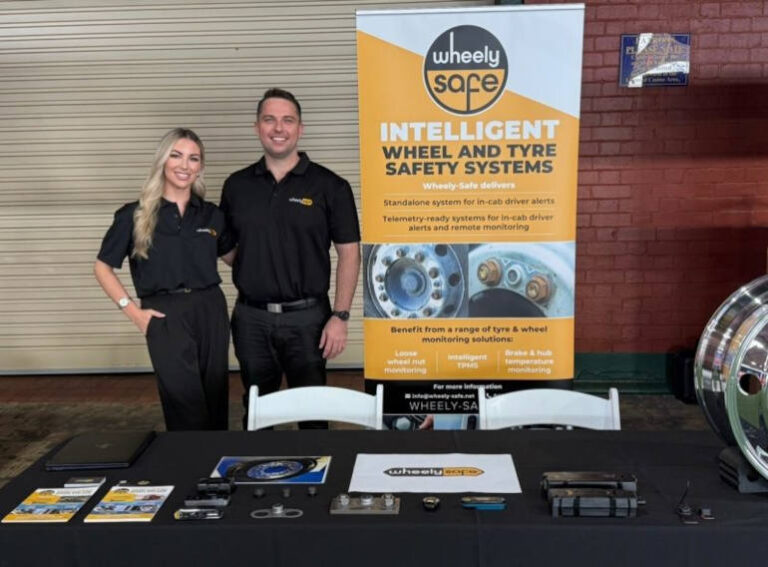
UK-based vehicle safety technology company Wheely-Safe has announced the creation of a dedicated regional business, Wheely-Safe Pty Ltd, to oversee customer engagement, distribution and technical support across Australia and New Zealand.
The new entity will be led by George Priest, appointed Director, who will manage all current and future business in the region including enquiries, orders and aftersales support.
According to Gary Broadfield, Group Managing Director, “This strategic expansion enables us to provide localised service and support, ensuring we’re closer to our customers in the ANZ region. It marks a key milestone in our commitment to long-term growth and customer success in emerging markets across the Southern Hemisphere.”
Technology designed for fleet risk management
Wheely-Safe already protects hundreds of fleets across the UK and Europe with its award-winning safety solutions:
- Wheel loss detection – sensors mounted in a bracket straddling two wheel nuts raise alerts at the first sign of movement.
- Hub temperature monitoring – the same sensors track heat build-up around brakes and hubs, helping prevent failures and fire risks. This is particularly relevant to Australia’s hot climate and long-haul operating conditions.
- Tyre pressure monitoring (TPMS) – valve-stem mounted sensors detect pressure loss. Research shows that one-third of roadside breakdowns are tyre-related, with 90 per cent linked to pressure issues.
The latest generation system transmits data not only to the driver in-cab but also back to fleet managers, enabling real-time monitoring, faster response to issues, reduced downtime and improved compliance records.
Local presence matters for fleets
While the UK team will retain a strategic role, Wheely-Safe Pty Ltd brings greater agility to the ANZ market. Localised support is expected to streamline:
- Installation and training across diverse vehicle types.
- Warranty and service turnaround times, reducing administrative delays.
- Integration with fleet management systems, ensuring tyre and hub alerts can feed into existing telematics or maintenance processes.
For fleets managing Chain of Responsibility obligations (vehicles over 4,500 kg GVM), documented controls for wheel security, tyre pressure and brake health supported by timestamped alerts could strengthen compliance evidence and reduce the risk of roadside incidents.
More Stories Like This
- Chery adds fleet muscle behind its growing vehicle range
 Chery is expanding its fleet sales team in Australia, but Chief Operating Officer Lucas Harris says winning fleet business will depend on much more than putting more people on the road. For Fleet Managers, the bigger issue is confidence that the organisation behind the vehicles can support them throughout the ownership cycle. That means fleet
 - Parts and servicing become BYD’s next fleet challengeAs BYD grows its share of the Australian fleet market, the company is also expanding the dealer, parts and technical support network needed to keep those vehicles operating. Marcus Walker, National Fleet Sales Manager at BYD Australia and New Zealand, told the Fleet News Group in an interview for a podcast episode that BYD currently
- What Ford Pro Means for FleetsFord Pro has officially launched in Australia, bringing a broader commercial vehicle support model that aims to combine vehicles, finance, conversions, servicing and software into a more integrated offering for fleet customers. For Fleet Managers, however, the important question is not simply what Ford Pro promises globally, but which parts of that ecosystem are available
- WEX and Mastercard target fleet payment fragmentationWEX and Mastercard have announced a strategic partnership to bring fuel, vehicle maintenance, tolling and parking payments into a single payment experience for fleets across Asia-Pacific. The partnership aims to reduce the administrative work created when fleet expenses sit across separate payment systems, while giving Fleet Managers a more complete view of operating costs. For
- Toyota flags price pressure on diesels from 2027Toyota has warned that tighter emissions targets from 2027 could place upward pressure on commercial vehicle prices as it balances continued demand for diesel models with its obligations under the New Vehicle Efficiency Standard (NVES). The manufacturer has not announced any price increases or provided details on affected models, amounts or implementation dates. However, its