

New fleet safety technology can deliver detailed data and new ways to coach drivers, but the Teletrac Navman research suggests the quality of the rollout may determine whether drivers see the system as support or surveillance.
Fleet technology projects are often measured by installation dates, hardware uptime and whether the data is flowing. For Fleet Managers, however, there is another part of implementation that can be harder to measure: whether drivers understand what has been introduced and why.
Teletrac Navman’s 2026 Driver Coaching Edition of its Mobilising the Future of Fleets Report puts that issue at the centre of technology adoption. Its survey of 600 respondents from commercial vehicle fleets across the United States, United Kingdom, Australia and New Zealand found a large difference in how drivers rated coaching depending on the quality of their initial onboarding.
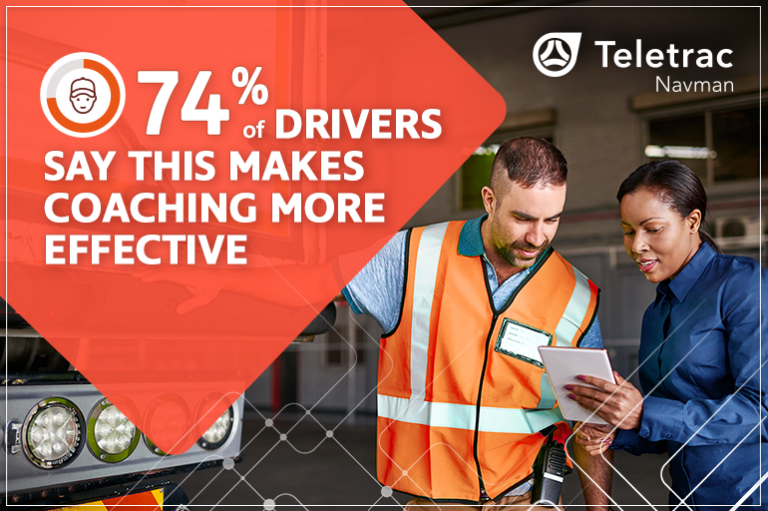
According to the report, 74% of drivers who experienced high-touch onboarding viewed coaching and feedback as highly effective. Among drivers who felt their initial preparation was lacking, the figure fell to 19%. Teletrac Navman describes well-onboarded drivers as three times more likely to see coaching as highly effective.
Installation is only one milestone
The finding matters because telematics, cameras and other safety systems sit very close to a driver’s day-to-day work. Unlike some back-office fleet systems, they can generate alerts, record events and contribute to conversations about individual behaviour. That makes communication before installation particularly important.
One in five drivers surveyed said technology had been installed in their vehicle with little or no communication from management. The report argues that fleets should explain what is changing, why it is changing, where and when the technology will be used, and how it will affect the driver’s work.
“New technology without warning is more likely to be met with resistance.”
Alain Samaha, Chief Executive Officer, Teletrac Navman
For Fleet Managers and Procurement Managers, this creates a broader implementation question. A technology business case may cover hardware, subscriptions, integration and expected safety outcomes, but the project plan also needs time and resources for driver communication, demonstrations and manager preparation.
Human contact still matters
The report also tested different onboarding approaches and found that the strongest result came from combining personal explanation with supporting material. Among drivers who felt “very well” prepared, 68% had received one-to-one explanations supported by video or written guidance. The figure was 54% for one-to-one guidance alone and 35% for video or written material without personal follow-up.
That suggests there is a limit to a compliance-style rollout built around an email, policy document or training video. Those tools can be useful, but the survey indicates they are more effective when a manager or supervisor is also available to explain the system and answer questions.
It also places responsibility on managers. If supervisors are expected to explain alerts, data use and coaching processes, they need to understand the system before they are asked to introduce it to drivers.
Understand the pressures behind the data
The report adds another useful dimension for fleet safety programs by asking drivers what they believe sits behind road risk. Fatigue or stress was the most common response at 31%, followed by time pressure or unrealistic expectations at 20%. Distraction was nominated by 18%, while lack of training or coaching and road quality conditions were both nominated by 15%.
For fleets, this is a reminder that an event recorded by technology may be a symptom rather than the whole problem. Harsh driving, distraction or fatigue alerts can be used to start a conversation about workload, scheduling, route design or training rather than being treated only as evidence of poor performance.
A practical rollout test for Fleet Managers
Before the next safety technology deployment, Fleet Managers can ask a simple set of questions: Do drivers know why the system is being introduced? Do they understand what is recorded? Can they see how the information will be used? Have supervisors been trained to explain it? And is there a clear opportunity for drivers to ask questions before the system becomes part of normal operations?
The report does not suggest good onboarding will solve every concern around monitoring or data use. It does suggest that poor onboarding creates problems that can undermine later coaching and technology acceptance. For fleets investing in safety systems, driver communication is therefore part of implementation rather than an optional extra after the hardware has been fitted.