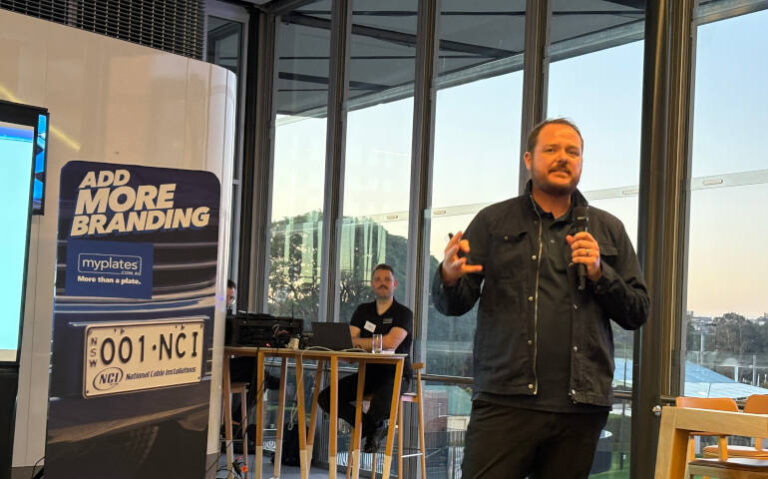
Mike Costello, Corporate Affairs Manager at Cox Automotive, delivered a sobering yet insightful overview of the used vehicle market at the 2025 myplates Industry Forum— and the implications for Fleet Managers are substantial. As vehicle residuals, supply chains, and buyer behaviours shift, Costello’s presentation was a timely reminder that used vehicle planning and resale strategy are now more important than ever.
A Cooling Market – But Still Hot for Some
Costello draws data from both dealer systems and Manheim auctions, highlighted that used vehicle prices remain elevated compared to pre-COVID benchmarks. Prices peaked in mid-2022, driven by supply constraints, but have since settled — albeit not uniformly.
Dealer used car prices are still up 30% on December 2019 levels.
Manheim auction prices have dropped from a 65% peak to 35% above pre-COVID norms.
Discounting has returned to the market, with around 40% of used vehicles selling below their original advertised price by an average of 6–7%.
This stabilisation is positive for used vehicle buyers, but presents challenges for fleets looking to maximise returns at end of lease or ownership.
Passenger Cars Are Gold
The biggest opportunity — and risk — for fleet managers lies in the unexpected performance of traditional passenger cars.
Costello explained:
“Passenger vehicles — sedans, hatchbacks, wagons — are significantly under-supplied in the used market, and they’re fetching much higher prices than SUVs.”
Why? Because fewer new passenger cars are being sold. In 2014, they represented nearly 50% of the new vehicle market. In 2025, that share is just 13.4%. As every new car eventually becomes a used one, the pool of passenger cars for resale is shrinking rapidly.
At Manheim:
Used passenger cars are now selling for 60.5% more than pre-COVID.
Their average residual value is 72% of RRP — significantly stronger than SUVs (63%) and utes (62%).
Time to sale is 5–10 days faster than SUVs.
For Fleet Managers, this opens up an opportunity: strategically including passenger cars in your procurement mix may deliver superior returns over a 3–5 year lifecycle — especially for roles where SUVs are not required.
Light and Affordable Cars are in Short Supply
Small cars like the Toyota Yaris, Mazda2, and Suzuki Swift are also performing exceptionally well in the used market.
A five to seven-year-old Yaris is, on average, selling for 105% of its original price.
Jazz, Swift, and Mazda2 are all up more than 50% compared to pre-COVID.
This is driven by rational buyers seeking affordable vehicles amid cost-of-living pressures, and the disappearance of budget small cars from new showrooms.
Implication for fleets: Light hatchbacks have become reliable resale performers. If your operational needs allow for it, investing in these models could yield strong returns — particularly in salary packaging or novated lease programs targeting budget-conscious drivers.
EVs: Residual Value Risk and Opportunity
Used electric vehicles (EVs) are growing rapidly in volume but are struggling on resale.
The share of EVs in used dealer listings has doubled over the past year — from 0.5% to 1%.
Used EV values are down significantly:
The average two to four-year-old EV dropped from over $80,000 to just above $50,000.
Residual values for a three to four-year-old EV like the Nissan Leaf or Kona Electric are only 35–40% of RRP.
By contrast, petrol Konas retain 70%.
“EV residual values today are about as bad as they’re going to get… but more EV choice and better battery testing will improve confidence.”
Mike Costello, Cox Automotive
Fleet takeaway: Be cautious when forecasting residuals on EVs. Brands cutting new prices (like Tesla and BYD) directly impact second-hand values. However, as the market matures and tools like battery state-of-health testing become standard, this may change.
Chinese Brands Are Reshaping the Market
Chinese vehicle brands, especially BYD, MG and Chery, are growing fast and impacting residual values across the board.
Chinese market share hit 20% in June 2025.
Their aggressively priced new vehicles put pressure on near-new used vehicles.
This is a double-edged sword. Costello summarised:
“Chinese brands are strategically targeting used car buyers — their new car pricing undercuts used models from other OEMs.”
Advice for fleets: Understand the risk of future resale pressure on vehicles competing with new, low-priced Chinese offerings. Consider how warranty, badge trust, and brand longevity factor into your total cost of ownership.
Older Vehicles Hold Strong
Costello also identified an unusual trend: older vehicles (eight to ten years) are holding their value better than newer used cars.
These vehicles are up 44% on pre-COVID prices.
This reflects strong demand from cash-strapped buyers and tight supply of affordable options.
For fleets considering longer lifecycle strategies or extended ownership, there is good news. Costello’s data suggests:
“High mid-2022 price inflation has remained really sticky for the older stuff… they haven’t really come down.”
What Should Fleet Managers Do?
To navigate this evolving market, fleet managers should:
Leverage current resale strength in passenger and light vehicles. If you own Corollas, i30s or a Yaris, now is a good time to sell.
Consider reintroducing passenger cars into procurement where fit for purpose. Their scarcity is supporting stronger resale values.
Treat EVs carefully — for now. Expect lower returns unless there is confidence in brand, tech, or battery health certification.
Monitor new Chinese vehicle introductions. These may erode resale value of incumbent brands’ late-model vehicles.
Use lifecycle modelling. Forecast values at three, five, and seven years to understand cost of ownership over time — not just upfront price.
Final Thought
As Costello said, fleet and leasing professionals are “at the interface” of market movements. With resale trends no longer predictable, future-proofing your fleet requires smart model selection, resale timing, and a keen eye on emerging vehicle segments.
Fleet News Group has been a trusted source of news and information for the fleet and transport industries since 2011. Our global audience provides services and products to their local communities by moving people and goods from one place to another. We celebrate their contributions to our society by sharing their stories.