
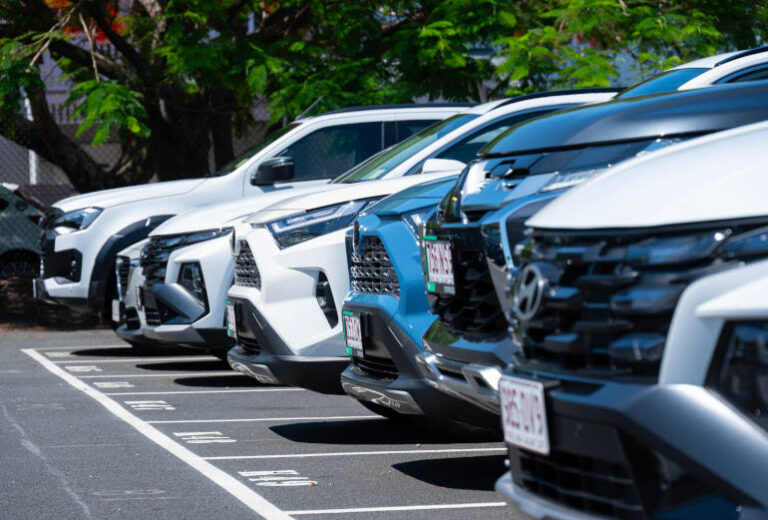
Pool and shared vehicles are a practical solution for many organisations. They reduce fleet size, improve utilisation and offer flexibility for employees who do not require a permanently allocated vehicle. However, while shared fleets can deliver operational efficiencies, they also introduce a higher level of risk — particularly when incident reporting is inconsistent or informal.
According to Shaun Janks, Co-Founder and Chief DingGo at DingGo, shared fleets amplify the impact of weak reporting processes.
“In a pool environment, accountability is naturally more complex,” Janks says. “When multiple drivers use the same vehicle, the only thing that creates clarity is accurate, timely reporting.”
When damage occurs in a shared vehicle and is not reported immediately, uncertainty sets in quickly. It can become unclear when the incident happened, how it occurred or who was driving at the time. Over time, this lack of visibility affects cost control, governance and trust within the organisation.
“Shared vehicles don’t create risk on their own,” Janks explains. “The risk comes from gaps in information.”
A common issue in pool fleets is delayed discovery of damage. Vehicles may return with minor dents, scratches or interior wear that is not identified until the next user performs a walk-around — sometimes days later. By then, critical details are often lost.
“Once time passes, context disappears,” Janks says. “And without context, managing the issue objectively becomes difficult.”
From a financial perspective, unreported minor damage can accumulate and remain unresolved until lease return or resale preparation. What might have been a small repair early on can become a larger, more costly reconditioning exercise.
“We regularly see costs surface at the end of a vehicle’s life that relate to incidents never properly recorded,” Janks notes. “Pool fleets tend to magnify that effect.”
There is also a governance dimension. When responsibility is unclear, drivers may feel unfairly blamed for damage they did not cause, while fleet managers lack the data needed to make fair decisions.
“If there’s no record of when damage occurred, disputes become inevitable,” Janks says. “Clear reporting protects both the organisation and the driver.”
Shared environments can also unintentionally discourage reporting. When responsibility is collective rather than individual, drivers may be less inclined to report minor incidents — particularly if the process is time-consuming or unclear.
“It’s rarely deliberate,” Janks explains. “But friction in the reporting process leads to under-reporting, especially for low-level damage.”
Strong, structured reporting processes are essential in this context. Mature pool fleets treat every incident — regardless of severity — as a recordable event.
“Recording an incident is about creating a timeline,” Janks says. “Once you have a clear history of vehicle condition, decisions about repairs and accountability become fact-based.”
Digitised reporting is particularly valuable for shared fleets. Manual systems such as paper forms or email chains introduce delay and discourage timely lodgement. Digital portals enable drivers to report incidents quickly, often from their mobile device, while details are still fresh.
“When reporting is simple and immediate, compliance improves significantly,” Janks says. “And that changes the entire dynamic of a shared fleet.”
Consistent data capture also supports proactive management. Reliable incident data can reveal recurring damage types, high-risk locations or vehicles that are poorly suited to shared use.
“Once patterns become visible, you can intervene — whether that’s through training, policy adjustments or different vehicle selection,” Janks explains.
Importantly, Janks emphasises that stronger reporting does not equate to increased repair frequency.
“Logging an incident doesn’t mean you must fix it immediately,” he says. “It means you have visibility and can decide whether to repair now, defer or manage it at end of life.”
As shared mobility models expand within organisations, the importance of structured reporting grows. Pool fleets intensify both the efficiencies and the vulnerabilities of fleet management practices.
“Efficiency without visibility carries risk,” Janks concludes. “In shared fleets, disciplined reporting isn’t an administrative burden — it’s the foundation that makes the model sustainable.”
For organisations operating pool vehicles, the message is straightforward: shared vehicles require shared responsibility, and shared responsibility depends on reliable, timely information.
- UK Sales Signal a Changing Market for Fleet Buyers
 Battery electric vehicles accounted for approximately 26% of the UK automotive market in September 2026, finishing just two percentage points behind vehicles powered solely by internal combustion engines, according to GlobalData. The figures highlight how closely electric vehicles are competing with conventional petrol and diesel models, while hybrids continue to play a significant role in
 - Honda Makes its Next Hybrid MoveHonda will begin rolling out its next-generation hybrid system globally from 2027, promising improved fuel efficiency, a new vehicle platform and electric all-wheel-drive technology. Named Honda Hybrid, the system builds on the company’s existing two-motor e technology. Honda plans to launch 15 next-generation hybrid models globally by the end of its financial year on 31 March 2030,
- Toyota acknowledges service parts supply disruptionToyota has acknowledged a temporary issue affecting the supply of some service parts following an upgrade of its core business systems, with the company working to restore normal operations. Speaking to Fleet News Group during Toyota’s latest sales market update, Vice President of Sales, Marketing and Franchise Operations John Pappas confirmed the disruption when asked
- Green Comeback for Mazda MX-5Mazda has expanded the MX-5’s driver assistance equipment for 2026, adding cyclist detection to its autonomous emergency braking system and introducing lane-keep assist across the range. The changes cover both the Roadster and retractable-roof RF models, alongside new seats and interior trim for the GT RS and an additional exterior colour. The autonomous emergency braking
- Rising Stars Put Workshop Talent in the SpotlightAustralia’s next generation of automotive technicians has been recognised in the 2026 Capricorn Rising Star Awards, with Repco renewing its support for the program as workshops face continuing pressure to develop skilled tradespeople. Jaeden Matteo D’Aloia has been named Overall Australian Rising Star, also taking out the Victoria/Tasmania regional award. Carter Boyle received the Overall