

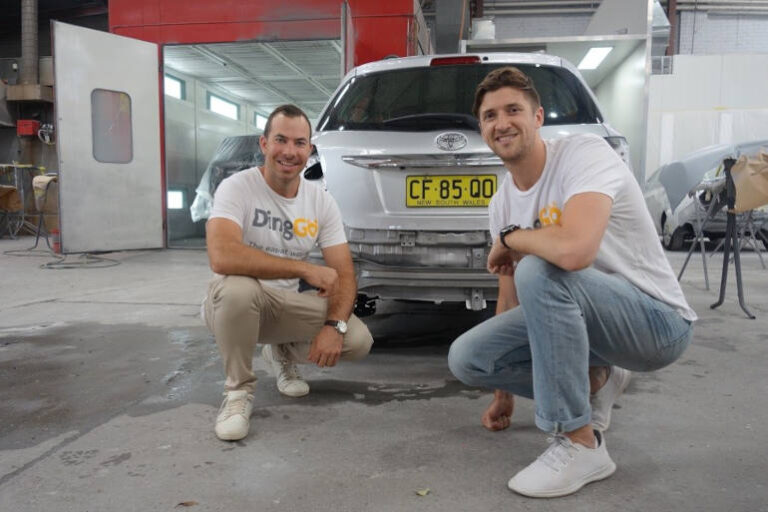
DingGo has launched MotorClaimPro, a new AI-powered platform designed to help insurers, claims administrators and large motor fleets manage complex third-party claims while reducing financial leakage and administrative workload.
The specialist platform focuses on two areas that can be particularly difficult to manage: outbound recoveries, where costs are pursued from an at-fault third party, and inbound demands, where another party is seeking payment from the insurer or fleet operator.
Rather than replacing an organisation’s existing claims management system, MotorClaimPro is designed to operate alongside platforms including Guidewire, Wilbur and Five Sigma.
Claims can be passed into MotorClaimPro for liability assessment, third-party management, negotiation and settlement, with the final outcome, payment information and audit trail then returned to the organisation’s core claims platform.
DingGo Co-founder and Chief Product Officer, Josh Sandford, said third-party motor claims remain one of the more complicated areas of insurance administration.
“Insurers have invested enormously in digitising claims, but third-party motor claims remain incredibly complex to administer,” Sandford said.
For fleet operators, that complexity can also translate into longer vehicle downtime, additional administrative work and less visibility over the true cost of an incident.
A single claim can involve liability decisions, repair costs, rental vehicles, recovery activity, tax treatment, multiple parties and, in some cases, financial hardship or litigation.
Sandford said MotorClaimPro was developed to provide a specialist motor claims layer rather than attempting to replace existing technology.
“The idea is very simple: don’t replace the technology an insurer already relies upon,” he said.
“Plug in a specialist motor claims layer that can automate the repetitive work, guide claims teams through complex decisions and make sure every dollar and every action is accounted for.”
AI built into the claims process
MotorClaimPro uses AI throughout the claims workflow, including automated document classification, liability summaries linked to local road rules and estimates of third-party vehicle damage.
Those estimates can be compared with submitted repair invoices and vehicle images, with DingGo’s Crash Intelligence and photo-based repair estimating technology also incorporated into the triage process.
The platform also provides configurable recovery and demand-management workflows, task management linked to service-level requirements and separate workbenches for inbound and outbound claims.
Automated email, SMS and letter communications can follow a claim through its lifecycle, while scheduled communications can be stopped automatically when a customer enters financial hardship.
Sandford said the objective was to put more specialist claims knowledge into the technology itself.
“A big challenge in claims is that the quality and consistency of an outcome can depend upon the experience of the individual managing it,” he said.
For larger fleets and claims administrators, this approach has the potential to improve consistency across high claim volumes while reducing reliance on manual follow-up and individual operator experience.
Making claims leakage visible
Another focus of MotorClaimPro is identifying the smaller financial losses that can accumulate across a claims portfolio.
Instead of treating a claim as a single settlement figure, the platform records individual cost categories including repairs, rental expenses, service fees, legal costs and payment arrangements.
It also supports tax treatments, total-loss write-offs and incidents involving multiple parties.
Where part of a recovery is abandoned or a settlement is adjusted, the reason can be recorded against the claim, creating a more detailed financial picture of the final result.
“Claims leakage isn’t necessarily one enormous mistake,” Sandford said.
“It’s often hundreds or thousands of small decisions, missed follow-ups, data entry inconsistencies, unchallenged costs or recoveries that weren’t pursued as effectively as they could have been.”
For fleet managers, the same principle applies to understanding the true cost of vehicle incidents. Repair invoices may only represent one component of the financial impact, with replacement transport, administration, lost recoveries and other costs contributing to the final result.
Better visibility over those costs can help fleets identify recurring problems, challenge unexpected expenses and make more informed decisions around insurance, risk management and vehicle operations.
A specialist layer for fleet claims
MotorClaimPro has been developed for insurers, underwriting agencies and third-party administrators, but DingGo is also targeting corporate and government fleets, rental operators and insurance brokers managing large motor portfolios.
Its API-first architecture is intended to allow organisations to connect the platform to existing claims and accounting systems rather than undertaking a wholesale technology replacement.
“The future isn’t necessarily one enormous system trying to do absolutely everything,” Sandford said.
For fleet operators already managing vehicles across multiple systems, suppliers and insurance arrangements, that approach could make specialist claims technology easier to introduce without disrupting the broader fleet management environment.