

BYD Australia has delivered more than 50,000 new energy vehicles in Australia in 2025, marking a significant year of growth for the brand and highlighting its increasing relevance to fleet and business buyers.
According to figures released this month, BYD recorded 52,415 deliveries across battery electric vehicles (EVs) and plug-in hybrid models, up from 20,458 units in 2024. This represents year-on-year growth of 156 per cent and placed BYD eighth overall among the more than 60 passenger and light commercial vehicle brands operating in Australia.
The result reflects a year of rapid expansion in both model range and dealer footprint, as well as growing acceptance of electrified vehicles beyond early adopters.
Shark 6 drives demand
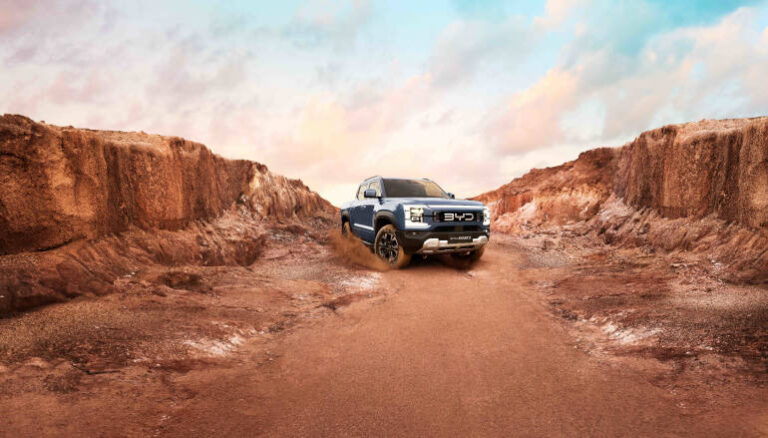
The standout performer in 2025 was the Shark 6 dual-cab ute, which was BYD’s top-selling model for the year. The plug-in hybrid Shark 6 recorded 18,073 deliveries in its first year on sale, underlining strong demand for electrified utes that can still meet payload and towing requirements.
The Shark 6 was followed by the fully electric Sealion 7 SUV with 13,410 deliveries, while the Sealion 6 plug-in hybrid SUV added a further 9,055 units.
For fleet buyers, the results reinforce the importance of vehicle segments such as utes and mid-size SUVs in any transition strategy, particularly where a full move to battery electric is not yet operationally viable.
Dealer network expansion still a work in progress
BYD’s growth in 2025 was supported by a rapid expansion of its retail and service footprint. The company more than doubled its authorised dealer network during the year, finishing 2025 with close to 100 locations nationwide. Further expansion is planned in 2026, with the network expected to exceed 150 dealers across metropolitan, regional and rural areas.
BYD Australia Chief Operating Officer Stephen Collins acknowledged that while progress has been made, servicing capacity remains a key focus area.
“We continue to work tirelessly to build a strong BYD dealer network that meets the needs of customers, both in terms of vehicle sales, and importantly, vehicle servicing,” Collins said.
“While we took a huge step forward in 2025 by increasing servicing capacity markedly, we acknowledge there is still much to be done. We thank customers for their patience.”
For fleet managers, aftersales support and service coverage remain critical considerations when assessing newer brands, particularly as vehicle volumes increase.
New models coming in 2026
Looking ahead, BYD has flagged several new model introductions in early 2026, including the fully electric Atto 1 compact hatch, the Sealion 5 plug-in hybrid SUV, and the seven-seat Sealion 8.
The Sealion 8 is expected to play a significant role in the brand’s next phase of growth, particularly for organisations requiring larger vehicles with lower tailpipe emissions.
Implications for fleet buyers
BYD’s 2025 performance reflects broader shifts underway in the Australian fleet market. Growth in electrified vehicles is increasingly being driven by practical use cases, competitive pricing, and expanding vehicle choice across core fleet segments.
While challenges remain around servicing capacity, residual values and long-term support, BYD’s sales trajectory suggests it is moving beyond niche status and becoming a brand that fleet buyers will need to continue evaluating alongside more established manufacturers.
As 2026 approaches, the focus for fleets will be less about headline sales growth and more about how these vehicles perform over their full operating life — including downtime, support, and whole-of-life costs.