

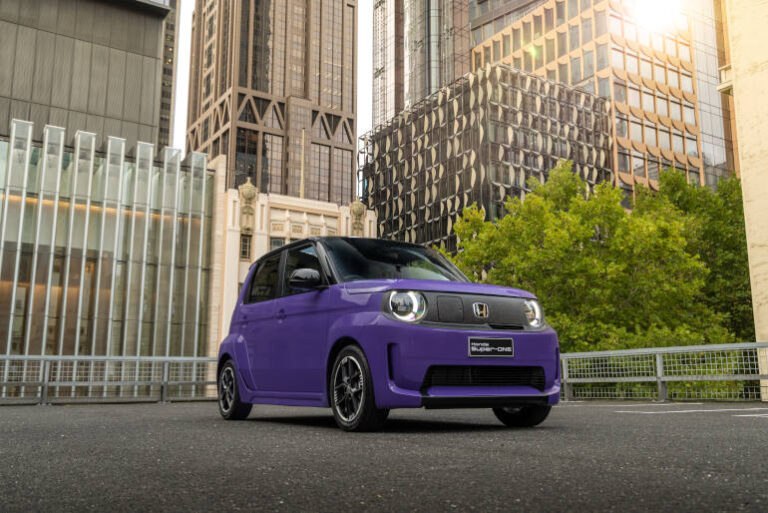
Honda will begin rolling out its next-generation hybrid system globally from 2027, promising improved fuel efficiency, a new vehicle platform and electric all-wheel-drive technology.
Named Honda Hybrid, the system builds on the company’s existing two-motor e technology. Honda plans to launch 15 next-generation hybrid models globally by the end of its financial year on 31 March 2030, primarily in North America.
For Australian fleet buyers, the announcement provides an indication of Honda’s future product direction. However, the release does not confirm which models will reach Australia or when they will become available locally.
The move comes as Honda reallocates development and production resources towards hybrids in response to growing global demand. It forms part of the roadmap to rebuild its automobile business announced in May 2026.
Efficiency improvements go beyond the engine
Honda says the next-generation system will improve key components of its existing hybrid technology, including the engine, drive unit and control systems.
The development work includes expanding the engine’s high-efficiency operating range, improving drive-unit efficiency and reducing the size of the drive unit.
For fleets, the potential benefit is lower fuel consumption across everyday operations. Honda has not provided fuel consumption figures in the announcement, so the scale of any running-cost improvement remains to be assessed when individual models are revealed.
The Honda Hybrid name will also be used globally to communicate the technology to customers, giving the next-generation system a simpler identity than the existing e designation.
New platform and electric all-wheel drive
The upcoming hybrid models will use a newly developed platform designed to reduce weight while optimising body rigidity.
Honda says a new approach to managing body rigidity will improve vehicle behaviour during cornering and roadholding performance.
The models will also introduce Honda’s Motion Management System, an integrated vehicle control technology, alongside a newly developed electric all-wheel-drive system, known as e-AWD.
Together, these developments are intended to combine better efficiency with improved handling and driving confidence. Details of how the technologies will be applied across individual models have yet to be outlined in the release.
Building on two-motor hybrid technology
Honda’s current e technology uses a generator motor and a traction motor, with motor drive used for most daily driving situations.
The system automatically switches between three driving modes according to conditions, combining electric driving characteristics with petrol-engine operation.
Honda Hybrid advances that foundation, continuing a hybrid development programme that began with the first-generation Insight in 1999.
For fleet managers, the key questions will be how the next-generation models translate these engineering changes into measurable fuel savings, suitable vehicle choices and competitive whole-of-life costs.
The global rollout signals a stronger commitment to hybrid vehicles. Australian fleet buyers will need local model announcements, specifications and operating-cost data before assessing where the new technology fits within their replacement plans.