

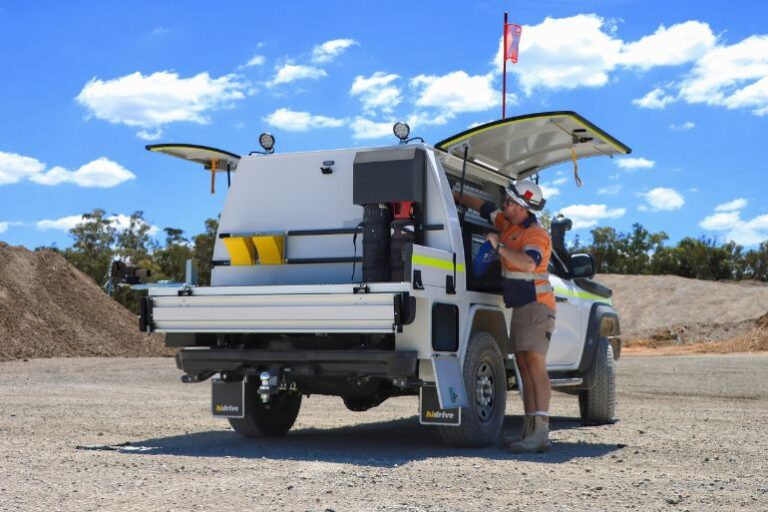
Ford is expanding mobile servicing as part of the local Ford Pro rollout, with the aim of reducing one of the less visible costs of fleet maintenance — the time and labour involved in taking vehicles to and from a dealership.
For many fleets, the real cost of a scheduled service extends well beyond the workshop invoice.
Taking a vehicle off the road can mean allocating employees to drop it off and collect it, rearranging operational schedules and potentially having another vehicle available to cover the downtime.
Ford’s mobile servicing model is designed to remove some of that disruption by taking selected servicing directly to the fleet.
Michael Elias, General Manager – Ford Pro Australia, said Ford has been trialling a dealer-operated mobile service vehicle and the response from customers has been strong.
“The feedback from customers is phenomenal.”

Targeting the hidden cost of servicing
The proposition is relatively straightforward: if routine work can be completed at a fleet depot or workplace, there is less need for employees to move vehicles between the operation and a dealership.
Ford says some servicing can be completed quickly at the customer’s location using processes developed through Ford Pro globally.
For Fleet Managers, that changes the calculation around servicing.
The question is no longer simply what a scheduled service costs. It becomes how much employee time is required, how long the vehicle is unavailable and what disruption is created by moving it away from its normal operating location.
If mobile servicing can reduce those costs, its value may be significantly greater than the convenience of having a technician arrive at the depot.
Dealers remain central to the model
Ford is not attempting to replace its dealer network with mobile servicing.
Instead, the mobile units are being positioned as an extension of Ford’s existing service network, with dealerships continuing to handle work requiring workshop facilities as well as supporting customers operating across different regions.
Ford Customer Service Division Director Greg Davidson said Ford’s network provides coverage across metropolitan and regional areas.
“We have a big presence across the metro cities and significant coverage across regional Australia.”
Ford has more than 220 service outlets nationally, giving fleets with vehicles operating across multiple locations an established support network.
The potential advantage of mobile servicing will therefore depend on how individual dealers implement the program, the distance they are prepared to travel and the range of jobs that can practically be completed away from the workshop.
Fleets will need to understand the service scope
For procurement and fleet teams, those details will be important when evaluating the potential savings.
Ford’s launch material focused on routine servicing and customer convenience rather than providing a detailed national list of maintenance jobs that mobile technicians will be able to perform.
That means fleets considering Ford Pro mobile servicing should establish exactly what is available through their local dealer before incorporating expected downtime or labour savings into a vehicle business case.
The service also needs to be considered alongside Ford’s seven-year warranty program, which requires eligible vehicles to be maintained through the Ford dealer network.
Where servicing performed by a Ford dealer’s mobile unit satisfies those requirements, fleets could potentially maintain warranty coverage while reducing the operational disruption normally associated with dealer servicing.
Uptime will be the real measure
Mobile servicing is another example of vehicle manufacturers increasingly looking beyond the vehicle itself when presenting their fleet offering.
For Fleet Managers, aftersales support has a direct relationship with utilisation and whole-of-life operating costs.
A vehicle that spends less time travelling to a workshop, waiting for service and being returned to its operating location can potentially deliver more productive hours during its ownership period.
The test for Ford Pro’s mobile service model will therefore be measurable rather than simply whether customers find it convenient.
Fleet Managers should be asking how many workshop trips can be eliminated, how many staff hours can be saved and, most importantly, how many vehicle-off-road hours can be removed.
If Ford and its dealers can demonstrate those reductions, mobile servicing starts to become an uptime strategy rather than simply another aftersales feature.