

Australia’s new-car market has delivered a landmark month that will reshape fleet conversations about residual values, replacement cycles and the pace of electrification.
June 2026 was the strongest month ever for Australian new-vehicle sales, with 140,058 vehicles sold from all sources. VFACTS recorded 131,134 sales, up seven per cent on June last year, while battery-electric vehicles accounted for 23.3 per cent of the broader market.
The numbers are striking for several reasons.
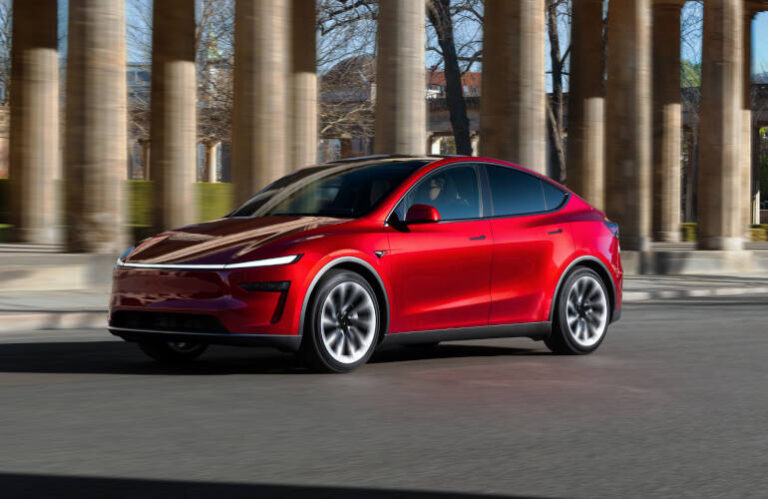
Tesla Model Y sales reached an all-time record of 8,072 vehicles, making it Australia’s best-selling vehicle of any fuel type for the second month in a row, according to the Electric Vehicle Council. That placed it ahead of the Ford Ranger on 5,999 sales and the Toyota HiLux 4×4 on 5,175 sales.

The FCAI’s VFACTS reporting data still placed the Ranger at the top of its reported model rankings, followed by the HiLux 4×4, BYD Sealion 7, Toyota RAV4 and BYD Shark 6. The distinction matters because Tesla does not report through VFACTS, while the FCAI’s “all sources” data captures a broader view of the market.
BYD was another headline-maker. It sold 18,881 vehicles in June, just 243 behind Toyota’s 19,124. Ford was a distant third with 9,181 sales.
FCAI chief executive Tony Weber described the June result as a turning point.
“The Australian automotive market has shifted on its axis during the first months of 2026. This year is likely to represent a significant turning point for the Australian automotive industry,” Mr Weber said.
China is now Australia’s largest vehicle source, accounting for 46,592 VFACTS sales in June, or 35.5 per cent of the market. Japan supplied 20.7 per cent, Thailand 17.8 per cent, Korea 11.3 per cent and Germany 4.4 per cent.
For Fleet Managers, the significance is not simply that EVs had a strong month. It is that the composition of Australia’s future used-car market may have changed materially.
Today’s deliveries become tomorrow’s used-car supply
June’s sales boom will eventually flow into the used-vehicle market.
Many of the vehicles delivered in June will be sold, traded or de-fleeted within three to five years. A larger volume of new cars entering the market now means a larger potential pool of late-model used vehicles later in the decade.
That is not automatically bad news for fleets. More used supply can create better replacement options, improve choice for employees and support a healthier second-hand market for newer EVs, hybrids, utes and SUVs.
However, it may also place pressure on residual values.
Fleet Managers and leasing companies have traditionally relied on reasonably predictable used-car demand for popular fleet vehicles. That assumption becomes less secure when new entrants are offering vehicles with newer technology, stronger safety equipment, lower running costs and increasingly competitive purchase prices.
A three-year-old fleet vehicle may still be a capable and well-maintained asset, but it could be competing against a brand-new model with more advanced driver-assistance technology, larger screens, better connectivity, improved efficiency and a sharper advertised price.
That comparison may become even harder for vehicles that are less well equipped, less fuel efficient or based on ageing platforms.
Discounting could pressure future values
The June sales data also highlights the competitive pressure facing established brands.
BYD came within 243 sales of Toyota during the month, while Chinese-sourced vehicles represented more than one in three VFACTS sales. New brands are no longer a niche consideration for fleet procurement teams. They are rapidly becoming volume players.
Competition can be positive for fleets because it creates more choice and puts pressure on manufacturers to improve pricing, specifications, warranty offers and service support.
But a more competitive new-car market can also create residual-value risk.
If manufacturers begin discounting heavily to defend market share against new entrants, the value of similar used vehicles can fall. This is particularly relevant for fleets operating on fully maintained operating leases, novated leasing arrangements or funding models where expected resale value has a direct impact on monthly cost.
Fleet Managers should not assume that the residual-value performance of the past few years will continue unchanged.
The market is moving into a period where new-car pricing, model updates, technology changes and brand competition may have a greater influence on used values than traditional badge strength alone.
EV acceptance is becoming a fleet issue
The EV transition also looks increasingly difficult for fleets to ignore.
More than 32,500 battery-electric vehicles were sold in June, representing more than 23 per cent of all new-car sales. The Electric Vehicle Council said almost 49,000 Australians took delivery of a battery-electric or plug-in hybrid vehicle during the month.
EVC chief executive Julie Delvecchio said the shift was becoming visible across the mainstream market.
“Electric vehicles are now competing head-to-head with Australia’s legacy manufacturers and winning because they’re cheaper to run, there are more models to choose from than ever before, and they’re better to drive.”
That consumer acceptance matters for Fleet Managers.
Employees are likely to become more familiar with EVs through their own household vehicle choices, novated leases and workplace conversations. The question for fleet teams will increasingly shift from whether drivers will accept an EV to whether the organisation has the right vehicle choices, charging support and operating policies in place.
More model choice should also make it easier to match EVs to fleet tasks. The market is no longer limited to a small number of passenger cars and premium SUVs. It now includes a wider range of compact cars, SUVs, performance vehicles, dual-cab alternatives and plug-in hybrids.
What Fleet Managers should do now
June’s sales result does not mean every fleet should immediately overhaul its replacement programme. The FCAI and EVC have both pointed to unusual conditions, including end-of-financial-year deliveries, fuel-price volatility and pre-ordered vehicles arriving in volume.
But it is a warning that the market is changing faster than many fleet policies, replacement schedules and residual-value assumptions.
Fleet Managers should review whether their vehicle-selection process still reflects the market likely to exist when a vehicle is sold, rather than the market that existed when it was ordered.
That means testing residual-value assumptions against possible new-car discounting, reviewing replacement timing for ageing models, monitoring the supply of newer competitor vehicles and reassessing whether EV and PHEV options can now meet more operational requirements.
The June results may prove to be an unusually strong month. But they have also revealed something more important: Australia’s vehicle market is no longer waiting for the future to arrive.