

Fleet cameras have evolved far beyond simple dashcams. What began as a tool for recording incidents is rapidly becoming one of the most powerful technologies available to fleet managers seeking to improve safety, reduce risk and better understand driver behaviour.
According to Webfleet, the next generation of AI-powered cameras will not just record what happens on the road — they will actively help drivers make better decisions in real time.
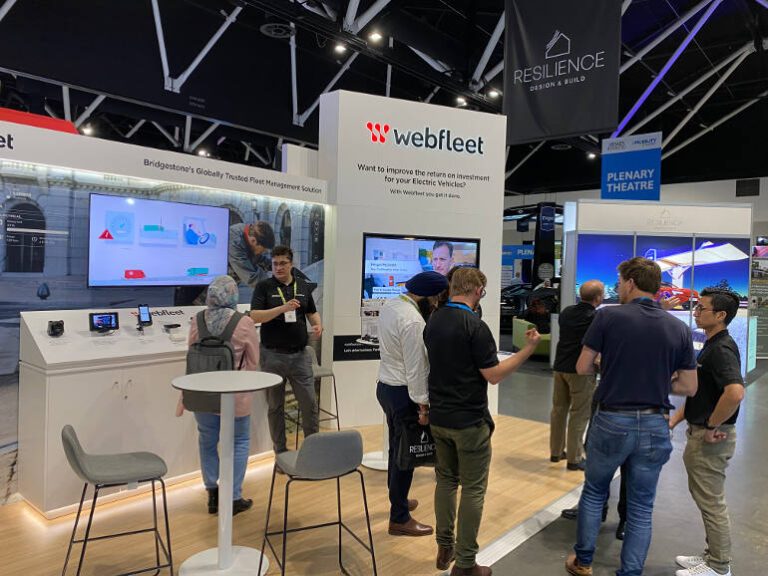
Speaking with Fleet News Group at Sustainability Business Live 2026, Adam Dennis, Enterprise Account Manager at Webfleet, said advances in artificial intelligence and machine learning are transforming the role cameras play within fleet operations.
“The big one is the AI cameras,” Dennis said.
One of the most significant developments is the ability for cameras to identify and interpret road signs as vehicles travel.
“The Cam Pro is getting the ability to read speed signs live,” Dennis explained. “It’s been tested and run in Europe for quite a while. It’ll read stop signs, speed signs, traffic lights and provide in-cabin alerts based on sign-posted speeds, not gazetted speeds.”

The distinction is important for fleet operators.
Traditional telematics systems often rely on mapping databases to determine speed limits. While effective in many situations, these databases can sometimes lag behind temporary road changes caused by roadworks, natural disasters or local infrastructure upgrades.
Dennis said the new capability addresses a challenge commonly experienced by local government and infrastructure fleets.
“A lot of councils have a lot of trouble with the maps being a few months behind because of road work, because of flood damage,” he said. “This will allow much better driver behaviour management, especially with speed limits.”
The move reflects a broader trend within fleet technology. Cameras are increasingly being used as active safety devices rather than passive recording tools.
Instead of simply capturing evidence after an incident, AI-powered systems can identify risks as they develop and alert drivers before a crash occurs.
The technology is also becoming more sophisticated in understanding what is happening inside the vehicle.
Dennis revealed that Webfleet is introducing occupancy monitoring and expanding the machine-learning capabilities of its camera platform to deliver deeper operational insights. At the same time, the company is working to address one of the biggest barriers to camera adoption: privacy concerns.
Fleet Managers frequently encounter resistance from drivers, unions and employee representatives worried about how camera footage may be used.
“It’s such an easy win, but you get a lot of pushback,” Dennis said. “A lot of privacy concerns.”
To address those concerns, Webfleet is introducing functionality that automatically obscures identifying information when footage is accessed.
“We have coming this year the ability to blur faces on download and blur number plates,” he said. “Because we’re GDPR compliant, we go above and beyond Australian legislation for privacy.”
Dennis believes these privacy protections will help organisations balance driver trust with the safety benefits provided by camera technology.
The developments are part of a broader expansion of Webfleet’s connected vehicle ecosystem. The company is also opening access to significantly more vehicle data through its API platform.
“So instead of the six or seven data points we allow to be reported in the database and captured, we’ll do 80 to 90 for a truck,” Dennis said. “Things like axle weights, battery voltage, engine temperature, all that kind of stuff.”
For Fleet Managers, the increasing intelligence of camera systems is creating opportunities that extend well beyond incident investigation.
As AI becomes more capable of recognising road conditions, traffic controls and driver behaviour, cameras are emerging as one of the most practical ways to influence safety outcomes before incidents occur.
The technology is moving from evidence collection to risk prevention.
And for fleets under pressure to improve safety performance while managing costs, that shift could make AI-powered cameras one of the most valuable technology investments of the next decade.