

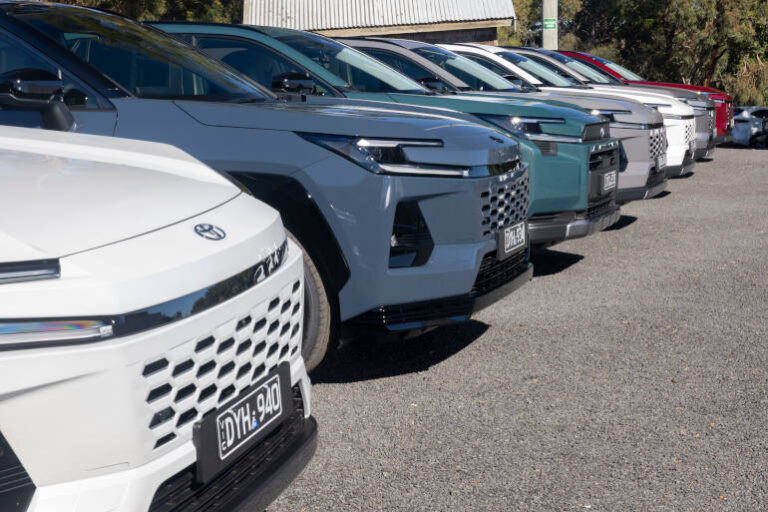
The introduction of advanced connected technology in the sixth-generation Toyota RAV4 is shifting the conversation about vehicle management beyond maintenance schedules and fuel consumption.
Fleet Managers are now being asked to consider something new – data governance.
As vehicles become more connected, they generate increasing volumes of operational information — from driving behaviour and location data to system performance and safety alerts. That information can improve safety and efficiency, but it also introduces new responsibilities for organisations managing fleets.
The message from Toyota executives is clear: connected vehicles are not just a technology upgrade. They represent a governance challenge.
Vehicles are becoming data platforms
Modern vehicles are no longer isolated mechanical assets. They are connected systems capable of collecting, transmitting and analysing data in real time.
This shift is particularly evident in vehicles equipped with next-generation connected services and software platforms, which enable remote monitoring, over-the-air updates and integrated safety functions.
For fleet operators, these capabilities create new opportunities to improve performance — but also new obligations to manage privacy, security and compliance.
“Toyota does not develop technology for its own sake. It is the means by which we can make the vehicle easier to use and live with, safer and more connected with the things that matter to our customers.”
John Pappas – VP of Sales, Marketing & Franchise Operations at Toyota Australia
That connectivity is now central to how vehicles are operated and supported throughout their lifecycle.
Privacy expectations are rising alongside technology
As connected vehicle technology expands, so do expectations around data protection and transparency.
Fleet organisations are increasingly accountable for how vehicle data is collected, stored and used — particularly when vehicles are assigned to employees or operate in public environments.
Toyota has positioned privacy protection as a core design principle in its connected vehicle systems.
“When we think about connected services, we know that protecting customer data is as essential as protecting their safety on the road,” Pappas said.
That statement reflects a broader industry trend: data security is becoming a safety issue in its own right.
Drivers expect transparency — and control
One of the key developments in connected vehicle technology is the ability for users to control how their data is shared.
New connected service systems allow drivers and fleet administrators to manage privacy settings directly through the vehicle or associated applications.
This approach reflects growing awareness that trust in connected technology depends on transparency.
“User data is useful, but now with next-generation connected services, the user has control within the car when they want to share what they want to share,” said Alysha Magro, Senior Product Owner – Connected App at Toyota Australia.
“They can simply toggle the specific sharing settings.”
That capability gives organisations greater confidence in adopting connected systems while maintaining compliance with privacy requirements.
Connected technology is reshaping fleet risk management
For Fleet Managers, the emergence of connected vehicles introduces a new category of operational risk.
Traditional fleet risks focused on:
- Vehicle safety
- Driver behaviour
- Maintenance reliability
- Fuel consumption
Connected technology adds new considerations:
- Data privacy
- Cybersecurity
- System reliability
- Software updates
- User access control
These issues are becoming part of routine fleet governance discussions, particularly in government and corporate organisations with strict compliance obligations.
Safety systems now depend on software and data
Many of the most advanced safety features in modern vehicles rely on connected technology and data processing.
Systems such as emergency call services, collision notification and driver monitoring depend on real-time communication between the vehicle and external networks.
These functions can improve response times and reduce risk during incidents, but they also require robust data management practices.
For fleet operators, this means safety is no longer defined solely by mechanical performance or driver training. It is increasingly shaped by digital infrastructure.
Training and policy development are becoming essential
As connected technology becomes standard equipment, organisations are updating fleet policies to address new responsibilities. Common areas of focus include:
- Data access permissions
- Driver privacy protection
- Cybersecurity protocols
- Software update procedures
- Incident reporting processes
These changes reflect a shift in the role of the Fleet Manager — from asset supervisor to technology steward.
The fleet perspective
The rapid growth of connected vehicle technology is transforming fleet management. Vehicles are becoming smarter. Safety systems are becoming more sophisticated. Operations are becoming more data-driven.
But with those advantages comes a new obligation to manage information responsibly.
The introduction of connected systems in vehicles like the Toyota RAV4 signals a turning point for the fleet industry — one where governance frameworks must evolve alongside technology.
Because in modern fleet operations, protecting data is becoming just as important as protecting drivers.




