

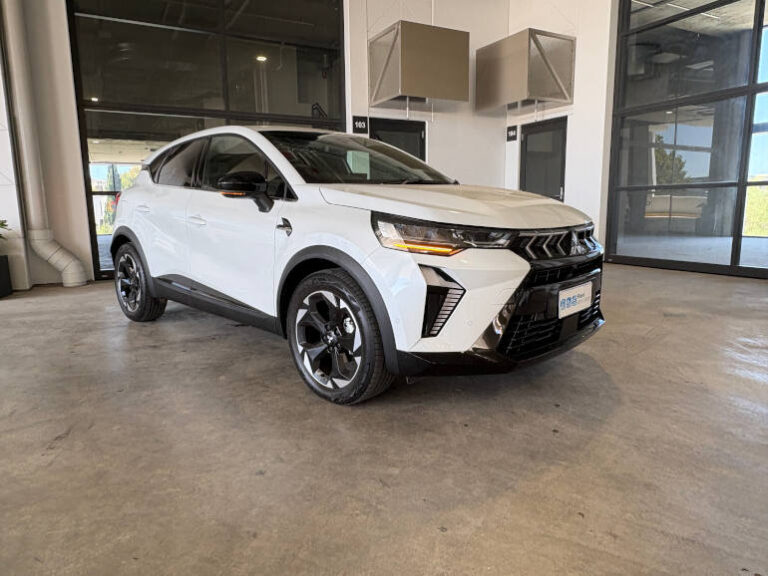
For years, the Mitsubishi ASX was the safe, sensible choice sitting quietly in the value corner of the showroom. It was familiar, affordable, and easy to justify to a Fleet Manager with a spreadsheet in one hand and a depreciation forecast in the other.
This new ASX Aspire is not that car anymore.
Yes, it looks sharper. Yes, the cabin feels more modern. And yes, there is a welcome dose of European flair because underneath the Mitsubishi badge, this ASX is based on a Renault Captur. But that glow-up comes with a much higher asking price, and that changes the conversation completely.
The ASX has gone from value hero to lifestyle player
The old ASX spent about 15 years building a reputation as a value-driven small SUV. This one arrives with a completely different brief. It is more stylish, more refined and more upmarket in feel, but it also costs around $20,000 more than the model it replaces. That is not a facelift. That is a personality transplant.
From a fleet perspective, that matters.
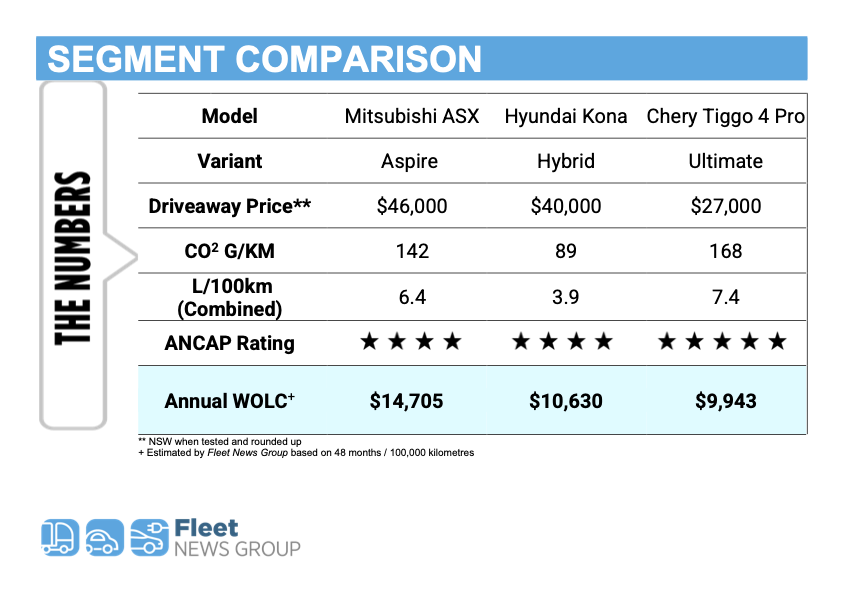
This new ASX Aspire now sits in the mid-$40,000 range, which puts it into a fiercely competitive part of the small SUV market. That would be manageable if it dominated on whole-of-life costs, but that is exactly where it starts to struggle.
Whole-of-life costs are where the romance fades
This is the part where the ASX stops winking at you over a nice steering wheel and starts handing over the bill.
I compared the ASX with rivals such as the Chery Tiggo 4 Pro and Hyundai Kona. The problem is simple: the Mitsubishi is roughly the size of the cheaper Chery, but priced more like the Kona. Over a four-year term, that creates a depreciation gap that is hard to ignore. Add in the Kona’s fuel-saving hybrid advantage, and the numbers start leaning away from the ASX pretty quickly.
That does not make it a bad car. Far from it.
It just means this is no longer the sort of vehicle that wins the argument by being the cheapest sensible option in the room. The old ASX used to turn up in the fleet meeting wearing a hi-vis vest and carrying a calculator. The new one arrives in a European jacket and asks whether you have considered ambience.
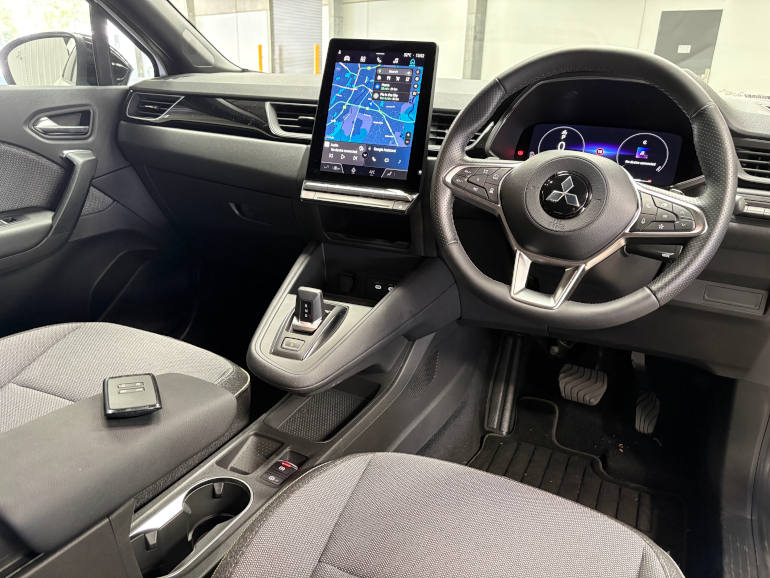
Inside the cabin, Mitsubishi has done a very good job
If this review stopped at the interior, the ASX would come away looking very strong.
The cabin is practical, comfortable and thoughtfully laid out. There is a big central screen, useful storage, physical buttons, and enough little compartments to hide the usual collection of sunglasses, cables, coins and work-day clutter. For drivers who use the car as a mobile workspace, the alignment of the armrest and centre console apparently makes it surprisingly easy to rest a laptop and get some quick work done. Not perfect, but better than expected for a small SUV.
That practicality is important because plenty of small SUVs look good in brochure photos, then become annoying once you actually have to live with them. This one seems to avoid that trap.
There are a few quirks, of course. The media controls take some getting used to, and the key is more European card-style wafer than traditional fob. Handy in a handbag, less brilliant in a suit pocket. But these are the kind of eccentricities that owners either complain about for a week or suddenly start describing as “character”.
The seats also get a tick. Cloth trim, manual adjustment, good bolstering and a nice feel across the cabin surfaces. This is not premium, but it is definitely not cheap and cheerful either.
It looks good. That helps.
Let’s be honest: styling matters.
The old ASX had all the visual drama of an office microwave. Reliable, yes. Exciting, not especially. This new model is a clear step forward. I describe it as stylish and attractive, with rounded European-inspired design that gives it more driveway appeal than the previous generation.
That matters for private buyers and novated lease customers. It also matters for fleets thinking about driver acceptance. People may claim looks do not matter, but nobody has ever walked across a car park, glanced at their allocated vehicle and thought, “Excellent, it resembles a filing cabinet.”
The ASX Aspire is far easier to like on appearance alone.
Fleet buyers will hesitate, novated lease buyers may lean in
Here is where the ASX finds itself in an awkward but interesting position.
The WOLC calculations make it clear that this is “certainly not a fleet car”, mainly because of the higher purchase price and the four-star ANCAP rating, which will be enough to remove it from consideration for many fleet policies.
But it may still have an audience.
A novated lease buyer who wants European styling and comfort, but also wants the reassurance of a Mitsubishi badge and local brand familiarity, might find the ASX Aspire appealing. It has that blend of known brand plus slightly continental flavour that could work for buyers who want something a bit more interesting than the default small SUV shortlist.
That is probably its lane in Australia.
Not the hard-nosed fleet tender. More the private buyer or salary packaging customer who likes the way it feels, likes the way it looks, and is prepared to pay a bit more for that experience.
What about resale?
There is a bit of nuance here.
In Australia, this model is new. In Europe, it is already a second-generation car that has been around since 2019 and is now later in its lifecycle. Normally that might raise questions, but lower sales volume and Mitsubishi keeping the model around for several years could actually help future value. It may not flood the market, and the European styling could help it age gracefully.
That said, the price still looms large. Paying more upfront usually means you need the market to be kind later, and that is never guaranteed in such a crowded segment.
Final verdict
The Mitsubishi ASX Aspire is a better car than the badge might lead some people to expect.
It is more polished, more stylish and more enjoyable inside than the old ASX ever was. The cabin is practical, the design is attractive, and the Renault-based underpinnings bring some welcome European flavour. On comfort and feel alone, there is a lot to like.
But for fleet buyers, the conclusion is fairly blunt: it has moved too far away from the value formula that made the old ASX easy to recommend. Higher pricing, tougher depreciation pressure and a four-star ANCAP rating make it a difficult business case.
For private buyers and novated lease customers, the answer is more generous. If you want a small SUV that feels a bit more European without stepping into a less familiar brand, the ASX Aspire could make sense.
It is no longer the cheap and cheerful ASX of old.
Now it is the ASX that has discovered good tailoring, better furniture, and a more expensive taste in life. The question is whether Australian buyers are willing to pay for the makeover.