
The next stage of fleet technology is not about adding more hardware. It is about consolidating systems, improving data quality and embedding intelligence directly into vehicles.
According to Daniel Antonello, General Manager Sales and Business Development across Australia and New Zealand at HERE Technologies, fleets are entering a new phase where mapping, AI and OEM telematics are converging.
“We’re very much a B2B setup,” Antonello said. “We have applications, APIs and data, and our customers build that into their hardware or software applications.”
That integration runs deeper than many fleet operators realise.
“Of the passenger vehicle market with factory navigation, we’re probably about 75 to 80 per cent of those systems,” he said. “And in the truck market, we’re around 90 per cent.”
For fleets, this means the underlying data ecosystem is already embedded in most vehicles on the road.
From CDs to streaming maps
Vehicle navigation has evolved significantly over the past decade.
“We evolved to SD cards, then over-the-air updates,” Antonello said. “Now the latest becoming more mainstream is streamed maps.”
Streaming fundamentally changes how data is delivered and maintained.
“We’re streaming the map continuously,” he said. “With streaming, we’re adding AI into it so the map can somewhat self-heal.”
That self-healing capability is driven by vehicle data feedback loops.
“With permissions, we get insights from vehicles,” Antonello explained. “If a camera sees a stop sign or speed limit and sends it to us, we’ll check it against our database, update it and send that back out to the community.”
The scale of change is significant. “We make over 12 million edits to the map every year in Australia,” he said. “The map is changing every second.”
For fleet operators, this continuous update model improves compliance, safety and route accuracy without manual intervention.
Heavy vehicle intelligence moves beyond routing
Connected fleet technology is also reshaping heavy vehicle operations. Truck OEMs are increasingly focused on embedding regulatory and physical constraints into navigation systems.
“Is my vehicle allowed on this road? Can it fit down that road with bridge height restrictions?” Antonello said. “We’re mapping legislative requirements and physical requirements to the vehicle itself.”
Instead of relying on driver knowledge or separate reference systems, the vehicle can now calculate suitability automatically.
“When the user puts in a route, one, they’re allowed on that road, and two, they can safely drive down that road,” he said.
For transport operators, that reduces risk exposure from bridge strikes, non-compliant routes and avoidable detours. Antonello notes that Australia is well positioned in this regard.
“Australia and New Zealand would be right up there in data availability,” he said. “From our portfolio perspective, it’s pretty advanced.”
The end of bolt-on telematics?
Perhaps the most disruptive shift is happening in telematics architecture. Today, many fleets install third-party hardware to unify mixed vehicle brands under one reporting platform. But Antonello believes consolidation is coming.
“In fleet, a company might buy different vehicle types and want that consistent driver experience,” he said. “That’s where telematics comes in.”
However, OEMs already collect significant data through embedded systems.
“The OEMs have their own telematics. They always have,” Antonello said. “Primarily it’s been about diagnosing problems ahead of time.”
Now, with lower data costs and stronger connectivity, the ecosystem is opening up.
“We see a world where that ecosystem is opening up and the transition is to using the OEM screen,” he said. “Factory screens are becoming bigger and brighter and more usable. It just means we don’t need to double up on hardware.”
Instead of installing additional devices, fleet applications could run directly on the existing in-vehicle interface.
“Let’s use the hardware that came with the truck or the car, and install our application into the vehicle,” Antonello said.
While still early, he expects this shift to accelerate. “It’s not widespread today. It’s very much early stage,” he said. “But I see that as the biggest disruptor in this space.”
AI, integration and fleet maturity
The broader trend is clear. Mapping is no longer static. Telematics is no longer isolated. Vehicles are no longer data silos.
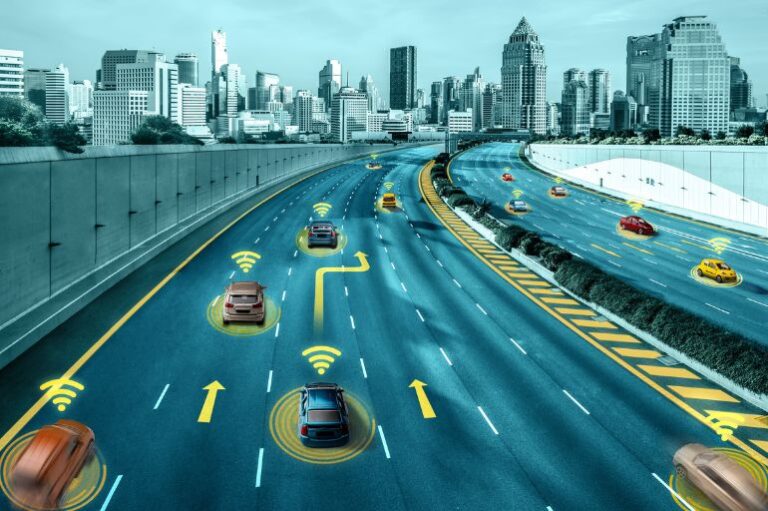
Streaming maps, AI-assisted updates, embedded vehicle data and open APIs are converging into a connected ecosystem. For Fleet Managers and Procurement Managers, the implications are practical:
- Reduced hardware duplication
- Improved driver experience consistency
- Better compliance through embedded road intelligence
- Faster response to infrastructure and regulatory changes
As Antonello describes it, the industry is moving from fragmented systems to integrated platforms.
Once OEMs provide consistent access to vehicle hardware and data, “you just need an application to make use of that,” he said.
The next phase of fleet technology will not be defined by new devices mounted to dashboards. It will be defined by how effectively fleets leverage the intelligence already built into the vehicle.