

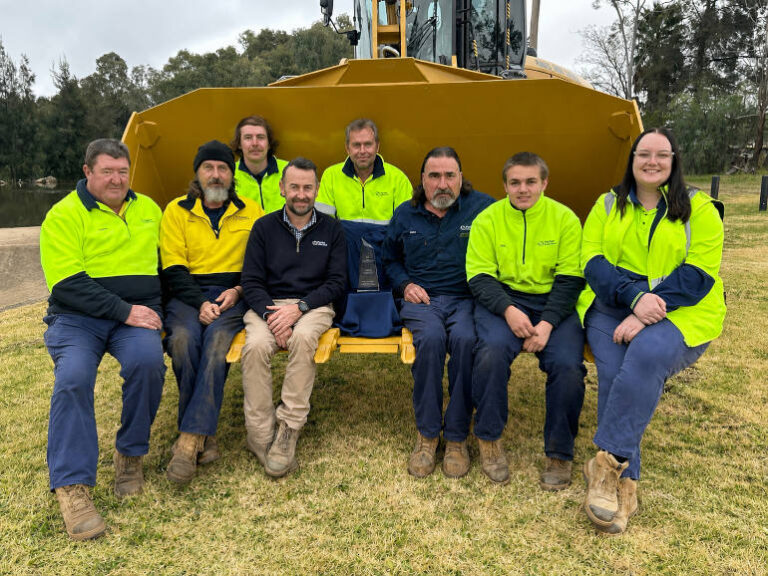
Parkes Shire Council is a finalist in the Fleet of the Year category in the 2026 Fleet News Group Awards.
Managing a diverse fleet across 5,000 square kilometres creates challenges that metropolitan fleets rarely face, and Parkes has responded with detailed lifecycle planning, in-house capability and a determination to make every asset earn its place.

A regional fleet with metropolitan-level discipline
Parkes Shire Council manages around 550 major fleet assets worth approximately $18 million across a shire covering about 5,000 square kilometres. The mix extends from small equipment through to heavy trucks, graders, plant trailers and specialist machinery supporting roads, parks, water, sewer and other community services.
The main workshop is located in Parkes, with smaller depots at Trundle and Peak Hill. Some assets can travel up to 150 kilometres from the main depot to reach jobs across the shire. That geography changes the way the fleet team thinks about reliability, maintenance support and procurement. A breakdown is not simply an inconvenience when the vehicle may be a long way from the workshop and supporting essential rural works.
Purchase price is only the beginning
Parkes owns its fleet and completes maintenance in-house, giving the team direct visibility of how equipment performs throughout its working life. Replacement decisions are not made simply because an asset has reached a particular age. The council considers kilometres or hours, condition, maintenance costs, utilisation, operational requirements, resale value, industry trends and internal recoveries.
Whole-of-life value is central to the process. Parkes compares ownership with external hire and asks whether an asset is being used enough to justify retaining it. The team also looks closely at local aftersales support. In a regional environment, a machine that requires a technician to travel from Sydney can carry a significant hidden cost. During the finalist interview, Fleet and Depot Manager Michael O’Shannessy described an earlier asset where a technician visit could cost about $1,500 in travel alone. A competing supplier had local technical support and could meet with the council regularly to review upcoming work.
That difference matters. The cheapest machine on tender day may not be the best-value machine over the next decade.
Data gives the fleet team a stronger voice
TechnologyOne dashboards help Parkes monitor asset recoveries, utilisation, operating costs and replacement timing. The fleet team can show managers whether an asset is meeting its expected recovery position and investigate why it is falling behind. Telematics provides a second source of evidence by showing whether equipment is actually moving and working.
This changes conversations about replacement. When someone asks for a new vehicle or machine, the answer can be supported by data rather than opinion. If an asset is underutilised or has not generated the expected recovery, the council can consider extending its life, redeploying it or disposing of it rather than automatically replacing it.
Major decisions also go through documented evaluations and the council’s plant procurement committee, which includes councillors and the mayor. The result is a fleet program closely linked to the council’s financial and operational planning.
Continuous improvement is part of the job
The strongest theme in the Parkes finalist interview was not one particular technology. It was the willingness to keep improving. The team has built policies, dashboards, workshop systems and telematics processes over time, often responding to audit findings or lessons from day-to-day operations.
O’Shannessy described the philosophy simply:
“We don’t sit on our hands. We try things. If it doesn’t work, we change tack and go again.”
Parkes also shares what it learns with other councils. The fleet team has helped peers understand its TechnologyOne setup, telematics processes and maintenance systems. For a regional organisation, that willingness to test, document and share improvements is an important part of the Fleet of the Year story.
Next week: the fleet that helps find potholes
In the second article in this series, we’ll look at one of Parkes Shire Council’s most unusual uses of telematics: turning everyday fleet movements into another source of information about road condition across the shire.
Vote for Parkes Shire Council
Vote for Parkes Shire Council in the 2026 Fleet News Group Fleet of the Year Award
Industry voting is now open. Visit the Fleet News Group Awards voting page to cast your vote.
Awards Night – 14 October 2026, Sydney
The winner of the Fleet of the Year Award will be announced at the Fleet News Group Awards Night in Sydney on 14 October 2026. Register your interest to attend the Awards Night.