
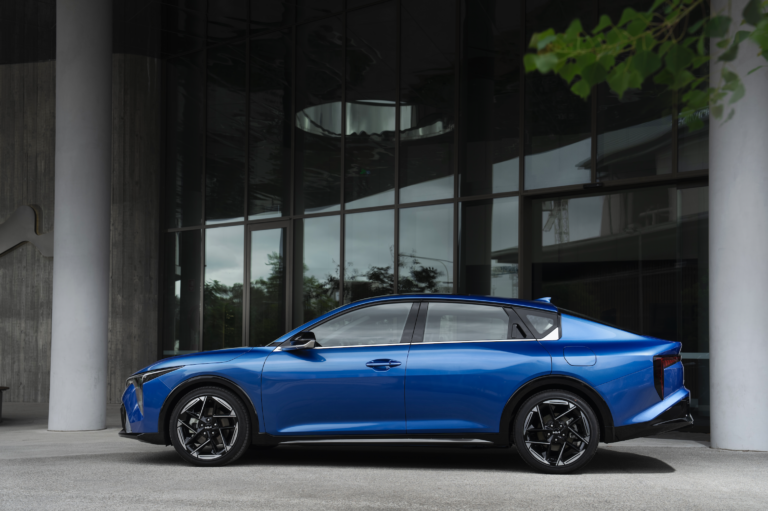
The recently released ANCAP safety rating for the Kia K4 sedan has delivered a clear message for fleet managers: relying solely on star ratings when assessing vehicle safety is no longer enough.
ANCAP awarded the Kia K4 Sport, Sport+, GT-Line and S with the optional Safety Pack a five-star rating, while the base S variant without the pack scored just four stars. The drop is largely due to the omission of critical crash avoidance features – especially autonomous emergency braking (AEB) functionality that fails to detect cars in cross traffic scenarios or motorcycles in adjacent lanes.
In an era where ANCAP ratings are used as a fleet-policy baseline or procurement filter, this dual outcome highlights a pressing issue: variant-specific safety differences are becoming more common and more complex. Manufacturers, under pressure to meet competitive price points, are stripping out safety technology from base variants, often to attract price-conscious buyers.
A New Layer of Risk
The Kia K4 S without the Safety Pack still includes a suite of passive and some active safety features. But its reduced Safety Assist score (64% vs 77% in other grades) reflects a diminished ability to avoid crashes in real-world driving scenarios. While these differences may seem minor on paper, they can be critical in protecting employees, contractors or volunteers – especially when the vehicle is used in busy metro traffic or shared as a pool car.
This problem isn’t unique to Kia. Many brands are offering “stripped” versions of popular models to maintain sharp driveaway pricing. And from a procurement perspective, fleet managers may unintentionally specify a lower grade to meet budget targets without realising the safety compromise.
The Fleet Safety Conversation Needs to Expand
Organisations must now go beyond the star rating and dig deeper into variant-specific safety specifications. The ANCAP score is still important – but it is no longer the full story.
What’s needed is a broader, vehicle-agnostic safety policy that applies across all vehicle types in the fleet, including:
- Novated lease vehicles, which may be selected based on price or spec without fleet oversight.
- Grey fleet vehicles, where employees use personal cars for work travel.
- Tool-of-trade and pool vehicles, which are often shared among staff with varying driving habits.
- Short-term rental vehicles, which are frequently used to plug operational gaps.
Organisations should define minimum safety requirements based on key technologies, such as AEB with pedestrian/cyclist detection, lane keep assist, rear cross traffic alert, and blind spot monitoring – not just the star badge.
As ANCAP CEO Carla Hoorweg noted: “In 2025, safety should not be treated as a ‘pay-for’ option ”. And yet, that’s precisely the situation fleets are being forced to navigate.
What You Can Do
- Review your fleet policy to include minimum safety tech – not just an ANCAP rating.
- Educate buyers, especially those using novated leasing, about safety equipment differences.
- Ensure procurement teams understand how to interpret variant specs and include Safety Packs where needed.
- Engage suppliers and OEMs to confirm standard inclusions, especially when models change.
Ultimately, if the goal is to ensure all staff get home safely – regardless of the vehicle they drive – then the responsibility must shift from trusting star ratings to embedding safety into every fleet decision.
- Why fleet replacement plans need more than age and kilometres
 Fleet replacement planning is often treated as a timetable. An asset reaches a nominated age, records a certain number of kilometres or hours, and enters the replacement program. It is a familiar approach, but Andrew Railz believes it is no longer enough for organisations managing limited budgets, long delivery times and growing expectations around service
 - The EV Transition Has Exposed a Fleet Management ProblemFor years, fleet professionals have argued that vehicles should be managed as assets rather than procurement categories. The slow transition to electric vehicles has exposed exactly why that distinction matters. Across Australia and New Zealand, many organisations continue to claim that electric vehicles are too expensive, unsuitable for their operations, or not ready for deployment.
- Why Mature Fleet Organisations Don’t Separate Procurement From Fleet ManagementOne of the clearest indicators of fleet management maturity is how an organisation views its fleet assets. Immature organisations often see vehicles as a purchasing exercise. Mature organisations see them as business-critical assets that require management throughout their entire lifecycle. The distinction is subtle, but the impact on cost, risk, safety and performance can be
- Fleet Management Is Not a Procurement CategoryOver the last decade, many organisations have moved responsibility for fleet into procurement teams. On paper, it makes sense. Fleet assets represent significant expenditure, procurement professionals are skilled negotiators, and vehicle purchasing is often one of the largest capital outlays in an organisation. But treating fleet as simply another procurement category is creating a growing
- How to Evaluate if You Should Outsource Fleet Management TasksWhen organisations review their fleet operations, the conversation often centres on financial models like leasing versus owning. But there’s another, equally important decision that can significantly impact performance: whether to outsource certain fleet management tasks. Outsourcing can deliver real value when applied correctly — but if misunderstood, it can create inefficiencies and strip the organisation