
Sydney’s ICC was buzzing in October as Mobility Live Australia brought together the leading minds in fleet, transport, and mobility. From telematics and AI to charging infrastructure and new financing models, exhibitors said the conversations this year were focused, practical, and forward-looking — reflecting an industry ready to act.
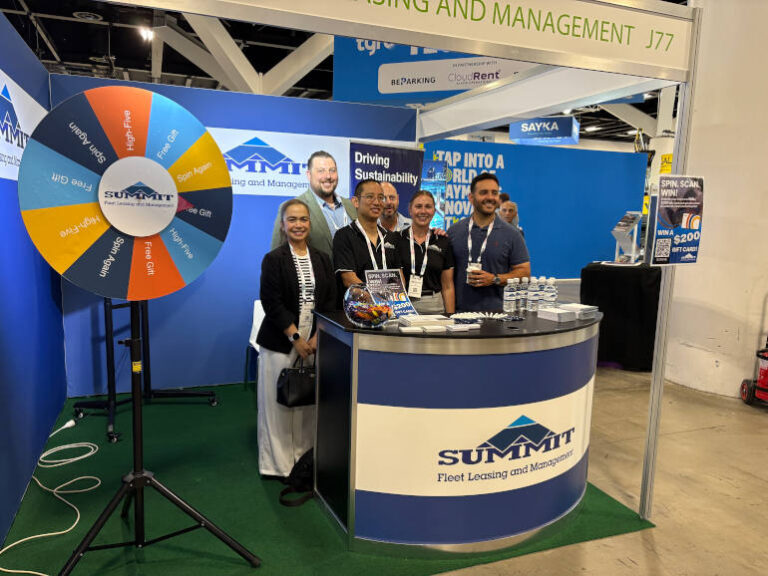
Summit Fleet: Connecting with the Market
Dominic Natoli, Strategic Sales and Marketing Manager at Summit Fleet Leasing and Management, said Mobility Live provides a unique platform to engage directly with customers and understand their sustainability goals.
“It’s a wonderful opportunity for us to understand and really connect with the market — to talk about the latest trends in mobility and sustainability, and how Summit can provide better solutions for our customers,” Natoli explained.
With a strong presence in novated leasing and salary packaging, Summit used the event to highlight its ESG commitment.
“Sustainability is high in our thinking. That’s why Mobility Live is such a natural fit — it’s where the industry comes to discuss how to move from ideas to action.”
GVA Automotive: Addressing Residual Value Risk
For new entrant GVA Automotive, Mobility Live marked its first official engagement with the Australian fleet market. Co-founders Boyd Stidwell and Mitch Waters said the event provided the perfect audience to introduce their multi-year guaranteed buyback program — designed to reduce risk for fleets transitioning to electric and low-emission vehicles.
“We saw that one of the biggest inhibitors to EV adoption was uncertainty around residual values,” Stidwell said. “Our partnership with RVI gives organisations balance sheet surety. It means fleets can move into new-energy vehicles knowing their financial exposure is protected.”
Waters added that Mobility Live attracts exactly the people they need to reach.
“You’ve got government, councils, and corporate buyers here — the ones making long-term fleet decisions. It’s the perfect environment to start the education process,” he said.
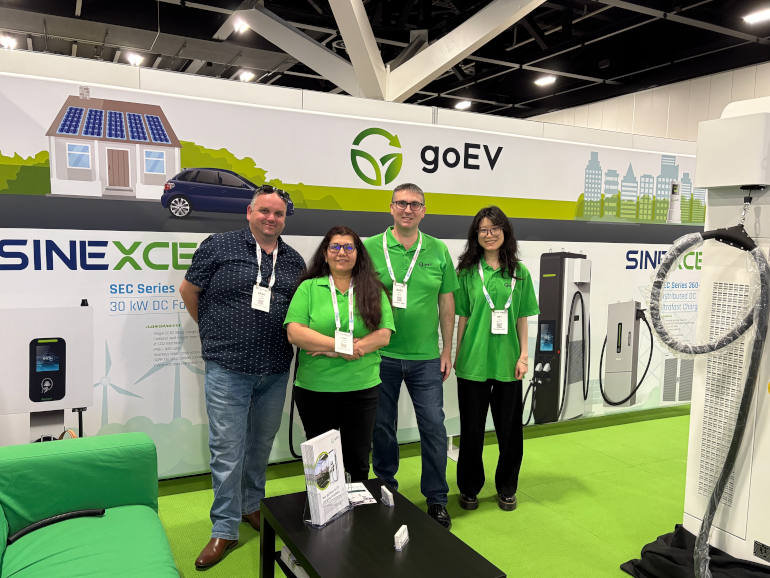
Go EV: Charging Ahead for Heavy Transport
Returning exhibitor Mark Lampard, Managing Director of Go EV, said Sydney’s event has become a cornerstone for the fleet electrification conversation.
“It’s a really good show. We get a unique set of customers here,” Lampard said. “The organisers have committed to Sydney, and that’s a great move — it gives consistency and helps us plan ahead.”
Go EV displayed its 80-kilowatt Sonic Cell charger — similar to those being rolled out nationwide for the NRMA.
“Heavy transport is where it’s at right now,” Lampard said. “We’ve been focused on that segment for the past 18–24 months, and it’s exciting to see operators move beyond trials to full-scale commitments.”
Geotab: Turning Data into Decisions
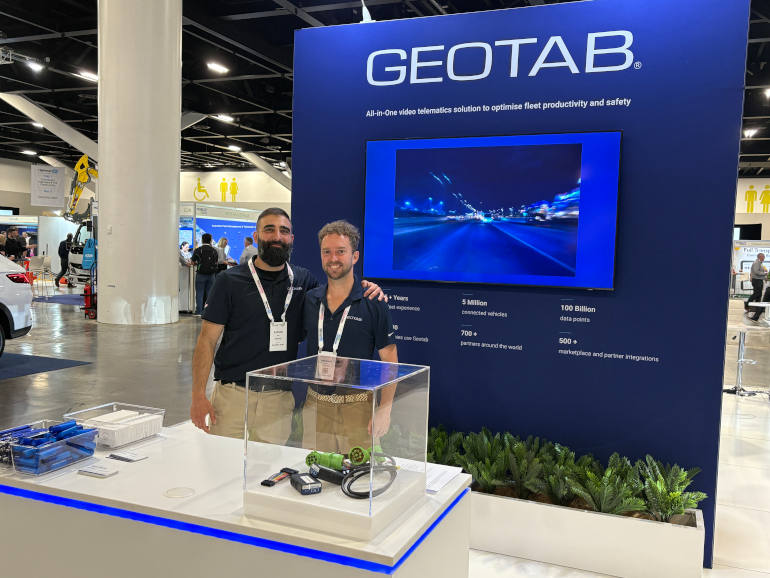
For Geotab’s Associate Vice President of Business Development, APAC, Will Batty, Mobility Live was a chance to show how technology is reshaping safety and sustainability in fleet management.
“We’re now starting to see customers that want to do more with telematics,” Batty said. “The value data can bring is huge. We’ve moved from collecting information to using AI to generate real insights — from predictive collision risk to helping fleets identify which vehicles are ready for an EV transition.”
He added that Australian fleets are now embracing the next wave of technology, from AI-powered tools like Geotab Ace to intelligent dashcams.
“Events like this are critical because they bring technology and fleet practitioners together in a non-sales environment,” Batty said. “It’s a space for collaboration, learning, and sharing what’s next.”
Collaboration, Not Competition
Across every conversation, one message was clear: Australia’s mobility and fleet sectors are no longer experimenting — they’re implementing. The focus has shifted from “what’s possible” to “what works,” with Mobility Live serving as the meeting ground where innovators, suppliers, and fleet buyers shape the next phase of the journey.
As Will Batty put it, “Events like Mobility Live help the industry collaborate and learn what’s coming in the future — and how to take it back to their own businesses.”
Mobility Live Australia 2025 once again proved that the road to smarter, safer, and more sustainable transport runs through Sydney — and the exhibitors leading the charge are already gearing up for next year.
- Hyundai Reveals a Bold New Chapter for Tucson
 Hyundai’s next-generation Tucson will arrive in Australia in mid-2027 with a hybrid-only line-up, bringing a larger body, redesigned cabin and new digital technology to the SUV market. Unveiled globally in New York, the all-new Tucson introduces Hyundai’s next-generation hybrid system and a design direction the company calls “Art of Steel”. For fleet managers planning replacements
 - MMS fleet business grows units as managed-only strategy gains momentumMcMillan Shakespeare’s (MMS) fleet management business increased the number of vehicles under management during FY26, with particularly strong growth in managed-only arrangements as the company invested in productivity and operational changes intended to support future expansion. MMS’s Asset Management Services (AMS) division finished the year with approximately 16,000 fleet units, up 3.3%, while the business recorded 20
- MG sees EV interest rise as Australian range expandsMG Motor Australia says its electric vehicle sales are accelerating as the company prepares to expand the choice of vehicles and powertrains available to Australian buyers. Speaking during the media tour at Everything Electric in Sydney, MG Motor Australia Marketing Director Dimitri Andreatidis said changing Australian buying patterns are being reflected in MG’s own results.
- Ford Gives Mustang Dark Horse the Triple Eight TreatmentFord is strengthening the Australian connection between its road cars and Supercars program with a locally developed T8-Spec Pack for the Mustang Dark Horse. Developed with input from Triple Eight Race Engineering and Ford’s local engineering team, the Australian-exclusive package is scheduled to reach customers in the fourth quarter of 2026. Rather than relying on
- Chery sees EV growth through novated leasingChery believes novated leasing will become an increasingly important sales channel as its Australian EV range expands across more vehicle segments and brands. Speaking with Fleet News Group at Everything Electric in Sydney, Lucas Harris, Chief Operating Officer at Chery Motor Australia & New Zealand, said the company was already seeing encouraging demand for its