

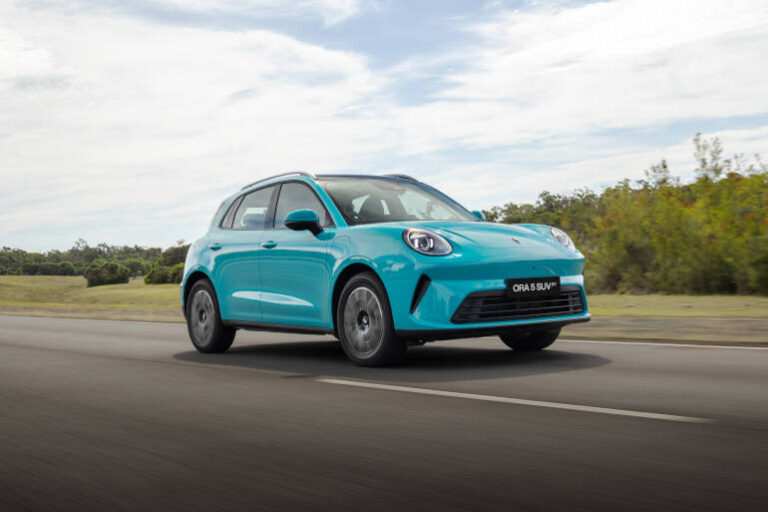
GWM is preparing its biggest Australian product offensive yet, with nine new models due before the end of 2026 and a powertrain strategy spanning petrol, diesel, hybrid, plug-in hybrid and fully electric vehicles.
The expansion will push GWM into more vehicle segments while giving fleet and novated lease buyers a broader choice of powertrains, from electric city vehicles to diesel-powered towing and touring models.
GWM is targeting more than 60,000 Australian sales in 2026, a top-five market position by the end of 2027 and a place among Australia’s top three automotive brands by 2030.
Rather than backing one powertrain technology, the company plans to offer different solutions for different operating requirements.
“No single technology wins every customer, and no single customer needs every technology,” said GWM Australia Chief Operating Officer John Kett.
“Our role is to give customers the freedom to choose the solution that best fits their lives, whether that’s petrol, diesel, hybrid, plug-in hybrid or electric.”

Electric expansion begins with ORA
The recently launched ORA 5 SUV marks the beginning of a larger electric vehicle expansion.
GWM plans to follow it with an ORA 5 Hatch and an all-new ORA mid-size SUV before the end of the year.
The additional models should give novated lease buyers more opportunities to access GWM electric vehicles through the Fringe Benefits Tax exemption, while also providing fleets with more choice across different vehicle sizes and applications.
Plug-in hybrid utes move into the mainstream
One of the most significant fleet introductions will be the Cannon Hi4-T Plug-in Hybrid Ute, scheduled to arrive in September.
It will sit alongside the larger Cannon Alpha Hi4-T, giving GWM what it claims will be Australia’s broadest range of electrified utes.
For fleets, the expanding plug-in hybrid ute range provides another pathway to reduce fuel consumption and emissions without immediately moving to a fully electric commercial vehicle.
However, the real-world benefits will still depend on drivers regularly charging the vehicles. Without consistent charging, a plug-in hybrid risks carrying the additional weight and complexity of an electric drivetrain without delivering its full efficiency advantage.
The Cannon Alpha range will also gain an XSR variant aimed at buyers requiring greater off-road capability.
Diesel remains part of the plan
While GWM is expanding its electrified range, it is not walking away from diesel.
A new 3.0-litre turbo-diesel engine will be introduced in the Cannon Alpha and Tank 500, with Australia selected as the lead global market for the powertrain.
GWM says the engine was developed using Australian customer feedback, local testing and local driving conditions. It is expected to provide increased power and torque, improved fuel efficiency and greater confidence when towing.
The new diesel option could be particularly relevant to regional fleets, infrastructure operators and recreational buyers requiring long-distance range, towing ability and access to established refuelling networks.
It also demonstrates the practical reality facing Fleet Managers: electrification may be growing quickly, but diesel will continue to suit applications where payload, towing, remote travel and utilisation requirements remain difficult to meet with battery electric vehicles.
Three-pronged attack on the mid-size SUV market
GWM will also expand its presence in the highly competitive mid-size SUV segment.
The new Haval H7 will be offered with hybrid and Hi4 plug-in hybrid powertrains. Selected variants will also feature front and rear differential locks, giving the H7 stronger off-road credentials than many conventional family SUVs.
Later in the year, the Haval Jolion Max will arrive in plug-in hybrid and battery electric forms. Positioned between the existing Jolion and H6, it will give GWM another entry point into one of Australia’s largest vehicle categories.
The expanded SUV line-up could give fleet buyers greater flexibility when matching vehicles to different roles, while novated lease customers will have more options across hybrid, plug-in hybrid and fully electric powertrains.
WEY takes GWM upmarket
GWM will also introduce WEY as its fifth Australian sub-brand before the end of 2026.
The premium brand will initially target large SUV and people-mover segments, combining electrified powertrains with more luxurious interiors and advanced technology.
WEY represents an important change for GWM. The company has traditionally built its Australian presence around value, but the new brand will test whether buyers are prepared to consider GWM products in more expensive and premium segments.
“Australia is now one of GWM Group’s top three strategic international markets,” said GWM Australia Managing Director Andrew Gao.
“We’ll continue investing our best products, technologies and resources into the ANZ region.”
More choice creates a new challenge
A larger range will give buyers more options, but it will also make vehicle selection more complex.
Fleet Managers will need to compare more than purchase prices and claimed fuel consumption. Charging access, annual kilometres, towing requirements, duty cycles, payload, servicing, taxation and resale values will all influence the correct choice.
That is where GWM’s strategy may prove valuable.
Rather than presenting one technology as the answer to every transport problem, the company is building a range that acknowledges Australian buyers have very different requirements.