

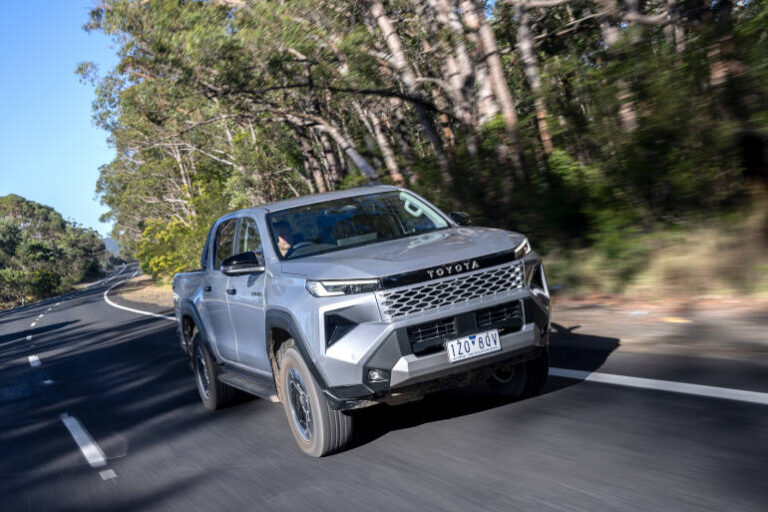
Toyota Australia will use 100 per cent renewable diesel to power a fleet of 40 HiLux vehicles at the 2026 AFL Grand Final Parade, demonstrating how lower-carbon fuels could reduce the lifecycle emissions of existing diesel fleets.
The HiLux vehicles will carry players from the two Grand Final teams through Melbourne during the parade on 25 September. They will also be used for the lap of honour for recently retired players on Grand Final day.
All 40 vehicles will run on HVO100, a paraffinic renewable diesel produced from hydrotreated vegetable oil. Its feedstocks can include waste oils and other renewable sources.
Toyota said the fuel could provide fleets with another pathway to reducing lifecycle emissions, particularly where electric vehicles were not yet suitable for the operational requirements.
All HiLux models produced from 2015 with Toyota’s 2.8-litre 1GD or 2.4-litre 2GD diesel engines are compatible with HVO100. Toyota estimated approximately 500,000 of these vehicles were already operating on Australian roads.
This compatibility is significant for fleet operators because it creates the potential to lower emissions from vehicles already in service without replacing the asset or modifying its powertrain.
Toyota Australia Vice President Sales, Marketing and Franchise Operations John Pappas said the parade would provide a high-profile demonstration of the fuel.
“We’re looking forward to seeing thousands of fans line the streets to cheer on the teams and this year, for the first time ever, our 40-strong Toyota HiLux fleet will be powered by low-carbon liquid fuel,” Pappas said.
“We see Renewable Diesel playing a role in Australia’s transition to lower-emission motoring, without leaving customers behind in the journey towards decarbonisation.”
Toyota plans to conduct further trials and testing of renewable diesel in its vehicles and intends to make other diesel models compatible with HVO100.
For fleets with large numbers of utes and other diesel-powered vehicles, renewable diesel may eventually provide a practical way to address emissions from the existing fleet while longer-term replacement and electrification programs continue.
However, compatibility is only part of the equation. Wider fleet adoption will depend on the local production, availability, distribution and cost of HVO100 compared with conventional diesel.
Toyota said it would continue working with industry to support opportunities for renewable diesel in Australia as part of its broader multi-pathway approach to decarbonisation.