
The Ford Ranger Super Duty wasn’t just built—it was engineered from the ground up to meet the demands of hard-working operators who are tired of modifying off-the-shelf utes to get the job done. Developed in Australia and shaped by conversations with more than 50 fleet operators and industry professionals, the Super Duty is a purpose-built commercial vehicle that stands apart from the regular Ranger in almost every way.
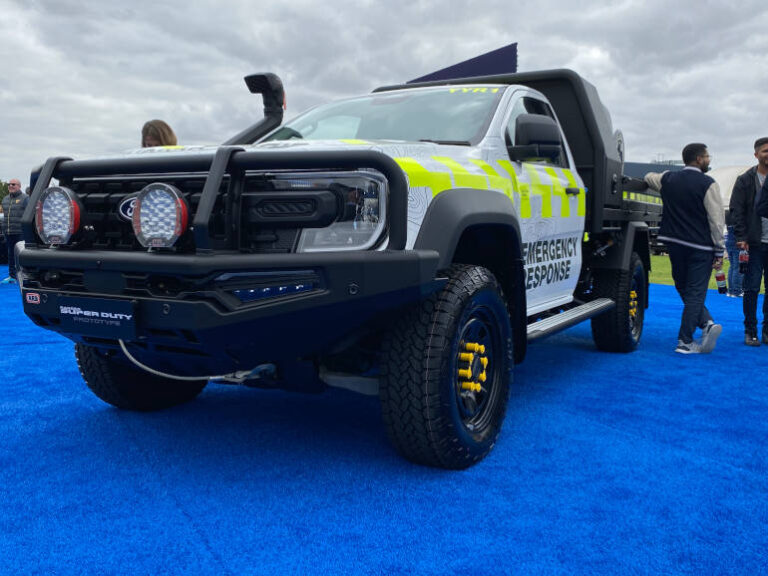
At first glance, it may look like a tougher Ranger, but dig deeper and you’ll find an entirely different machine. According to Max Wolff, Design Director for Ford’s International Markets Group and China, “Every part of the design is purpose driven,” including squared-off over-fenders for clearance, 33-inch tyres for traction and toughness, and a frame-mounted steel bumper for real-world resilience.
A No-Compromise Utility Vehicle
Ford has long led the ute segment with the Ranger, a favourite among tradies and weekend warriors alike. But with the Ranger Super Duty, the focus has shifted firmly to commercial-grade capability and long-term durability. As Wolff put it, this truck isn’t about compromise—it’s about function: “The no-compromise spirit is what really animated Ranger back in 2010 or 2012, and that’s what we’re doing now for the heavy-duty commercial market, with Ranger Super Duty”.
That “no-compromise” approach led the design and engineering teams to push the envelope—resulting in a vehicle that offers a maximum Gross Vehicle Mass (GVM) of 4500kg, Gross Combined Mass (GCM) of 8000kg, and maximum braked towing capacity of 4500kg straight from the factory. This isn’t a concept ute with shiny features—it’s a workhorse designed to handle brutal conditions without breaking a sweat.
Designed and Engineered in Australia
While Ranger has always had strong ties to Australia, the Super Duty was both designed and engineered locally. “We spoke with heavy duty fleet operators who told us they wanted a turnkey solution that meant they could sidestep the difficulty and expense of aftermarket modifications,” Wolff explained. “We realised that most work truck customers are looking for a cab chassis—and that’s where we started”.
One of the innovations that came out of these conversations was the integrated device mounting system. Instead of leaving fleet managers to retrofit brackets and damage dash plastics, Ford developed a factory-integrated solution to mount devices up to 4kg—perfect for rugged laptops and fleet tablets used in the field.
What Makes It Different to a Regular Ranger?
While the Ranger and Ranger Super Duty may share a name and silhouette, they are vastly different in both hardware and purpose.
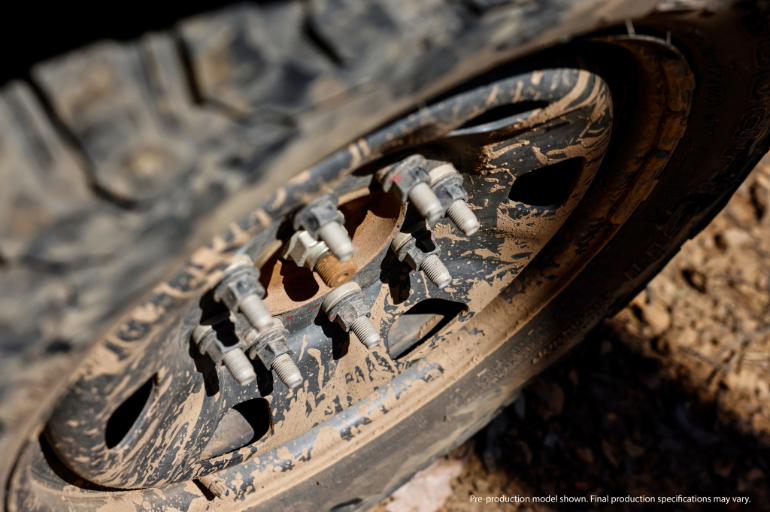
Chassis and Suspension: The Super Duty runs a unique frame with thicker sections, reinforced suspension mounts, upgraded tow bar mounts, and a heavy-duty driveline. As Dave Burn, Chief Program Engineer for Ranger Super Duty, explained, “We strengthened the chassis, added new suspension, new front and rear axles, eight bolt wheel hubs with thicker studs. It’s not just a tougher Ranger—it’s a completely different vehicle under the skin”.
Axles and Load Capacity: The Ranger Super Duty gets heavy-duty front and rear locking differentials, a new transfer case, and a rear axle that’s the largest ever fitted to a production Ranger. These enhancements give it the ability to tow and carry significant loads simultaneously. “With an eight-tonne combined vehicle mass, it can do both towing and carrying at the same time. That’s a really neat thing,” said Burn.
Off-Road Upgrades: Ground clearance has been raised. Differential, fuel system, and transmission breathers have been mounted higher for deeper water crossings. All variants come with front and rear locking diffs and upgraded low-range gearsets based on learnings from the F-Series Super Duty and Bronco Raptor programs.
Factory Ready for Customisation: Super Duty takes upfitting to the next level. Whether you’re fitting a service body, a canopy, or a full mine-spec conversion, the chassis is ready. Mounting points are pre-engineered for fast, safe integration with aftermarket accessories. Lighting and winch systems are easily accommodated thanks to the front-end design, while a snorkel co-developed with Safari and compatibility with ARB equipment shows Ford has done the prep work for fleet fit-outs.
Technology and Driver Assistance: Unlike most work trucks, the Super Duty doesn’t skimp on technology. It includes Pro Trailer Backup Assist™, Onboard Scales, and Smart Hitch to help drivers load and tow safely. And the unique “driver assistance technology bar” on the cab chassis variants ensures fleet buyers don’t lose out on safety features like blind-spot monitoring or cross-traffic alert after a body fit-out.
Visual Presence and Functional Design: Aesthetically, the Super Duty sets itself apart with a stamped “SUPER DUTY” bonnet, dark mesh grille for increased airflow, and more pronounced fenders. As Wolff explained, “All the design elements have purpose… We wanted to achieve a feeling that from just one glance, Ranger Super Duty means business”.
Testing Beyond Expectations
The Ranger Super Duty wasn’t just put through standard durability testing—it was punished. In some tests, Ford used autonomous robots to simulate continuous 24/7 driving over harsh terrain. “From the fuel tank to the transmission to the new heavy duty transfer case—it’s all protected with high-strength steel bash plates,” Burn said.
Additionally, Ford created new test regimes, including a brutal mud-pack trial simulating mine work—where 600kg of wet earth was caked under the vehicle to see how it performed when pushed to the extreme.
Ready for Australia’s Harshest Conditions
Ford’s engineers clearly understand the demands of Australian conditions, particularly in high fire risk areas. That’s why the Super Duty allows drivers to delay DPF regeneration and trigger it manually—a detail likely to be appreciated by rural and mining operators.
With six drive modes—including Rock Crawl and Mud/Ruts—and permanent 4A (Automatic 4WD), Ranger Super Duty is built for unpredictable terrain. According to Burn, the upgraded low-range gearing and locking differentials mean “it performed flawlessly” even in conditions that would stop other vehicles.
A Partner for People Who Get the Job Done
Max Wolff summed up the spirit of the vehicle when asked how it would feel to see it out in the wild: “It’ll feel fantastic, and it’ll feel great knowing that we’ve helped give people a dependable partner to get the job done—a true no excuses truck so our customers don’t have to compromise”.
For fleet managers, procurement teams, and anyone responsible for specifying vehicles that need to tow, carry, and survive in extreme locations, the Ford Ranger Super Duty isn’t just another option. It’s a new category. Built in Australia, built for work, and built to be upfit-ready from day one.
Orders open in 2025, with deliveries expected in 2026. Whether you run trucks in local government, construction, mining, or agriculture, this is one Ranger that’s earned the Super name.