

As Australia passes 1,111,064 new-car sales year-to-date to November, a clear shift is emerging in how different buyer groups approach vehicle choice. Fleet, business and rental buyers are increasingly driven by Fit for Purpose fundamentals — the cornerstone of professional fleet management — while private buyers continue to purchase based on lifestyle aspirations rather than operational need.
Retail sales reached 554,438, meaning private buyers now make up less than half of the new-car market in 2025. Retail demand is down 2.1% year-on-year, while business (+1.5%) and rental (+5.9%) buyers remain in growth.
But what stands out most is the divergence in the types of vehicles being purchased — and what that reveals about Australia’s maturing approach to fleet planning, utilisation and transition to lower-emission transport.
Fleets Are Choosing Fit for Purpose — Private Buyers Often Aren’t
Fleet Managers have spent the past decade refining procurement practices to ensure vehicles match the operational needs of the organisation. Payload, duty cycle, utilisation, lifecycle cost and occupational risk now guide decision-making.
And yet, in contrast, private buyers have increased their purchases of light commercial vehicles (LCVs) by 12.2% year-to-date.
This is one of the most striking contradictions in the 2025 numbers.
LCVs are typically selected by fleets because they serve a functional purpose — carrying tools, towing equipment, supporting service delivery or enabling trade-related mobility.
Private buyers, however, are increasingly choosing these vehicles aspirationally. It is a decision powered by emotion, image, lifestyle branding and perceived versatility, rather than practicality or whole-of-life cost.
It reinforces a long-standing issue: The private market selects vehicles for identity. Fleets select vehicles for work.
Government Fleets Are Cutting Back — A Sign of Optimisation, Not Weakness
Government fleet purchases have fallen 16.1% year-to-date — a sharp decline, but not an unexpected one.
This reduction reflects the internal fleet utilisation reviews now standard in state and local government as part of EV transition planning. Agencies are:
- removing surplus vehicles
- consolidating underused assets
- reviewing operational mobility needs
- replacing traditional vehicles with alternative transport modes where appropriate
This trend will continue as both government and corporate fleets face tighter budgets and heightened scrutiny. The shift to electric vehicles requires organisations to build a real fleet strategy, not simply replace vehicles at end of lease.
Mobility planning is now as important as procurement. The question is no longer “what car should we buy?” but “how do we move people from A to B?”
That’s a profound cultural change — and it’s showing up clearly in the sales data.
Fleet Buyers Now Outnumber Private Buyers — And the Gap Is Growing
For the first time in modern automotive history, non-retail sales (business, rental and government) are collectively higher than private purchases in Australia. This signals a structural realignment driven by:
- corporate decarbonisation targets
- safety and utilisation requirements
- financial scrutiny and WOLC analysis
- purposeful transition planning
- increasing expectations for operational efficiency
While private buyers delay upgrades or select vehicles for emotional reasons, fleets are moving with discipline and intent.
Opinion: The Divide Between Purpose and Preference Is Widening
Fleet managers have long understood that Fit for Purpose is more than a procurement framework — it is risk management, financial stewardship, operational optimisation and increasingly a sustainability tool.
Private buyers, unconstrained by governance or accountability, continue to buy based on desire. The 12.2% surge in private LCV purchases demonstrates that capability branding continues to overpower genuine need.
Meanwhile, government and corporate buyers are rationalising assets, cutting underutilised vehicles and shifting toward cleaner, smaller, and more efficient models.
The irony is hard to ignore:
- Private buyers talk about lifestyle but buy vehicles they rarely use to their full capability.
- Fleets talk about capability but increasingly buy vehicles they use less, share more and monitor more closely.
As EV transition pressures intensify, the organisations that master Fit for Purpose principles will move ahead. Those without a fleet strategy — public or private — will eventually be forced into one by cost, emissions requirements or simple operational necessity.
Australia’s 2025 sales data doesn’t just tell us what people bought. It tells us who understands their mobility needs — and who is buying based on emotion rather than purpose.
History Repeats — Are We Heading for Another Market Shake-Up?
In the early 2000s, Australians couldn’t buy large V6 and V8 sedans fast enough. Falcon, Commodore, Magna — these were the top sellers and the trend seemed unstoppable.
Then the GFC hit. Fuel prices surged overnight. And suddenly… Australians abandoned big cars in droves.
Almost instantly, small cars like the Toyota Corolla, Hyundai i30, Mazda3 and Holden Cruze became the nation’s best-sellers.
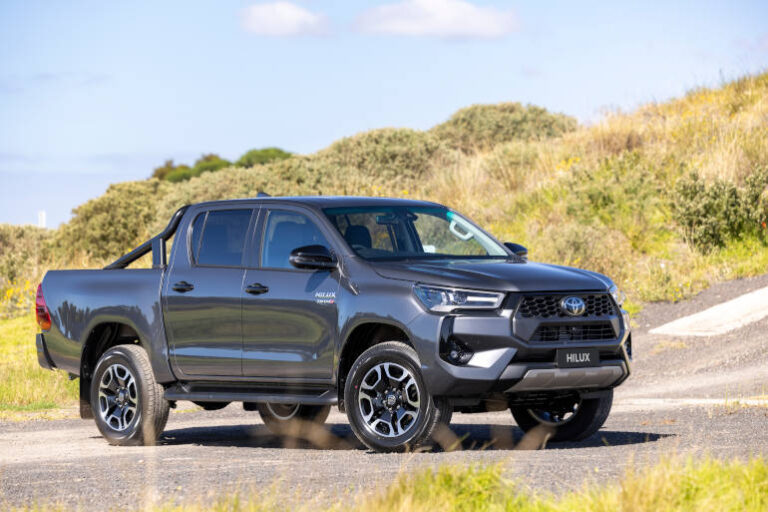
Today’s boom in 4×4 dual-cab utes feels eerily similar. The retail love affair seems unshakeable — until the next economic or regulatory shock makes operating heavy, high-emission vehicles less appealing or more expensive.
And that moment may not be far away. NVES penalties will make inefficient vehicles more costly for manufacturers — and eventually buyers.Road User Charges for EVs (and potentially broader RUC reforms) will reshape operating economics. Fuel price volatility always looms as a wildcard.
Will history repeat? Possibly. Maybe even probably.
If it does, fleets — with their disciplined Fit for Purpose approach — will bewell ahead of the curve, particularly in the second-hand market where demand for efficient, practical vehicles will spike again.