
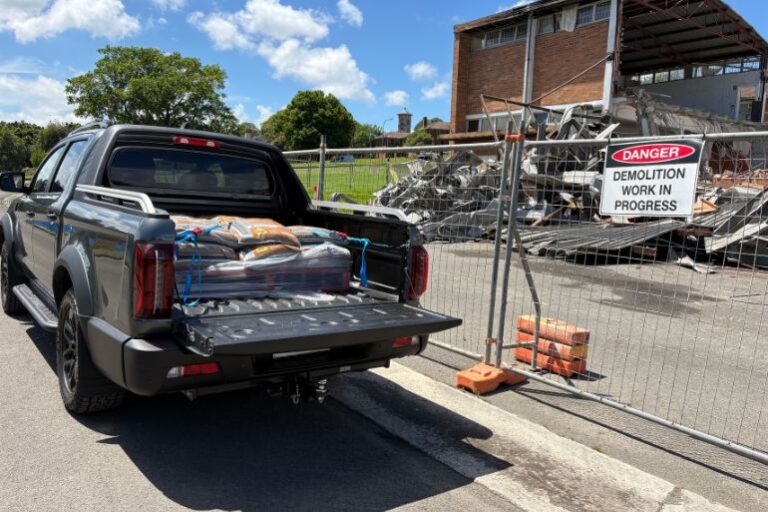
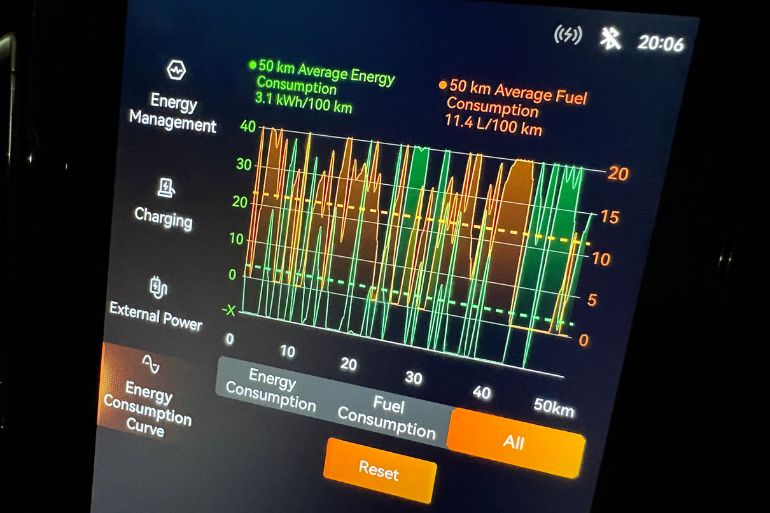
I put 600 kg of bagged sand in the back of the JAC Hunter because I wanted to know what happens when a plug-in hybrid ute has to do a day’s work. The answer depends on how much charge you start with. With charge in the battery, the Hunter is quiet, smooth and easy to drive. With the battery down near its reserve and the sand still in the tub, the trip computer showed 11.4 L/100 km.
That’s a long way from the brochure’s 1.6 L/100 km. It’s also the reason I’d put the Hunter on a fleet shortlist only after looking at where it will park at night, who will plug it in and what it will carry the next morning.
Whole-of-life cost: 59 cents per kilometre
The Hunter scored 8/10 for whole-of-life cost in our Fleet News Group assessment. We modelled it at 59 c/km over four years and 120,000 km, below our 67 c/km benchmark for a 4×4 dual-cab ute. Purchase price, estimated resale, servicing, tyres and energy costs all matter, but charging is the variable I’d spend the most time on.
If I were buying for a fleet, I’d model petrol and electricity against a week of actual routes before signing off. If I were shopping on a novated lease, I’d ask for a quote that reflects where I can charge and how often I expect to tow or carry a load.
Work space ergonomics: quiet on the road, fiddly on the screen
The best part of driving the Hunter unladen was how easily it pulled away. With charge in the battery, the electric motors give it a smooth, quiet response around town. The difference was particularly noticeable after driving the T9 diesel. The Hunter still feels like a ute underneath, but it’s a more relaxed place to spend time in traffic.
With the sand on board, the ride felt less bouncy around town. I could still feel the weight, and on a short freeway run I noticed more steering intervention from the lane-keeping system. I’d want drivers to try it with their usual tools, equipment and fit-out before making a call. My test was with a load in the tub; I didn’t tow with it.
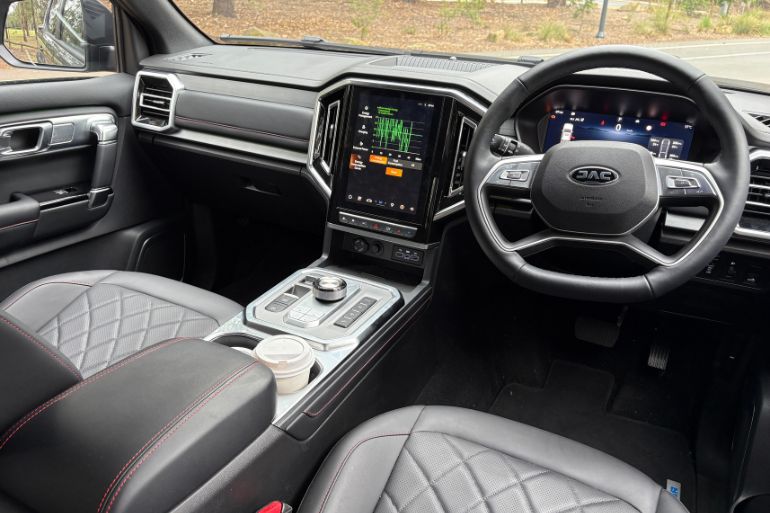
The cabin has useful touches: wireless phone charging, a front 12V socket and physical controls for temperature and fan speed. The infotainment system does the job, though I found myself restarting the radio and resetting the air conditioning more often than I’d like. And the two cup holders are really a bottle holder and a coffee holder. If you’re doing the morning coffee run for two, the passenger might have to fish theirs out. The Hunter scored 6.2/10 for work space ergonomics.
Car park or driveway appeal: it looks the part
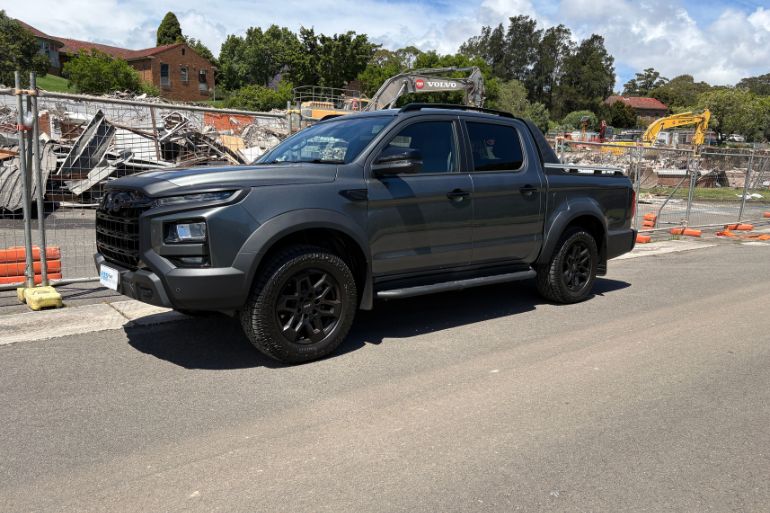
I like the Hunter’s styling. It has a strong front end and familiar dual-cab proportions, and it looks at home in a work car park or a driveway. I gave the styling 8/10, which contributed to an overall 7.2/10 for this section.
The bigger question for a fleet buyer is what it’ll be worth in four years. There’s less local resale history to draw on than there is for a HiLux or Ranger, so I’d run the numbers with a lower residual as well. That’s an easy way to see how much of the business case depends on the resale estimate holding up.
Sustainability and safety: the plug earns its keep
The Hunter’s five-star ANCAP rating carries a 2024 datestamp, and it scored 8.5/10 for sustainability and safety in our assessment. Its driver assistance features include lane-keeping assist and rear autonomous emergency braking. I’d give drivers a proper handover on how those systems behave, along with a run-through of the hybrid drive modes and battery reserve settings.
| JAC Hunter PHEV | Key specifications |
|---|---|
| Powertrain | 2.0-litre turbo petrol, two electric motors, 4×4 |
| Combined power | 360 kW |
| Battery | 31.2 kWh lithium iron phosphate (LFP) |
| Claimed electric range | Up to 100 km (NEDC) |
| Official combined fuel consumption | 1.6 L/100 km |
| Official combined CO₂ emissions | 38 g/km |
| AC charging | Up to 11 kW |
| Payload | 915 kg |
| Braked towing capacity | 3,500 kg |
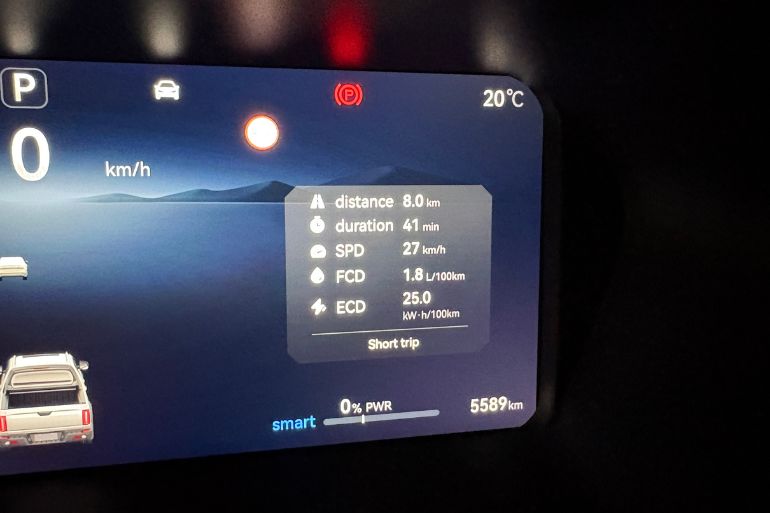
The official fuel figure is a laboratory result. On another stretch with the sand still in the tub and more battery charge available, I saw about 2 L/100 km alongside 27–28 kWh/100 km on the display. That second number matters: the ute was using less petrol because electricity was doing more of the work. If I were trialling one in a fleet, I’d track both figures from day one.
Manufacturer’s commitment to fleet: check the support where you work
JAC scored 4.8/10 for manufacturer commitment to fleet. Its smaller dealer network and fleet team held it back in our assessment, but there are useful ownership provisions: a seven-year warranty, capped-price servicing and roadside assistance, subject to terms. There’s also a loan vehicle program for eligible warranty repairs. I’d ask the local dealer how that works in practice, especially if the ute will be working away from a capital city.
The Hunter finished with a Fleet News Group Best Value Analysis score of 7.39/10. I’d trial it first with a crew that runs predictable routes, returns to a charger and can do its day’s work within the payload limits. For a crew that spends most of the week on the highway with a load and rarely gets near a plug, I’d keep the T9 diesel in the comparison. The 600 kg of sand made that decision easier to see than any brochure figure could.