
The summer break is often the only chance fleet managers get to pause, reset and think about the year ahead. So as you sit by the coast, the pool or the barbie, here’s something worth pondering: Cummins—the brand most of us instinctively link to diesel engines—is now shaping its future around a much wider mix of energy technologies.
At All-Energy Australia 2025, Cummins quietly but confidently outlined where it’s heading. And while diesel isn’t going anywhere, the company’s strategic direction sends a clear message to fleet buyers: the powertrain landscape is changing, and Cummins plans to be part of whatever comes next.
Still diesel… but not only diesel
If you operate heavy vehicles, generators or off-grid equipment, Cummins is probably stamped somewhere in your fleet. That won’t change. Diesel will remain essential for long-haul freight, remote work and heavy-duty tasks for years to come.
But as Lucio Kroll, Senior Director – New Energy Solutions, explained, Cummins’ future is bigger than one fuel:
“The battery energy storage system is well aligned at Cummins… it supports the Destination Zero strategy.”
Destination Zero is the company’s long-term pathway toward lower emissions across all product lines. To drive it forward, Cummins created a dedicated business unit—Accelera—focused entirely on new-energy tech like hydrogen, fuel cells and battery systems.
This isn’t a sudden pivot; it’s a steady expansion of what Cummins can offer.
Hybrid power is the new normal
Many fleet managers feel caught between operational reality and decarbonisation targets. That’s where Cummins sees its sweet spot: helping customers transition without ripping out everything that already works.
Craig Wilkins, Director & General Manager – Power Generation, put it simply:
“Some applications are still very diesel-driven… but customers also want emission solutions and the ability to integrate renewables.”
The company’s message is pragmatic: use diesel where you must, add storage or renewables where you can, and transition in stages rather than all at once.
It’s a refreshing dose of common sense in an industry full of all-or-nothing narratives.
Batteries join the Cummins family
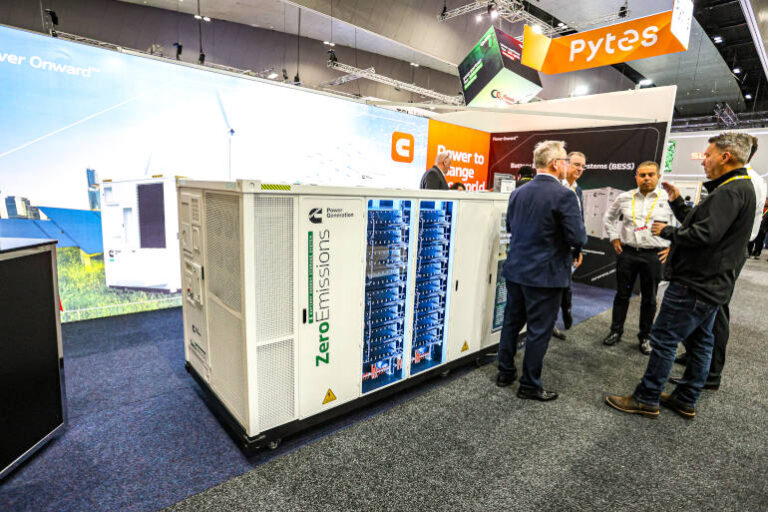
Cummins’ newest addition is its Battery Energy Storage System (BESS)—a modular, containerised battery unit ranging from 200 kWh to 2 MWh. It can:
- support solar at depots
- reduce genset run hours
- cut fuel costs during peak demand
- stabilise microgrids
- and boost resilience during outages
For fleets planning depot upgrades or preparing for electric vehicles, this sort of tech is becoming part of the conversation—whether we feel ready for it or not.
Lucio described the BESS as:
“A bridge technology to what’s going to come next.”
It’s not about going 100% electric overnight. It’s about setting up the building blocks.
What this means for fleet planning in 2026
As you map out next year’s priorities, a few things stand out:
- Multiple powertrains will coexist – Diesel remains essential, but hydrogen, batteries and hybrid systems are growing around it.
- Infrastructure matters more than ever – Depots, regional facilities and off-grid sites need smarter energy systems—not just new vehicles.
- Transition doesn’t have to be immediate – The Cummins strategy reinforces that gradual, staged decarbonisation is entirely valid.
- Reliability still rules
Craig’s reminder is worth noting:
“There’s plenty of people who can sell a battery… but managing it from concept through to service support is the unique part of what Cummins does.”
That continuity will be important to fleets juggling change with day-to-day operational pressures.
A summer takeaway for Fleet Managers
The new year will bring more technology choices, new policy pressures and rising expectations around emission reduction. But Cummins’ updated strategy is a useful guide: stay flexible, build capability step-by-step, and choose technologies that fit the job—not the hype.
For now, enjoy the break, let the ideas simmer, and get ready for a 2026 that will reshape the fleet landscape once again.