

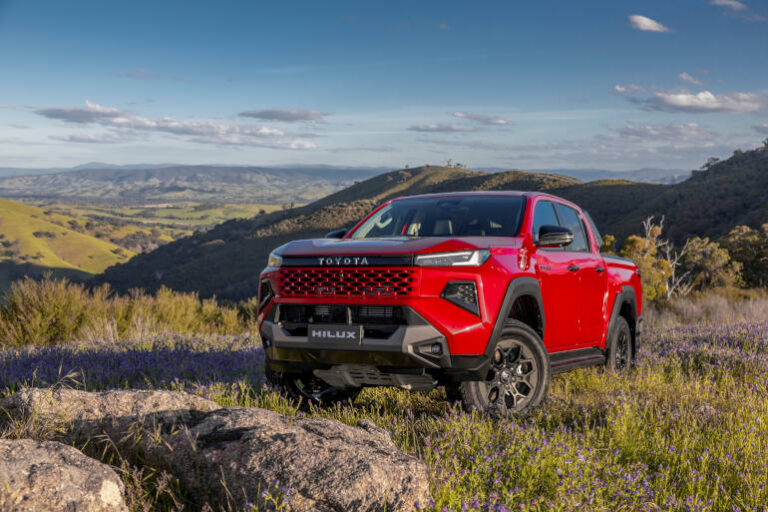
Battery electric vehicles accounted for almost one in four new vehicle sales in October 2026, as Toyota HiLux retained its position at the top of the sales charts and BYD finished second among brands in the FCAI figures.
The FCAI reported 103,325 new vehicle sales for October, up 3.8 per cent on the same month last year. Separately, the Electric Vehicle Council reported another 4,168 deliveries from Tesla and Polestar.
Across all sources, battery electric vehicles represented 23.1 per cent of sales, compared with 7.3 per cent a year earlier. NALSPA described the October BEV result as almost 25,000 vehicles, below September’s volume but still close to one in four purchases.
For fleet buyers, the results highlight a market offering a broader mix of suppliers and powertrains, while established utes continue to attract strong demand.
Toyota leads, BYD takes second
Toyota recorded 20,649 sales in the FCAI figures, ahead of BYD on 10,025 and Ford on 7,310.
Kia finished fourth with 5,801 sales, followed by Mazda with 5,730. MG, Hyundai, GWM, Geely and Chery completed the top ten.
China was the largest source of vehicles recorded through VFACTS, accounting for 36.3 per cent. Japan supplied 23.3 per cent, Thailand 17.9 per cent and South Korea 9.2 per cent.
FCAI chief executive Tony Weber said competition was giving buyers more options.
“Australia’s open and competitive market has put consumers in the driver’s seat, with more choice across brands, technologies, features and price points,” Mr Weber said.
HiLux and Ranger remain out front
Toyota HiLux led the models reported through VFACTS with 5,954 sales, followed by Ford Ranger on 4,841 and Toyota RAV4 on 4,718.
However, the separately reported Tesla Model Y recorded 3,105 deliveries, placing it ahead of the BYD Sealion 7, which recorded 2,524.
Combining the supplied FCAI and EVC model figures produces the following October ranking:
| Rank | Model | October sales |
|---|---|---|
| 1 | Toyota HiLux | 5,954 |
| 2 | Ford Ranger | 4,841 |
| 3 | Toyota RAV4 | 4,718 |
| 4 | Tesla Model Y | 3,105 |
| 5 | BYD Sealion 7 | 2,524 |
| 6 | Toyota Prado | 2,397 |
| 7 | Chery Tiggo 4 Pro | 2,178 |
| 8 | BYD Atto 2 | 1,943 |
| 9 | BYD Shark 6 | 1,843 |
| 10 | Geely EX5 | 1,789 |
The combined view matters for fleet buyers comparing market demand: Tesla and Polestar deliveries are reported separately by the EVC and need to be considered alongside the VFACTS results.
Petrol and diesel lose ground
Despite the growth in overall demand, petrol vehicle sales fell 35.9 per cent compared with October last year, while diesel sales declined 14.7 per cent.
The FCAI attributed strong BEV demand during 2026 to competition, instability in the Middle East, sustained higher fuel prices and Federal Government tax concessions.
“Consumers are making rational choices and are attracted to options that reduce their costs. Despite continuing pressure on household budgets and higher borrowing costs in 2026, the October result shows there is extraordinary resilience in new vehicle demand,” Mr Weber said.
He also called for charging infrastructure to keep pace.
“This increase in new vehicle demand, especially BEVs, must be supported by reliable and accessible charging infrastructure that keeps pace with demand.”
Running costs drive the electric conversation
Tesla delivered 4,050 vehicles in October, a 342 per cent increase on October 2025. Its Model 3 contributed 945 deliveries, compared with 181 a year earlier.
Combined Tesla and Polestar sales reached 47,554 for the year to October, up 86 per cent.
Electric Vehicle Council CEO Julie Delvecchio said household economics were influencing purchasing decisions.
“The Government’s Electric Car Discount and the New Vehicle Efficiency Standards are cost-of-living measures. They give Australians more choice, and when people have that choice, they’re choosing electric in record numbers.”
NALSPA’s September quarter novated leasing data also pointed to strong EV Discount uptake in outer suburban areas, with Werribee, Kellyville and Marsden Park leading its postcode ranking.
NALSPA CEO Rohan Martin said the benefits also extended to future used vehicle buyers.
“Every car that goes electric means less reliance on imported oil, less exposure to price shocks and lower emissions. Plus, today’s EV Discount cars become tomorrow’s affordable second-hand EVs for even more households.”
For fleet managers, October’s results reinforce the need to assess the expanding choice against actual operating requirements. Purchase price, energy costs, charging access, payload, towing and replacement timing all remain part of the decision, even as the market’s powertrain mix changes.