

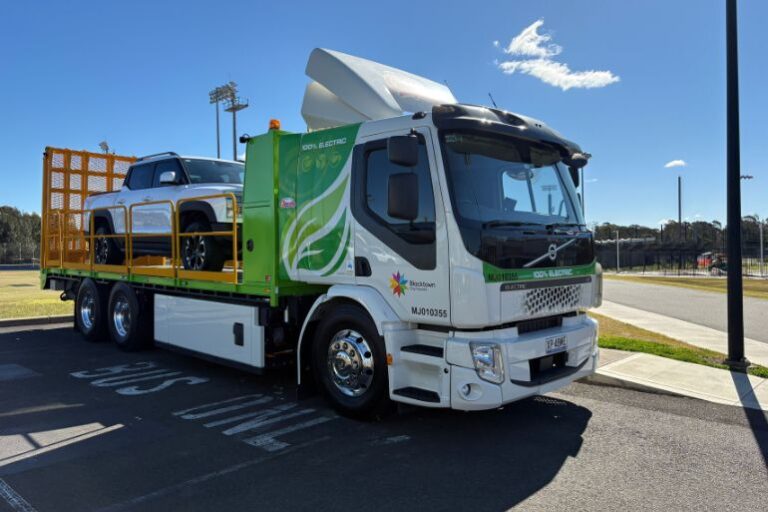
Fleet Managers under pressure to reduce emissions might be tempted to start looking through vehicle catalogues. Kris Nair from Blacktown City Council has different advice. Get the data right first.
Speaking during the Fleet News Group Awards finalists panel at Everything Electric Sydney, the Blacktown City Council representative argued that purchasing an electric car or truck should come near the end of an electrification project — not at the beginning.
Blacktown City Council is a finalist for Fleet Sustainability, Fleet Technology and Fleet of the Year in the Fleet News Group Awards program.
Its approach demonstrates how fleet data can turn an electrification target into an operational roadmap.

Don’t start with the vehicle
Nair’s advice to Fleet Managers returning to the office after Everything Electric was simple.
“Get the data right,” he said. “You don’t need to convert anything tomorrow, but at least have a roadmap. Understand where you want to get to.”
That roadmap requires significantly more information than annual kilometres. Fleet Managers need to understand how individual assets actually perform their work.
Gradient, loads and travel patterns
Nair highlighted road gradients, travel paths, vehicle loads and driver experience as some of the information fleets need to understand.
“There’s a lot of work to do,” he said. “Buying the car or the truck is the easiest part.”
The point becomes increasingly important as fleets begin electrifying commercial vehicles, trucks and specialist equipment.
A passenger vehicle travelling predictable metropolitan kilometres presents a very different energy requirement to a loaded truck operating on steep routes or a waste vehicle performing hundreds of stop-start movements.
The procurement decision needs to reflect that duty cycle.
Build the roadmap first
Nair said fleets should resist the pressure to immediately convert vehicles simply because an electrification target has been announced.
“There’s a lot of other water that needs to go under this bridge before you get to that journey of buying stuff,” he said. “So get the data right, get the roadmap right, and then buying is the last thing.”
It’s traditional fleet-management thinking applied to a new technology. Understand the requirement. Understand utilisation. Understand the operating environment. Model the costs. Then select the asset.
Electrification tests fleet maturity
There’s an important lesson here beyond electric vehicles.
An organisation with good fleet data can analyse where EVs will work, where charging will be required and which assets should be prioritised.
An organisation without that data may find electrification exposes gaps that were already present in its fleet-management practices.
The EV doesn’t create those problems. It simply makes them harder to ignore. For Fleet Managers being told to electrify, Nair’s message is a useful one: don’t start with the vehicle.
Start with the fleet.