
MG Motor Australia says its electric vehicle sales are accelerating as the company prepares to expand the choice of vehicles and powertrains available to Australian buyers.
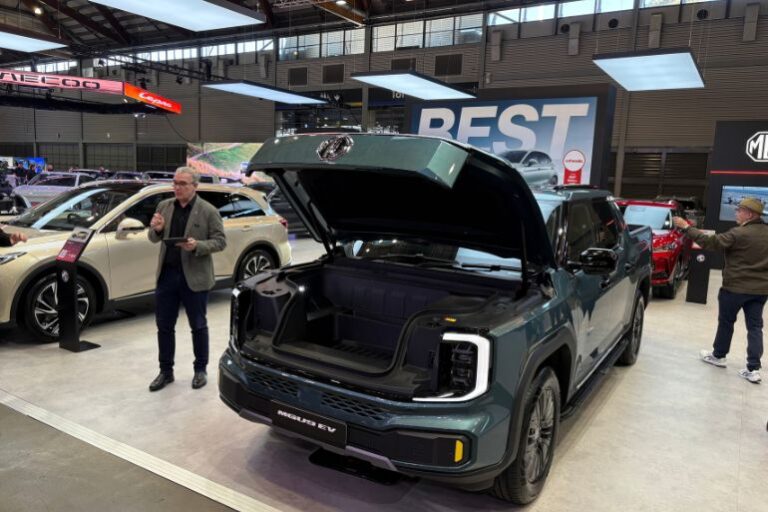
Speaking during the media tour at Everything Electric in Sydney, MG Motor Australia Marketing Director Dimitri Andreatidis said changing Australian buying patterns are being reflected in MG’s own results.
From July to August, MG’s electric vehicle sales increased by almost 42%.
The company is also seeing greater online interest in its electric models, with Andreatidis saying Google Trends data showed searches for the MG4 EV had increased by 90% year-on-year.

Australian buyers are changing
Andreatidis said the broader market is providing evidence that electric vehicles are becoming a mainstream consideration.
“In August, battery electric vehicles outsold both petrol and diesel vehicles in Australia for the very first time,” he said. “More than 27,000 battery electric vehicles were sold in a month, representing almost 25% of the new vehicle market.”
While monthly sales can fluctuate, Andreatidis sees the result as an important change in the way Australians are considering EVs.
“Electric vehicles are no longer a niche part of the market. Australians are considering them as a real option,” he said.
MG4 remains an important part of the EV range
The MG4 EV remains one of the brand’s key battery electric models and was prominently featured at Everything Electric.
MG is also expanding its electric SUV offering. The MGS5 EV has recently been refreshed, while the MGS6 EV adds another option in the SUV market.
At the other end of the spectrum sits the Cyberster, which Andreatidis described as the “embodiment of MG’s heritage as Morris Garages” and a combination of design, technology and performance.
Together, the models demonstrate the breadth MG is seeking as it expands beyond the segments where the brand has traditionally competed.
Petrol and hybrids remain part of the plan
MG’s expansion isn’t restricted to BEVs.
The company’s Australian strategy includes petrol, hybrid and plug-in hybrid vehicles, including the HS Super Hybrid.
“Some customers are ready to make the move to a battery electric vehicle today. Others may be looking at a hybrid or plug-in hybrid, and for some, petrol is still the right choice,” Andreatidis said.
For fleet buyers, that breadth could become increasingly important.
Organisations looking to reduce emissions don’t necessarily need to move every vehicle to the same technology at the same time. Different powertrains can potentially be allocated according to application, replacement cycle and access to charging.
Scale behind the expansion
MG’s Australian operation also has the scale of parent company SAIC Motor behind its product plans.
Andreatidis said this provides access to technology, engineering and manufacturing resources as the company expands its range.
“This gives us access to technology, engineering and production capability at a scale that allows us to bring new electric vehicles to Australia quickly and at a competitive price point,” he said.
Andreatidis said the next phase would be about more than increasing the number of models in showrooms.
“The next chapter for MG is not simply about adding more models; it’s about giving Australians more choice across vehicle types, price and powertrain, while continuing to build our capability in electrification,” he said.
For fleet buyers, that means MG’s relevance may increasingly extend beyond individual models. A broader range across multiple powertrains gives Fleet Managers more opportunity to assess the brand against different fleet applications as vehicles come up for replacement.