

Fleet organisations may operate different vehicles, provide different services and face very different operating conditions, but many fleet managers are trying to solve the same fundamental problems.
Reducing costs. Improving safety. Keeping vehicles on the road. Working effectively with suppliers. And finding better ways to measure performance.
It is one of the reasons DingGo was quick to support the inaugural Fleet News Group Awards, according to Co-Founder and Chief DingGo Shaun Janks.
DingGo is a sponsor of the awards program, which has been developed to recognise fleet organisations, suppliers and individuals demonstrating excellence across the industry.
When Fleet News Group first approached DingGo about supporting the program, Janks said the answer was straightforward.
“We said go for it because it was a simple answer for us, which was yes,” he said.
The reason goes beyond sponsorship.
Through DingGo’s accident management platform, Janks and his team work with fleet organisations trying to improve areas such as repair costs, vehicle downtime, incident rates and supplier performance.
That gives DingGo an opportunity to see examples of fleet best practice being developed across different organisations.
“So many fleets are trying to solve very similar problems,” Janks said. “Each business is unique. There’s a lot of similar problems.”
Different fleets, common challenges
Vehicle downtime is one obvious example.
“Show me a fleet that doesn’t want to improve their days off road, their downtime,” Janks said. “Show me a fleet that doesn’t want to reduce their costs.”
The solutions may be developed by individual organisations, but the lessons can often be valuable to the wider fleet community.
That is where Janks believes recognising excellence becomes important. DingGo works with fleets using its digital accident management platform to capture information about repairs, costs, drivers and downtime.
Some fleet managers are then taking that information further — benchmarking their performance, questioning existing processes and using the data to drive improvements.
Janks said DingGo’s account management team could immediately identify customers and individuals they believed were demonstrating strong fleet management practices when the awards were discussed.
“They listed a whole number of different individuals,” he said. “These people, these companies are great, and they’re pushing our software to its limits, and they’re pushing their businesses to limits of excellence.”

Showing the industry what best practice looks like
A core objective of the Fleet News Group Awards is to share the stories behind the finalists.
Rather than excellence remaining inside one organisation, the awards provide an opportunity for other fleet professionals to understand what their peers are doing and consider whether similar approaches could work in their own operations.
That philosophy aligns closely with Janks’ view of the industry.
DingGo sees organisations solving problems that are relevant to many other fleets, and Janks believes sharing those successes can help improve standards across the sector.
“We can lift the tide of the entire industry,” he said.
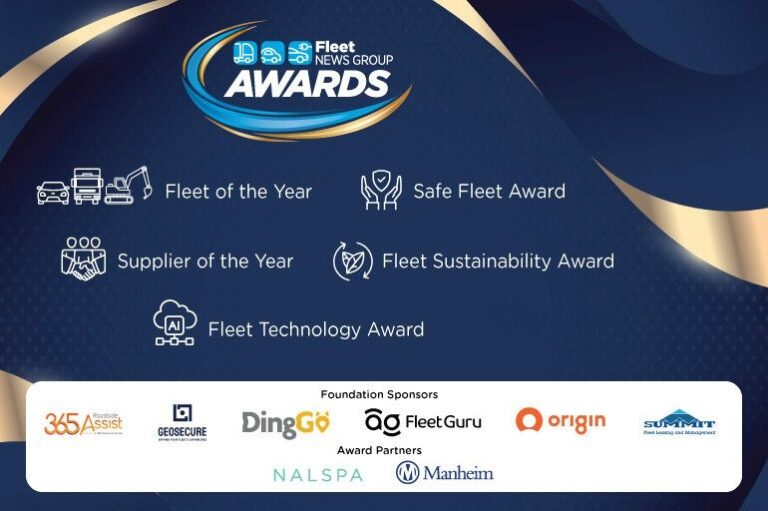
The Fleet News Group Awards include categories recognising fleet excellence across areas including safety, sustainability and technology, alongside broader fleet and supplier categories.
Those areas can often overlap.
Better accident data, for example, can help an organisation understand driver behaviour and reduce incidents. Improved repair allocation can reduce downtime. Greater visibility of supplier costs can improve financial performance.
Technology itself is not necessarily the achievement. What matters is how fleet managers use the tools and information available to deliver better outcomes.
Janks said it is the engaged fleet managers who often generate the greatest improvements.
“The more they use the data, the more they push us, and then the better their performances get,” he said.

Industry voting adds another layer of recognition
The Fleet News Group Awards program gives the wider industry an opportunity to participate in recognising excellence through voting.
For Janks, that peer recognition is another important part of the program.
The finalists provide examples of organisations and people doing things well, while the voting process asks others working in the industry to acknowledge that work.
“We should be getting around everyone that’s doing great things in our industry,” Janks said. “It makes us all better.”
That is also why DingGo sees its involvement in the Fleet News Group Awards as a natural fit.
The company wants fleets to use data to understand their current position, identify opportunities for improvement and ultimately achieve better outcomes.
The awards give the industry a platform to recognise the organisations already doing exactly that.
As Janks explained, seeing what others have achieved can help raise expectations across the entire fleet community.
And in an industry where many organisations are trying to solve the same problems, sharing and recognising best practice gives everyone an opportunity to improve.