
Commercial fleet buyers have more choice than they have had for years, particularly across vans, utes and electrified vehicles.
Ford Australia’s response is to compete harder on the vehicle itself while arguing that the infrastructure behind the product should also carry weight when fleets evaluate suppliers.
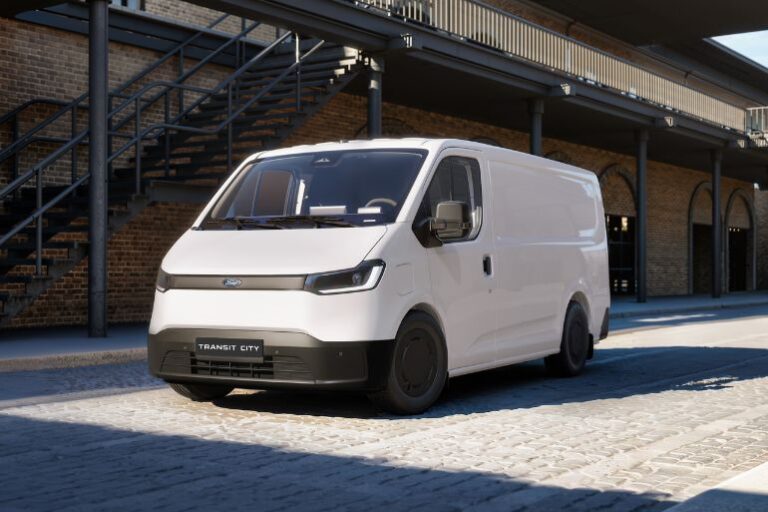
That strategy was evident at Ford Uncovered, where the company introduced the JMC-linked Transit City, launched Ford Pro in Australia and added a conditional seven-year unlimited-kilometre warranty across eligible vehicles.
For Fleet Managers and procurement teams, Ford’s message is that the tender comparison should extend well beyond the badge on the grille.

Ford responds to new competition
The Transit City demonstrates Ford’s willingness to look outside its traditional manufacturing base as it works to compete with the growing number of brands entering the Australian commercial vehicle market.
Developed with JMC in China and Ford of Europe teams, the electric van is aimed squarely at urban commercial operators.
Ford Australia General Manager, Product Marketing Karen Larkin said the company is looking beyond simply protecting its existing position.
“We want to be competitive. We want to grow our share and be relevant.”
It creates an interesting shift for fleet procurement.
Long-established manufacturers can now source vehicles and technology from many of the same regions as emerging brands. That makes assumptions based on country of origin increasingly less useful.
Instead, fleets need to assess the finished vehicle, its suitability for the task, acquisition cost and the support structure sitting behind it.
Putting a value on the support network
The second part of Ford’s argument is the infrastructure supporting the vehicle once it enters service.
Ford points to more than 220 service outlets, mobile servicing, vehicle conversion partners, its Uptime Command Centre and the expanded warranty offer as parts of the fleet proposition.
Ford Customer Service Division Director Greg Davidson said the service network represented something that could not be created immediately by a new entrant.
“You can’t ship trust in on the next container. You have to do the hard work to physically build that trust.”
That argument is particularly relevant for fleets operating in regional areas, managing specialist vehicles or running assets for long operating hours.
The value, however, still needs to be demonstrated.
A large dealer network only delivers a fleet benefit when technicians, parts and workshop capacity are available when vehicles need them. Fleet Managers therefore need to measure service accessibility and downtime performance rather than simply counting locations on a map.
Brand heritage is not enough
Ford’s recent moves also suggest the company understands that a support network cannot indefinitely compensate for an uncompetitive vehicle proposition.
Ranger offers have become stronger, pricing on electrified Transit Custom models is being reduced and Transit City has been positioned to compete directly for value-conscious commercial buyers.
Ford Australia and New Zealand President and CEO Fadi Mawal said the company needs to adapt as the market changes.
“The environments change, and we need to make sure that we’re staying relevant and competitive.”
For fleet buyers, that competition should ultimately be positive.
It creates pressure on established manufacturers to sharpen pricing, improve specification and strengthen their fleet support while forcing newer brands to demonstrate that they can provide the service, parts and uptime support required over a commercial vehicle’s working life.
Look beyond established versus new
The better procurement question may therefore no longer be whether a fleet should choose an established manufacturer or an emerging brand.
Purchase price, warranty coverage, servicing access, conversion capability, telematics, vehicle uptime and expected residual values can all be given a value during a tender evaluation.
Those factors provide a more useful comparison than assuming either an established badge or a new entrant automatically represents the better choice.
Ford’s proposition is that a globally competitive vehicle range combined with an established support network can provide fleets with both sides of that equation.
The increasingly competitive Australian fleet market will determine how much value buyers ultimately place on that combination.