
Ford Australia is taking a deliberate approach to growing Ranger sales in 2026, using a broader range of variants, powertrains and price points to attract new customers without compromising the model’s strong position in the market.
Speaking at the launch of the MY26.5 Ford Ranger and Everest, Ford Australia Marketing Director Ambrose Henderson said the strategy is focused on increasing customer choice while maintaining the attributes that have made Ranger Australia’s best-selling vehicle for the past three years.
“As I said, incredibly proud that Ranger has been the number one selling vehicle in Australia for three years in a row,” Henderson said.
“So far this year, year to date, we are ahead of the other competitors and have a decent lead of more than 2,000 units versus the other folks in the market.”
For fleet buyers, Ford’s approach is significant because strong new vehicle sales supported by a broad customer base typically contribute to healthy used vehicle demand and stronger residual values.

Rather than relying on a single flagship model, Ford is targeting multiple customer segments through an expanded Ranger line-up.
“Today we’re here to talk about Ranger and Everest with our model year 26.5 updates,” Henderson said.
“We are absolutely here to take what has been a winning formula, a class-leading and market-leading formula, and take that to the next level, and the way that we’re doing that is in two key areas, and that is more choice for customers and even greater value.”
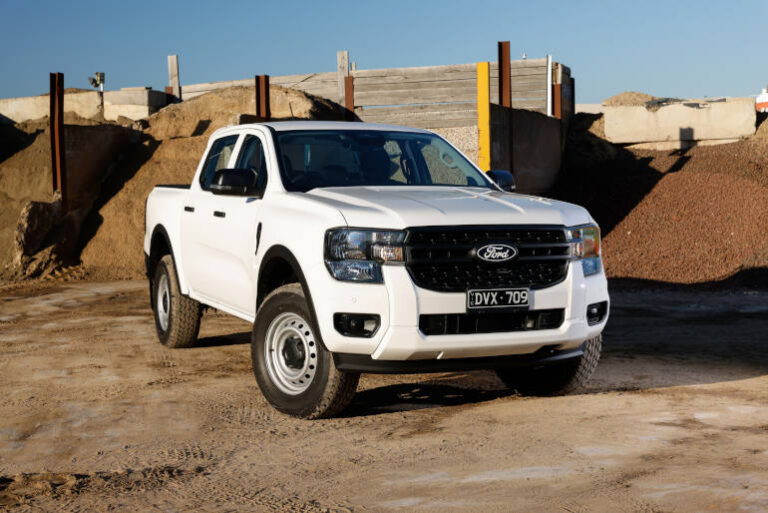
A key part of that strategy is introducing new entry-level variants designed to attract buyers who may previously have been priced out of the Ranger market.
“To help absorb some of that shock from the current fuel prices, the other way that we’re helping customers get into our brand at a lower price level is what we’re introducing on our new 26.5 model year variants,” Henderson said.
“We have a new entry series, broadening our range and allowing customers to buy into Ranger and Everest at lower price points.”
At the same time, Ford continues to expand customer choice at the upper end of the market through special editions, premium variants and additional powertrain options.
“We launch a range of new special editions,” Henderson said.
“We continue to offer the greatest range of engine options of anyone in either of these two segments.”
That includes the recently launched Ranger Plug-in Hybrid, which has experienced strong demand in recent months, alongside the availability of Ford’s V6 diesel engine across a broader range of variants.
“Customers have choice, no matter what they’re buying into, what series they’re buying in, what price point they’re at, they have a choice of what engine best suits their needs,” Henderson said.
For fleet managers, this diversified sales strategy is important because it helps Ranger appeal to a wider cross-section of buyers, including private customers, tradies, recreational users, government fleets and corporate operators.
A broader buyer base generally creates stronger demand in the used vehicle market, which can help support residual values over time. Residual value performance remains one of the most important factors in whole-of-life cost calculations, particularly for organisations operating leased fleets or vehicles with planned replacement cycles.
Ford is also strengthening its position in specialist fleet segments. Henderson highlighted the success of Ranger Super Duty, which was introduced to meet the needs of customers requiring greater towing, payload and durability.
“In fact, for the first quarter of this year, the first quarter that Ranger Super Duty was on sale, it outsold LC70,” he said.
The arrival of Ranger Super Duty pick-up and XLT variants is expected to further broaden its appeal and create additional demand in sectors such as construction, utilities, mining and government operations.
Combined with entry-level models, mainstream variants, premium grades, PHEV technology and Super Duty workhorses, Ford’s strategy is designed to ensure there is a Ranger for almost every buyer.
For fleet operators, that market coverage provides confidence that the Ranger’s popularity is likely to remain strong, supporting future resale values and reinforcing its position as one of Australia’s safest choices from a whole-of-life cost perspective.