

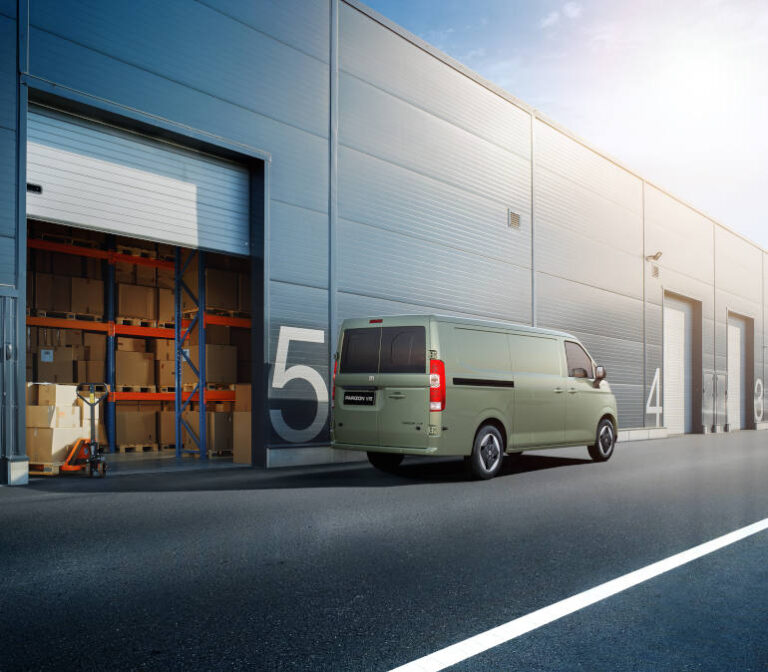
For decades, the ute has been the default choice for Australian fleets. It’s been the Swiss Army knife of the worksite—part tool carrier, part people mover, part weekend escape pod. But as the industry pivots toward decarbonisation and tighter operational discipline, the conversation is shifting.
Not dramatically. Not emotionally. Just pragmatically.
The reality is that vans—particularly electric and hybrid vans—are increasingly delivering better outcomes for fleet managers measured on emissions, safety, utilisation, and whole-of-life cost. And in a sector where decisions are meant to be evidence-based rather than preference-based, that matters.

The Ute Has Reached Its High-Water Mark
The phrase “peak ute” isn’t hyperbole. It reflects a structural shift in how fleets are being asked to perform.
Toyota has previously observed that the market has likely reached peak ute—an acknowledgement from within the industry that growth in this segment cannot continue indefinitely. Not because utes are failing, but because the job requirements are changing.
Historically, the single-cab one-tonne ute built by Ford Motor Company and Holden had a simple mission: carry a load from A to B.
That clarity of purpose made them effective tools for tradespeople. Over time, however, the modern dual-cab utility evolved into something else—part work vehicle, part family car, part lifestyle accessory. The payload didn’t necessarily increase, but the expectations certainly did.
From a fleet governance perspective, that evolution has introduced complexity. Vehicles are being selected for comfort, image, or familiarity rather than strict fit-for-purpose requirements. In asset management terms, that’s where inefficiency begins.
The Decarbonisation Equation Is Favouring Vans
Fleet managers are now under pressure to deliver measurable emissions reductions, not just intentions. That changes procurement behaviour.
Electric and hybrid vans are gaining traction because they align naturally with operational patterns—predictable routes, urban driving, and depot-based charging. These are precisely the conditions where electrification performs best.
Models such as the Ford E-Transit, Mercedes-Benz eSprinter, and the upcoming Hyundai Staria Load Electric illustrate how quickly the segment is evolving.
They offer several structural advantages:
- Lower tailpipe emissions immediately
- Reduced energy and maintenance costs
- Improved cargo security and safety
- Better aerodynamic efficiency
- Simpler integration into depot charging models
None of these are theoretical benefits. They show up in operational data—particularly in urban and service-based fleets where stop-start driving dominates.
This is why, despite the attention given to electric utes, vans are quietly becoming the first practical step toward large-scale fleet electrification.
Off-Road Capability Still Matters—But It’s a Minority Use Case
There will always be applications that require off-road capability. Mining, utilities, and regional infrastructure work demand vehicles that can operate in challenging environments.
The key question is not whether four-wheel drive is necessary. It’s whether a dual-cab ute is the most appropriate configuration.
In many cases, the answer is no.
A significant proportion of fleet vehicles spend the majority of their time on sealed roads, carrying tools or equipment rather than towing heavy loads or traversing rough terrain. When utilisation data is analysed objectively, true off-road requirements often represent a small fraction of operating hours.
That’s where disciplined fleet management comes into play.
Fit-for-purpose selection is not about tradition or driver preference. It’s about matching the asset to the task.
Vans Solve Problems That Utes Create
From a safety and productivity standpoint, vans address several persistent challenges associated with utes.
- Cargo containment – Loose equipment in an open tray introduces safety risks and compliance issues. Enclosed vans eliminate that exposure.
- Load security – Tools and materials are protected from theft and weather.
- Driver safety – Lower loading heights and better ergonomics reduce injury risk.
- Operational efficiency – Purpose-built storage systems improve workflow and reduce downtime.
These factors rarely dominate procurement discussions, but they have a measurable impact on total cost of ownership and risk management.
In the language of asset management, vans improve utilisation and reduce lifecycle costs.
Infrastructure Challenges Slowed the Transition—Not the Technology
Several years ago, many analysts—including those within the Fleet News Group community—expected commercial vehicles to lead the electrification transition. The logic was straightforward: high utilisation and predictable routes translate into strong financial returns from electrification.
That logic still holds. What changed was the pace of infrastructure development and organisational readiness.
Two barriers emerged:
- Charging infrastructure planning lagged behind vehicle availability
- Fleet management maturity levels varied significantly across organisations
At the same time, new passenger vehicles—particularly from Chinese manufacturers—entered the market with competitive pricing and strong feature sets. That shift captured consumer attention while commercial fleet transitions progressed more slowly.
The result was not a failure of electrification. It was a delay in execution.
The Cultural Challenge: Preference Versus Performance
One of the more subtle barriers to change is cultural rather than technical.
Operators often develop strong preferences for particular vehicle types. Those preferences are understandable—they reflect experience, comfort, and identity. But in a modern fleet environment, decisions need to be guided by performance metrics rather than habit.
This is especially important as organisations commit to emissions targets and sustainability reporting.
Vehicle selection is no longer just an operational decision. It’s a governance decision. And governance requires evidence.
The Strategic Role of Vans in Fleet Decarbonisation
For many organisations, the fastest path to measurable emissions reduction is not replacing every vehicle with an electric equivalent. It’s replacing the right vehicles first.
Urban service fleets, delivery operations, and maintenance teams are prime candidates for electrification. These are precisely the roles where vans dominate.
By transitioning these segments early, fleets can achieve:
- Rapid emissions reductions
- Lower operating costs
- Improved reliability
- Clear progress toward sustainability targets
This staged approach reduces risk while delivering tangible results. It also builds organisational confidence in new technology.
Calling Time on the Default Ute
None of this suggests that the ute is obsolete. It remains an essential tool in many environments. But the era of the automatic dual-cab purchase is coming to an end.
Good fleet management requires discipline—choosing the vehicle that best supports operational objectives, not the one that best fits tradition.
In that context, vans are not replacing utes out of fashion or ideology. They are replacing them because they perform better against the metrics that matter: safety, efficiency, emissions, and cost.
The shift will not happen overnight. But the direction is becoming clear. The modern fleet is moving toward vehicles designed for specific tasks rather than general use.
And increasingly, that vehicle looks less like a ute—and more like a van.