
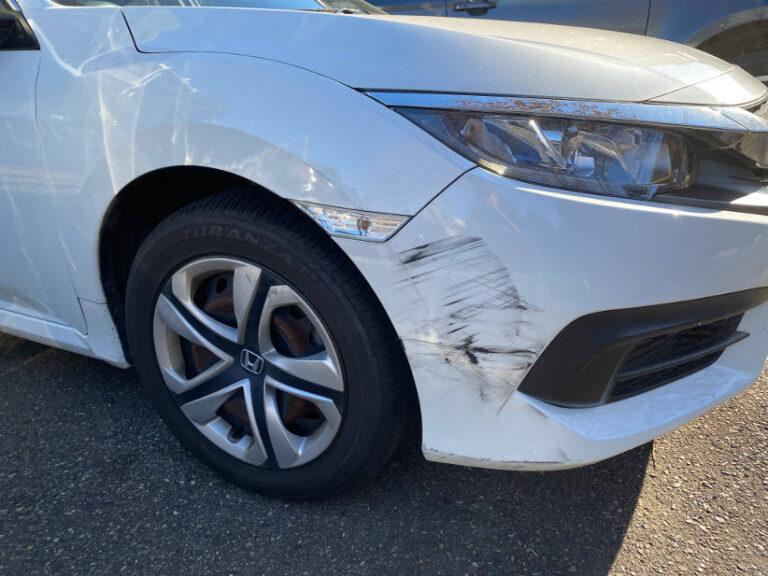
In many fleet environments, minor damage is treated as an inconvenience rather than a measurable cost. A scratched door, dented bumper or scuffed wheel rarely takes a vehicle off the road, so it is often deferred or handled informally. Over time, however, these small incidents can become one of the most underestimated cost drivers in a fleet.
According to Shaun Janks, Co-Founder and Chief DingGo at DingGo, minor damage is a persistent blind spot because it frequently falls outside structured reporting and cost controls.
“Minor damage is rarely minor by the time a vehicle exits the fleet,” Janks says. “The cost hasn’t disappeared — it’s just been delayed.”
In many organisations, incident reporting is closely tied to insurance claims. If the damage does not exceed the excess or require immediate repair, it may never be formally logged. While this can feel efficient in the short term, it undermines long-term cost visibility.
“If it’s not recorded, it doesn’t show up in your data,” Janks explains. “And if it’s not in your data, you can’t manage it properly.”
The financial consequences often surface at the end of a vehicle’s lifecycle. When assets are returned at lease end or prepared for resale, accumulated cosmetic and panel damage can result in unexpected reconditioning costs or reduced residual values.
“We regularly see fleets surprised by lease-end bills,” Janks says. “When you trace it back, it’s typically years of small, unmanaged incidents coming together at once.”
Beyond direct financial impact, visible wear and tear can affect brand perception. For customer-facing fleets, vehicle condition reflects organisational standards. Even mechanically sound vehicles can project the wrong message if cosmetic damage is left unattended.
Minor damage also creates governance challenges, particularly in shared or pool fleets. If incidents are not logged when they occur, determining timing and responsibility becomes difficult.
“In shared fleets, unreported damage quickly becomes a governance issue,” Janks says. “If no one knows when it happened, you lose the ability to manage accountability fairly.”
There is also a safety dimension. While many minor incidents appear cosmetic, some can conceal deeper issues — misaligned panels, sensor disruptions or structural impacts — that may worsen if left unchecked.
Janks is clear that the solution is not to repair every scratch immediately, but to consistently record every incident.
“Logging an incident doesn’t mean you have to fix it straight away,” he says. “It means you have visibility and can make a deliberate decision.”
When fleets capture all damage — regardless of severity — they build a more accurate picture of vehicle condition and repair frequency over time. That insight enables better budgeting, smarter repair timing and fewer end-of-life surprises.
“Once fleets start recording minor damage properly, they’re often surprised at how common it is,” Janks says. “That awareness alone can change behaviour.”
Digitised reporting systems play a central role. Manual processes, paper forms and informal emails discourage reporting, particularly for low-level incidents. Digital tools reduce friction and make it easier for drivers to report damage promptly and accurately.
“When reporting is simple, compliance improves,” Janks says. “That’s when data quality starts to lift.”
Better minor damage data also informs procurement decisions. Vehicles that appear similar on paper can have very different repair profiles once deployed in real-world conditions.
“Two vehicles may look comparable at purchase,” Janks notes, “but their repair frequency and severity over time can differ significantly. Minor damage data helps reveal that difference.”
As vehicle costs rise and governance expectations tighten, overlooking minor damage is increasingly difficult to justify. What once seemed inconsequential can quietly erode margins, residual value and operational control.
“Minor damage isn’t just cosmetic,” Janks concludes. “It’s a cost issue, a data issue and, ultimately, a fleet maturity issue.”
For fleets aiming to improve oversight, manage lifecycle costs and maintain professional standards, the discipline is straightforward: record every incident. With consistent visibility, minor damage shifts from a hidden cost to a manageable one.
- Fleet management isn’t just registrations and fuel cards anymore
 Fleet management is evolving from an administrative function into a strategic role, but some organisations are still struggling to recognise the value it can deliver. Speaking at MOVE Australia 2026, Paul Hopwood, Team Leader – Supply Chain & Logistics at Icon Water, explained how traditional fleet management structures have contributed to poor procurement decisions, underutilised
- What SG Fleet is buying: FleetPartners closes FY26 with booming novated bookFleetPartners has released what could be its final full-year result as an ASX-listed company, providing a detailed look at the business SG Fleet is preparing to acquire. And behind the headline financial numbers is an interesting change in the shape of the fleet. FleetPartners finished FY26 with 67,800 funded vehicles under management or financed, up 8
- Geotab helps fleets find missing equipmentGeotab has launched GO Anywhere Plus in Australia and New Zealand, giving fleet managers greater visibility over trailers, machinery and other valuable equipment that can be difficult to track across multiple locations. For organisations managing vehicles, trailers and equipment across depots, construction sites and customer locations, knowing where every asset is located can be a
- QFleet celebrates 35 years of keeping Queensland movingQFleet is celebrating 35 years of supporting Queensland Government services, growing into a centralised fleet operation managing more than 11,000 vehicles across the state. Established on 1 July 1991, the government’s fleet management business provides vehicle leasing, fleet management and advisory services to agencies whose work depends on reliable transport. Its vehicles support community health
- The workplace details that matter in Hino’s 300 SeriesHino’s updated Euro 6 300 Series brings changes to its engine, transmission and lighting, while retaining a cab designed around the practical demands of a working day. For fleet managers, that driving environment deserves attention alongside payload and towing capacity. Drivers need to enter and exit safely, find a comfortable seating position, reach controls and