

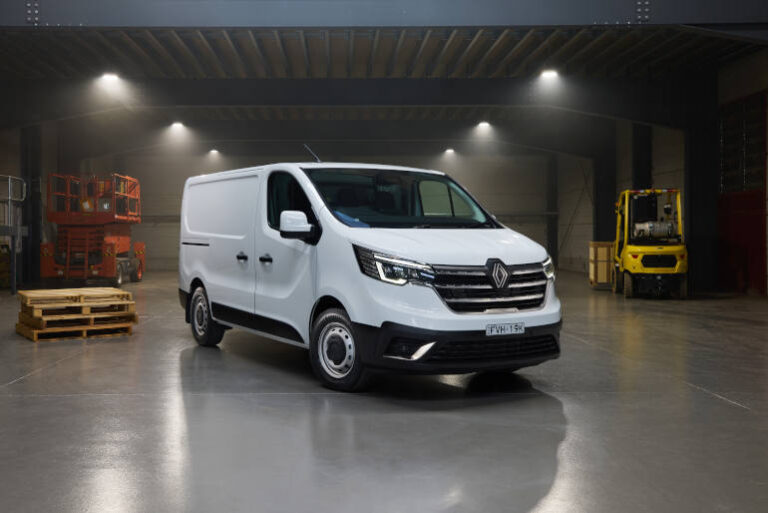
The MY26 Renault Trafic arrives with meaningful updates that will resonate with fleet buyers — improved efficiency, stronger towing, upgraded safety tech and a smoother automatic transmission.
Nine-speed automatic replaces EDC
The headline change is the move to a new nine-speed torque converter automatic, replacing the previous six-speed dual-clutch unit. The shift is aimed at delivering smoother gear changes and improved drivability in stop-start urban conditions — a key consideration for metro-based service fleets.
Power continues from the 2.0-litre four-cylinder diesel, now upgraded to Euro 6 emissions standards while maintaining outputs of 125kW and 380Nm.
Automatic variants now carry a combined fuel consumption rating of 6.2L/100km (ADR 82/01), down from 6.5L/100km. Manual variants are rated at 7.2L/100km.
2500kg towing across the range
Towing capacity has been increased to 2500kg across the range — a significant jump from the previous automatic variants, which were limited to 1630kg (LWB) and 1680kg (SWB). For trades and service operators, that added flexibility could remove the need for a heavier vehicle in some applications.
Practical upgrades for working fleets
Renault has doubled down on functionality inside the cabin:
- Factory-fitted steel bulkhead with glazed window now standard (except Crew Pro)
- Fold-down middle seat workstation with document holder
- Hidden laptop storage compartment
- Under-seat storage on Premium variants
- Ability to carry long materials up to 3.9m (LWB, seat not in use)
Premium variants also include a wide-view mirror in the passenger sun visor and bi-LED reflector-style headlights.
Safety and ADAS enhancements
The MY26 Trafic retains the safety upgrades that earned it an ANCAP Gold Star Commercial Van rating. Key features include:
- Adaptive cruise control (Premium and Lifestyle)
- Autonomous emergency braking with pedestrian and cyclist detection
- Driver attention monitor and drowsiness alert
- Tyre pressure monitoring
- QR rescue code for first responders
- Dedicated ADAS button with “perso” customisation mode
Long service intervals of 30,000km or 12 months, combined with an 80-litre fuel tank, further reinforce its low-downtime positioning.
.