

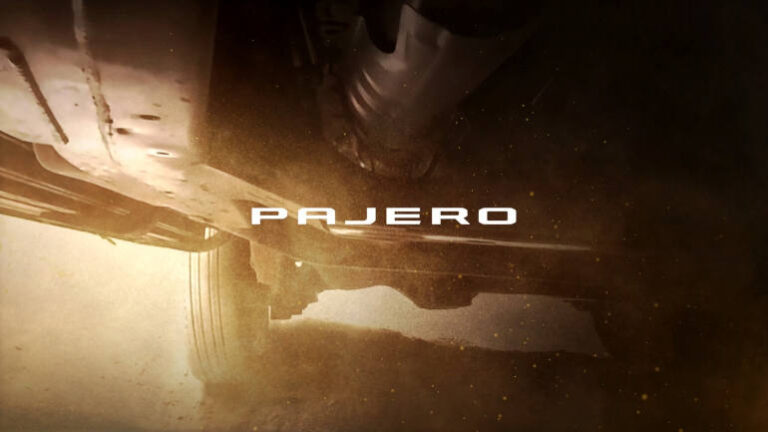
Mitsubishi Motors has revealed more details about the all-new Pajero, confirming the next-generation SUV will return to its rugged roots with a ladder-frame chassis, advanced suspension and the company’s Super-All Wheel Control system.
The new Pajero is scheduled to make its world premiere in autumn 2026, with Mitsubishi promising a combination of genuine off-road capability and improved comfort for everyday and long-distance driving.
It is an important confirmation for the iconic nameplate, with Mitsubishi positioning the new model as a serious cross-country SUV rather than simply another road-focused large SUV.
At the heart of the new Pajero will be what Mitsubishi describes as a “highly robust and durable” ladder frame.
The chassis will be paired with a suspension system designed to maintain strong road holding across difficult terrain, including surfaces with large bumps and significant impacts. Mitsubishi says the same suspension architecture has also been developed to reduce unwanted body movement and vibration when travelling on rough or uneven roads.
That balance between capability and comfort will be important if the new Pajero is to appeal to buyers wanting a vehicle capable of towing, touring and travelling on unsealed roads while remaining comfortable during normal daily driving.
Mitsubishi says reducing vibration and body movement should also help minimise driver and passenger fatigue over longer distances.
Another key part of the Pajero package will be Mitsubishi’s Super-All Wheel Control, or S-AWC, technology.
S-AWC integrates vehicle dynamics systems to optimise handling, off-road performance and vehicle stability across different driving conditions.
The technology draws on Mitsubishi’s long history of developing four-wheel-drive and all-wheel-control systems, including experience gained through motorsport and rally competition. Mitsubishi also continues to use its all-wheel-drive expertise across vehicles including the Outlander PHEV and Triton.
While Mitsubishi has now confirmed some of the Pajero’s fundamental engineering, important details including powertrain options, dimensions, towing capacity, interior specification and market availability have not yet been announced.
The company has also released new teaser material under the theme, “The Pajero is ready to write its next chapter,”with the latest content focusing on the suspension and chassis technology underpinning the vehicle.
The return of the Pajero name will give Mitsubishi another prominent off-road model alongside the Triton and provide buyers with an alternative in the increasingly competitive ladder-frame SUV market.
For fleet operators, government agencies and organisations operating vehicles in regional or remote environments, the combination of a durable chassis, four-wheel-drive technology and improved long-distance comfort could make the new Pajero particularly relevant.
Much will depend on the final specification, pricing, payload, towing performance and whole-of-life operating costs when the production model is revealed later in 2026.