
Fleet Managers have never had more data at their fingertips, but according to Jon Bates, Technology and Business Systems Manager at Summit Fleet Leasing and Management, that has never been the real challenge.
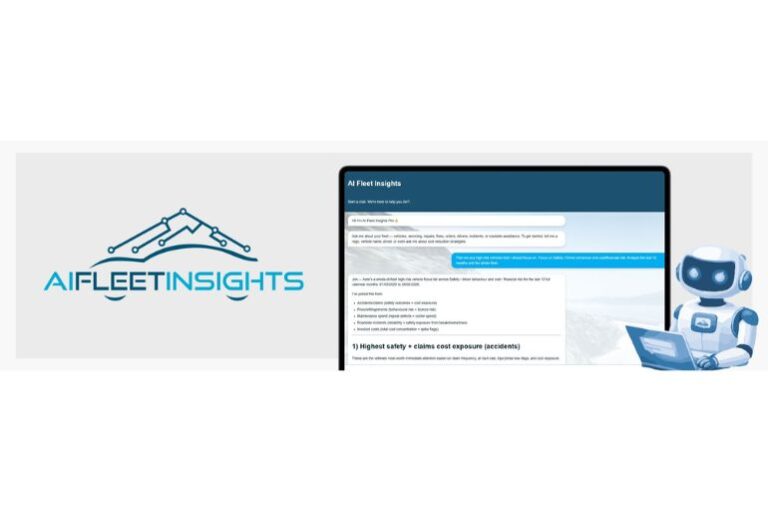
Presenting AI Fleet Insights at the AfMA Fleet Conference, Bates demonstrated how artificial intelligence can analyse thousands of fleet transactions, identify opportunities for improvement and generate executive reports in minutes using nothing more than a natural language prompt.
“The real challenge isn’t just collecting the data,” Bates told delegates. “Most fleet teams have got more than enough data at their fingertips. The real challenge is gaining meaning from that data, so it can inform insights, and it can inform better decision making.”

For decades, Fleet Managers have relied on spreadsheets, dashboards and business intelligence tools to understand maintenance costs, utilisation, fuel consumption and risk. Bates believes AI fundamentally changes that process.
“Historically, that’s required reports, spreadsheets, dashboards, business intelligence platforms, if you’re lucky, data analysts, and a whole lot of manual interpretation to understand what that means,” he said.
“AI gives us a new way to interrogate data. We can put in a natural language prompt and get meaningful insights back out of a platform in minutes rather than hours or days through traditional reporting methods.”
A Data Analyst in a Box
Rather than learning complicated reporting software, users simply ask questions such as “How can I improve fleet efficiency?” or “Generate a sustainability report for the last three months.”
Bates described the technology as “effectively a data analyst in a box.”
“It will go away, run reports, and give you the insights that you need to make better decisions.”
The system then ranks opportunities by potential savings, operational risk and implementation effort, providing fleet managers with a prioritised action list instead of raw data.
Among the recommendations demonstrated were reducing repeat maintenance costs, improving fuel efficiency, increasing odometer compliance and identifying under-utilised vehicles that could be reallocated.
One example suggested swapping vehicles between drivers to better balance kilometre accumulation and maximise asset utilisation.
“If a vehicle is running under the kilometres that it’s expected to, swapping that out with a vehicle that’s running at higher kilometres really optimises the utilisation of that vehicle,” Bates explained.
Sustainability Reporting Without the Manual Work
Environmental reporting is another area where Bates believes AI can dramatically reduce administrative effort.
During the demonstration, a simple prompt asked the system to analyse fleet sustainability performance, generate an Excel spreadsheet of carbon emissions and provide a summary report.
Within moments, the platform had produced an email containing thousands of fuel transactions, emissions factors and estimated CO₂ emissions for every transaction.
“From simply a natural language prompt, you can ask for any report that you want generated, and it will go away and generate it for you,” Bates said.
The automatically generated spreadsheets include filters and calculations that allow fleet teams to continue analysing the information without manually preparing the underlying data.
Connecting Risk Signals
The AI platform also demonstrated its ability to combine multiple data sources to identify fleet risks that might otherwise go unnoticed.
By correlating infringement history, maintenance records, roadside events and compliance data, the system automatically generated an executive risk report highlighting high-risk vehicles and driver behaviour.
One example identified drivers who were estimated to have exceeded 12 demerit points over a three-year period, while other sections highlighted speeding trends, mobile phone offences, repeated roadside breakdowns and overdue maintenance.
The platform also generated charts, graphs and recommended mitigation strategies without relying on pre-built templates.
“The system will come up with a format that it thinks is relevant and generate an executive level report for you,” Bates said.
Giving Fleet Managers More Time to Lead
Despite the rapid advancement of AI, Bates stressed that the technology is designed to support fleet professionals rather than replace them.
“I think the key message here is that AI is not coming to replace the role of a Fleet Manager, it’s here to enhance it,” he said.
“What AI does is really help bring confidence to the decisions that someone makes when setting their fleet policy.”
For Bates, the biggest benefit isn’t faster reporting—it’s allowing fleet teams to spend less time searching for information and more time implementing improvements.
“We’ve looked today at efficiency, sustainability and safety – three areas that every fleet team are thinking and worrying about,” he said.
“The real value with systems like this is not that it can generate a quick response. It’s that it can analyse massive amounts of data and produce insights and report those back to the user very, very quickly and in a very concise and easy to consume way.”
“No more mining through reports, mining through spreadsheets and that kind of thing. It’s really about giving fleet teams time to focus on action rather than administration and analysis.”
The live demonstration reviewed an entire fleet in less than 10 minutes, offering a glimpse of how AI could reshape fleet management by turning overwhelming amounts of operational data into immediate, actionable decisions.