

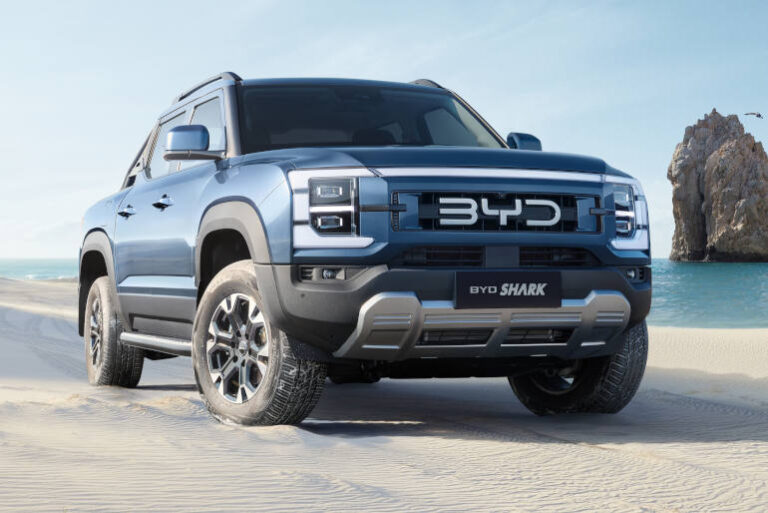
BYD Australia has announced a safety recall affecting approximately 32,009 Shark 6 vehicles, providing Fleet Managers with a timely reminder that the real cost of a vehicle recall can extend well beyond the time spent in the workshop.
The recall covers certain Shark 6 vehicles produced between 29 August 2024 and 15 June 2026. BYD says incorrect installation of the spare wheel, incorrect positioning of the spare wheel tray or insufficient fastening torque can cause abnormal wear to the spare wheel support cable. Continued movement may cause the cable to fail and the spare wheel to detach, creating a potential hazard to other road users.
BYD will replace the Spare Wheel Lifter Assembly with an updated design at no cost to owners.
On paper, it is a relatively quick repair.
“The remedy will take approximately 0.5 hours. Depending on the dealer’s work schedule owners may be required to make their vehicle available for a longer period,” BYD Australia said.
For a private owner, that inconvenience may amount to rearranging a morning or finding another way to get to work. For a fleet operating dozens or hundreds of affected vehicles, the calculation is very different.
Thirty minutes in the workshop can mean hours off the road
A 30-minute repair rarely means only 30 minutes of vehicle downtime.
Someone needs to identify which vehicles are affected, confirm VINs, contact drivers, arrange bookings and work around operational requirements. The vehicle then needs to travel to the repairer, be checked in, wait for a workshop bay, have the work completed and return to service.
Depending on the location of the driver and the available dealer capacity, a nominal 30-minute repair could easily consume several hours of productive vehicle time.
There is also the administrative workload.
Fleet teams need to determine which vehicles have completed the recall, which drivers have bookings and which vehicles still require follow-up. Missed appointments need to be rescheduled and, for decentralised fleets, the process could involve drivers and dealerships across several states.
Multiply those tasks across a large fleet and the management effort can quickly become significant.
Dealer capacity becomes part of the fleet risk
The Shark 6 recall also raises a broader issue for fleets considering vehicles from relatively new brands.
New entrants can offer competitive vehicles, specifications and pricing, but Fleet Managers also need to consider the support infrastructure sitting behind the vehicle.
A recall affecting more than 32,000 vehicles creates a substantial workload for any service network. For brands that are still developing their national dealer and service coverage, the ability to absorb thousands of additional workshop bookings becomes an important consideration.
That does not mean established brands are immune. Recalls occur across the automotive industry and manufacturers with extensive dealer networks regularly issue campaigns involving tens or even hundreds of thousands of vehicles.
The fleet question is therefore less about whether a manufacturer will ever have a recall and more about what happens when one occurs.
When assessing a new vehicle supplier, fleets may increasingly need to consider the geographical spread of authorised repairers, workshop capacity, parts availability and how quickly a manufacturer can complete a large-scale campaign without creating excessive operational disruption.
Shark owners have an interim action to manage
The Shark 6 recall also requires more than simply waiting for a workshop appointment.
BYD says owners who want to continue driving an affected vehicle should remove the spare wheel until the remedy has been completed. The company directs owners to the Shark 6 Owner’s Handbook for instructions.
That creates another practical task for fleets.
Fleet Managers need to make sure the recall information reaches drivers, confirm that any interim safety instructions have been followed and decide whether removing the spare wheel affects how the vehicle should be operated until the repair is completed.
The recall covers 28,543 Shark 6 Premium vehicles, 2,100 Shark 6 Performance vehicles and 1,366 Shark 6 Dynamic Cab Chassis vehicles. BYD says it will contact affected owners by email, with customers using the BYD App potentially receiving a notification there as well.
Fleets need a recall management process
The lesson from the Shark 6 campaign applies regardless of the badge on the grille.
Recalls are a normal part of operating a modern fleet. What matters is having a process that ensures they are identified and completed quickly.
For fleet teams, that process should cover:
- identifying affected vehicles and matching VINs to current drivers or locations;
- assessing any immediate operating instructions issued with the recall;
- prioritising vehicles where the safety consequence is greatest;
- coordinating bookings to minimise lost productivity;
- recording when the rectification work has been completed;
- following up drivers or vehicles that miss appointments; and
- retaining evidence that the recall has been completed.
The objective is not simply administrative compliance. A safety recall exists because the manufacturer has identified a potential outcome that needs to be prevented.
For the Shark 6, the workshop repair may take only half an hour. Managing 30 minutes of workshop time across a working fleet is where the real fleet management challenge begins.