

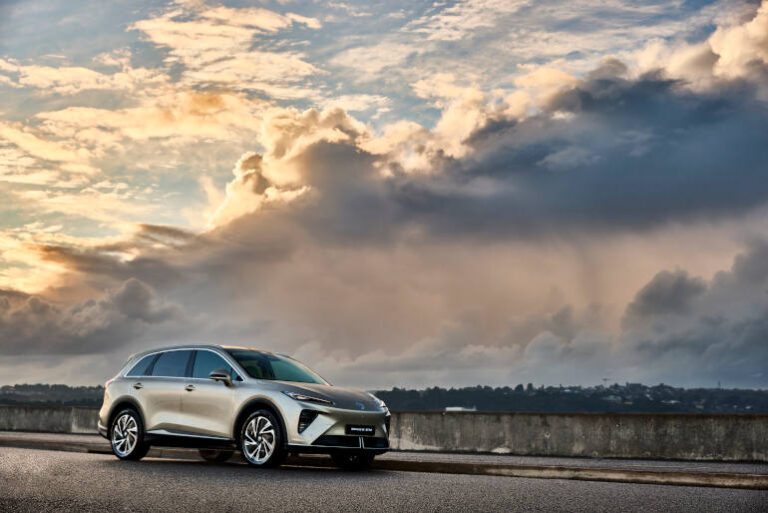
The traditional divide between mainstream and premium vehicles is becoming harder to define as rapid investment in electric vehicles, batteries and vehicle software pushes advanced technology into more affordable models.
For Australian buyers, that means features and systems that would once have required a substantial step up in price are increasingly appearing across a much broader section of the new-car market.
MG Motor believes the pace of change is being driven by the scale of investment taking place across the global automotive industry, particularly in electric powertrains, battery development and software-defined vehicle technology.
MG’s parent company, SAIC Motor, sold more than 4.5 million vehicles globally in 2025 and became the first Chinese automotive group to surpass 100 million cumulative vehicle sales earlier this year.
That scale is helping MG shorten the time between new technology being developed and it reaching Australian showrooms.
MG Motor Australia and New Zealand Marketing Director Dimitri Andreatidis said technology was becoming an increasingly important part of the purchasing decision.
“People still care about value, but they’re also paying much closer attention to the technology in a vehicle and how it improves the driving experience,” Andreatidis said.
“The pace of development across the industry means features that were once limited to premium vehicles are becoming available much sooner across a wider range of models.”
Electric vehicles are one of the clearest examples of the change.
MG has used models such as the MG4 EV Urban to broaden access to battery-electric vehicles, while the MGS6 EV introduces the company’s latest electric vehicle platform.
At the other end of the portfolio, SAIC-owned IM Motors is targeting the premium EV market in Australia with the IM5 and IM6, bringing more advanced battery and intelligent vehicle systems into the local market.
But the change taking place is about more than adding technology to a specification sheet.
Head of Product at MG Australia Meng Chen said manufacturers needed to ensure new systems delivered tangible benefits to drivers and owners.
“The pace of development has changed significantly over the past few years,” Chen said.
“Technology that once took years to filter into everyday vehicles is now reaching customers much faster. That’s largely being driven by investment in areas like battery technology, vehicle software and electric powertrains.
“The challenge isn’t simply introducing new technology; it’s making sure it delivers a real benefit for drivers.
“That’s the approach we take across every new MG vehicle. Technology should improve the ownership experience, not simply add another feature to the specification sheet.”
The scale of development underway within SAIC highlights how quickly the automotive landscape is moving.
During the first half of 2026, the company sold more than two million vehicles worldwide, including almost 800,000 new-energy vehicles, while overseas sales increased by almost 49 per cent.
Its development pipeline includes technologies such as semi-solid-state batteries, steer-by-wire systems and AI-enabled vehicles.
For Australian buyers — including fleet operators — the result could be a significant reset in expectations.
Features previously associated with more expensive vehicles are increasingly becoming available further down the market, while the speed at which battery, software and electric drivetrain technology is developing means vehicle specifications can change substantially between replacement cycles.
That puts greater emphasis on looking beyond the badge or traditional market segment when comparing vehicles.
As global manufacturers continue pouring investment into electrification and vehicle technology, the question for buyers may increasingly become not whether advanced technology is available, but how well it works, what value it delivers and how quickly it will become standard.