

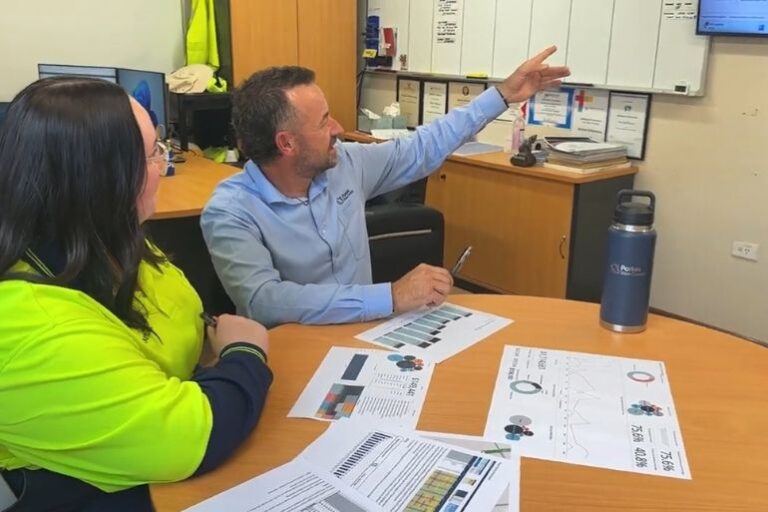
Parkes Shire Council is a finalist in the Fleet of the Year category in the 2026 Fleet News Group Awards.
One reason it has earned that place is the practical way it uses fleet data, including turning information from around 150 connected assets into another source of intelligence for identifying potential potholes across its vast rural road network.

The second story in our Parkes Fleet of the Year series
Last week we looked at the scale and complexity of managing a council fleet across approximately 5,000 square kilometres. This week, the focus shifts to what happens when fleet data is used for more than managing vehicles.
Parkes Shire Council has around 150 connected fleet assets regularly travelling across the road network. Instead of seeing those vehicles only as transport or plant, the fleet team asked a different question: could the movement data already being captured help the council identify road defects?
Using G-force instead of another camera system
The solution developed with the council’s telematics provider uses the sensitivity of the GPS device to detect sharp G-force events. A sudden vertical impact can indicate that a vehicle has encountered a pothole, rough crossing or damaged section of road.
The system plots these events geographically and allows the council to identify the strongest or most frequent impacts. O’Shannessy explained during the Fleet of the Year interview that the team can produce a map showing potential problem locations and focus attention on the top events. Council staff can then inspect the location and determine whether it requires a heavy patch, further investigation or another type of repair.
It does not replace qualified road inspection or engineering judgement. Instead, it gives the council another stream of evidence generated by vehicles that are already travelling through the shire every day.
Making existing assets work harder
The idea is compelling because it does not require a dedicated fleet of inspection vehicles. Parkes already has graders, trucks, utilities, passenger vehicles and other equipment moving across the network. Their normal journeys create information that can support another part of the organisation.
That approach reflects a broader theme in Parkes’ fleet management: before buying something new, look for more value from what already exists. The council applies the same thinking to utilisation and replacement decisions. If a vehicle or item of plant is not being used enough, telematics and recovery data can support a decision to redeploy, defer replacement or dispose of it.
In this case, the existing fleet is effectively helping the council’s road asset officers prioritise where to look.

Telematics that can prove the work
Parkes is also using auxiliary inputs on plant to distinguish between travel and productive activity. A mower can report when its blades are engaged. A street sweeper can show when the broom is operating. Other plant can be configured to record when a particular attachment is working.
That means the council can move beyond saying that a vehicle visited an area. It can demonstrate that the machine was actually performing the task. For community-facing services such as mowing or street sweeping, that creates a more transparent record of what was delivered, where it happened and when.
The same philosophy underpins the pothole initiative. Fleet data becomes operational evidence that can be shared with other parts of the organisation.
A small idea with a wider lesson
The pothole project is not about technology for technology’s sake. It is an example of asking how information already being paid for can solve another business problem.
Parkes has invested in telematics to manage utilisation, safety, fuel use and maintenance. Once that data infrastructure exists, the marginal value can grow when the organisation finds additional uses for it.
For other councils and fleet operators, that raises a useful question: what information is your fleet already collecting that could help another team?
It is one reason Parkes Shire Council has been selected as a finalist for the 2026 Fleet News Group Fleet of the Year Award. The fleet team is not just collecting data; it is looking for practical ways to turn it into better decisions and community outcomes.
Next week: cutting idle time
In article three, we’ll look at how Parkes used telematics to reduce weekly idling across its connected fleet by around 250 hours – saving fuel while also reducing unnecessary engine hours on expensive plant.
Vote for Parkes Shire Council
Vote for Parkes Shire Council in the 2026 Fleet News Group Fleet of the Year Award
Industry voting is now open. Visit the Fleet News Group Awards voting page to cast your vote.
Awards Night – 14 October 2026, Sydney
The winner of the Fleet of the Year Award will be announced at the Fleet News Group Awards Night in Sydney on 14 October 2026. Register your interest to attend the Awards Night.