
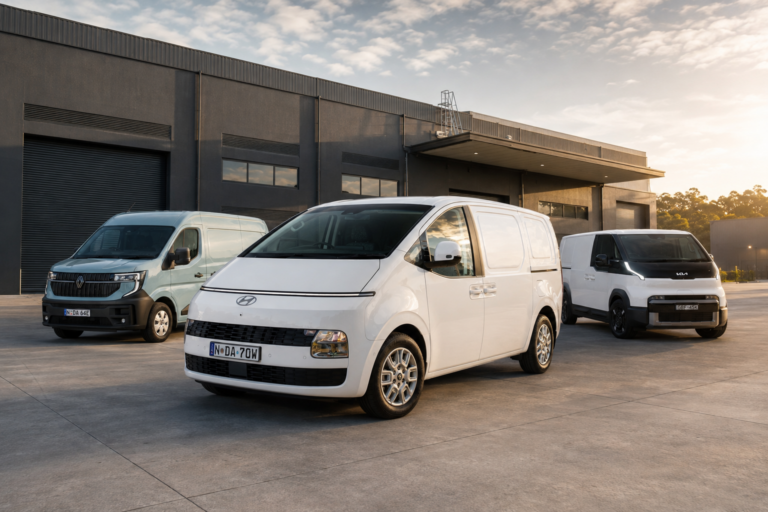
Choosing the right van in 2026 is no longer a simple matter of picking a body size and a diesel engine. The Hyundai STARIA Load, Kia PV5 and Renault Master each target different fleet applications, with distinct powertrains, dimensions and cargo solutions. The comparison table below highlights where each van fits best and the practical trade-offs fleet managers should consider before adding them to the fleet.

| Comparison point | Hyundai STARIA Load | Kia PV5 | Renault Master |
|---|---|---|---|
| Best suited to | Suburban service fleets, trades and mixed metropolitan duties | Urban delivery, courier and predictable depot-based routes | Larger deliveries, regional work and specialist fleet applications |
| Relative size | Medium | Compact to medium | Largest of the three |
| Current powertrain options | Diesel or hybrid | Battery electric | Diesel |
| Future powertrain options | Electric version expected later in 2026 | Higher-roof model expected later in 2026 | Electric version expected later in 2026 |
| Key powertrain advantage | Hybrid reduces fuel use without requiring charging infrastructure | Zero tailpipe emissions and well suited to controlled daily routes | Diesel remains practical for long distances, heavier work and unpredictable travel |
| Potential limitation | Hybrid version does not offer towing | Range and charging need to match the daily workload; no diesel option | Larger dimensions may restrict access to car parks and tight urban locations |
| Side sliding doors | Left and right doors standard | Left and right doors standard | Left door standard; right door optional |
| Rear-door configuration | Choice of lift-up tailgate or twin barn doors | Twin barn doors | Twin barn doors |
| Rear-door glass | Available with glass panels | No glass panels; rear visibility relies on a camera | Glass panels fitted |
| Cabin space | Roomy and practical | Roomy, modern and easy to access | Functional, but feels tighter around the driver |
| Dashboard and controls | Larger driver display with physical climate controls | Modern layout, but climate functions are integrated into the touchscreen | Driver-focused dashboard with accessible controls |
| Cabin storage | Good general storage | Generous cabin storage | Strongest storage package, including under-seat storage, hooks and a folding workstation |
| Exterior presentation | Practical but beginning to look more conventional | Most modern and distinctive appearance | Strong, truck-like design |
| Wheel treatment | Steel wheels with centre caps | Steel wheels with full wheel covers | Steel wheels with wheel covers |
| Cargo flexibility | Strong all-round practicality | Suited to smaller urban and delivery applications; higher roof will broaden its use | Best choice for higher-volume cargo and conversions |
| Body configurations | Van | Van | Van and cab chassis |
| Driver workstation potential | Practical cabin for everyday fleet use | Good storage and modern connectivity | Folding centre seat creates a dedicated work surface |
| Urban access | Well suited to metropolitan and suburban work | Best suited to tight city and urban environments | Size may be less convenient in low or restricted car parks |
| Regional suitability | Diesel and hybrid options support longer-distance use | Best where routes and charging are predictable | Strongest option for longer routes and widely spaced delivery points |
| Overall strength | Practical all-rounder with valuable powertrain choice | Electric city specialist with modern design | Large and versatile workhorse |
| Main fleet consideration | Confirm towing, payload and hybrid suitability | Validate real-world range, charging and camera-based rear visibility | Check vehicle height, driver fit and urban access requirements |
The comparison highlights why fleet managers should begin with the application, daily distance, payload, access restrictions and charging availability rather than trying to select one van for every role.