

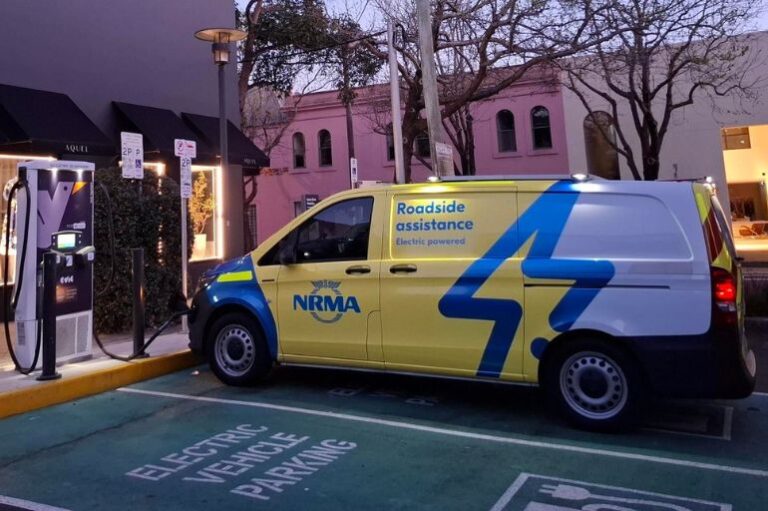
Managing fleet at the NRMA involves much more than keeping roadside patrol vehicles moving.
Fleet Manager Jai O’Keefe and his small team are responsible for approximately 450 vehicles supporting businesses across New South Wales, South Australia and Tasmania.
The majority are roadside patrol vehicles, supported by tilt-tray and cradle tow trucks. However, the fleet also includes vehicles used by NRMA Holiday Parks, NRMA Expeditions, the EV charging network and the marine business operating the Manly Fast Ferry service.
Across the holiday park operations, the asset mix expands to golf buggies, tippers, garbage compactors, tractors and other operational equipment.
“There’s a little bit of everything in the fleet,” O’Keefe said.
The NRMA fleet team manages vehicles across these businesses, excluding the separate SIXT rental vehicle operation, and expects the fleet to continue growing as additional holiday park assets come under its management.
A small team supporting a broad operation
The core fleet team consists of O’Keefe, a fleet controller and a general hand based at the organisation’s Wetherill Park depot.
The depot stores equipment used in roadside patrol vehicles and provides an internal capability for minor repairs, fault rectification and vehicle retrofits.
It is not a conventional mechanical workshop performing scheduled servicing, brake replacements or oil changes. Instead, the team focuses on the specialised equipment fitted to operational vehicles.
“If a vehicle comes in and there’s a light not working, an inverter has stopped working or there’s no power, there are all sorts of weird and wonderful things that fail with the vehicle,” O’Keefe said.
“They come in here a lot of the time. It’s common faults. We’re able to know exactly what it is, get it fixed, get it back on the road and send it away.”
This internal capability is particularly valuable for roadside vehicles, where delays waiting for an external supplier can affect operational availability.
The team also undertakes retrofits and design changes when vehicle builds need to be modified after entering service.
Balancing electrification with roadside efficiency
The NRMA fleet strategy is closely aligned with the organisation’s environmental, social and governance commitments, including a target to reduce emissions by 50 per cent by FY2030.
An EV-first selection requirement has been incorporated into the vehicle policy, alongside minimum safety standards, lifecycle requirements and the responsibilities of vehicle custodians.
After transitioning pool and general business vehicles, the fleet team is increasingly examining how electric vehicles can be introduced into roadside operations.
This presents a more complex challenge.
Many roadside patrol employees start and finish their shifts at home rather than returning to a central depot. The fleet therefore needs to accommodate employees who live in apartments or other properties without access to home charging.
“If you’re in an eight-hour shift and you have to charge for half an hour to 45 minutes in the field, that extra half an hour to 45 minutes of downtime is a massive cost impact on efficiency,” O’Keefe said.
Potential solutions include access to secure overnight charging locations, partnerships with other organisations and investigations into the best time of day and methods of charging.
Vehicle suitability also extends beyond driving range. Payload, safety, specialised equipment and the ability to power tools must all be considered before a commercial EV can replace an existing vehicle.
“There’s definitely been an expectation for the fleet team to deliver the end user a suitable product, and then also explain essentially why that is the best that we can find,” O’Keefe said.
Documenting fleet knowledge
With a relatively small team supporting a broad operation, documented procedures are an important part of business continuity.
The NRMA has developed an entry-level procedures document covering day-to-day fleet activities, common enquiries and the management of key suppliers.
The document is continuously updated by the team as processes and responsibilities change.
“It’s a case of being able to leave it in a place where someone can step in and just pick up from where I left off,” O’Keefe said.
Fleet policies have a three-year review period, although significant operational or regulatory changes can trigger an earlier update. Changes are communicated internally with a summary explaining the sections that have been revised.
The move towards EV-first selection resulted in a substantial policy update because the framework needed to remain suitable for roadside operations, holiday parks, marine activities and the EV charging business.
Improving visibility across multiple systems
Fleet information is currently managed across several systems.
The finance-controlled, VIN-based asset register is the source of truth for vehicle ownership and depreciation. SG Fleet supports day-to-day services including maintenance, fuel cards and tyres, while DingGo holds vehicle accident and repair information.
A separate safety system records workplace incidents, injuries, near misses and other events that may not involve vehicle damage.
Although the information is distributed across different platforms, O’Keefe said regular auditing is used to maintain alignment.
“I’m a stickler for clean data,” he said.
Fleet records are audited at least quarterly, while the finance team performs an annual reconciliation between the asset register and the SG Fleet vehicle list.
The fleet team also checks supplier data rather than assuming it is correct. During one review, newly added LDV eDeliver 7 electric vans were incorrectly classified as diesel vehicles. The error was identified through the team’s regular data checks.
The next step is to bring fleet information into the NRMA’s internal data warehouse. This could combine information from SG Fleet, DingGo and future telematics systems with operational data already used by the roadside business.
“Moving into an EV future, we need to have telematics in the vehicles,” O’Keefe said.
The intention is to create stronger reporting and analytical capability, including the potential use of artificial intelligence to identify trends across operating cost, utilisation, charging and vehicle performance.
Maintenance control across the fleet
All assets managed by O’Keefe’s team are now recorded through SG Fleet for maintenance approvals, cost reporting and service scheduling.
This has been particularly important for holiday park assets, where maintenance expenses had previously been processed through individual credit card transactions with limited central visibility.
Manufacturer servicing requirements are generally followed. However, electric vehicles with 24-month service intervals receive an additional safety inspection after 12 months.
The annual check can include tyre rotation, wiper replacement and a general roadworthiness assessment.
The team also maintains its own due and overdue service reporting. Communications with vehicle custodians are recorded, providing evidence of the actions taken when maintenance is required.
Service records can be supported by the original supplier invoices, giving the organisation a clearer audit trail if a safety or compliance issue arises.
Measuring fleet performance
O’Keefe prepares a weekly fleet snapshot and reports monthly to the senior leadership team.
Reporting covers vehicle delivery performance, incidents, cost per kilometre and significant concerns or achievements. Fuel, maintenance and tyre costs are also analysed to support operating decisions and future budgets.
Tyre performance is examined by lifespan and cost per kilometre, allowing the organisation to identify products that provide the best results for its operating conditions.
For roadside patrol vehicles and tow trucks, downtime is closely monitored by the operational business because vehicle availability directly affects response capacity.
The NRMA fleet team’s work demonstrates the complexity behind a highly visible roadside service. Its challenge is not simply selecting and maintaining vehicles, but coordinating multiple business requirements, improving data visibility and reducing emissions without compromising operational availability.