For years, a new van launch usually meant a familiar formula: a white box, a diesel engine and a model cycle long enough to test the patience of even the most loyal fleet buyer.
In 2026, that formula is changing.
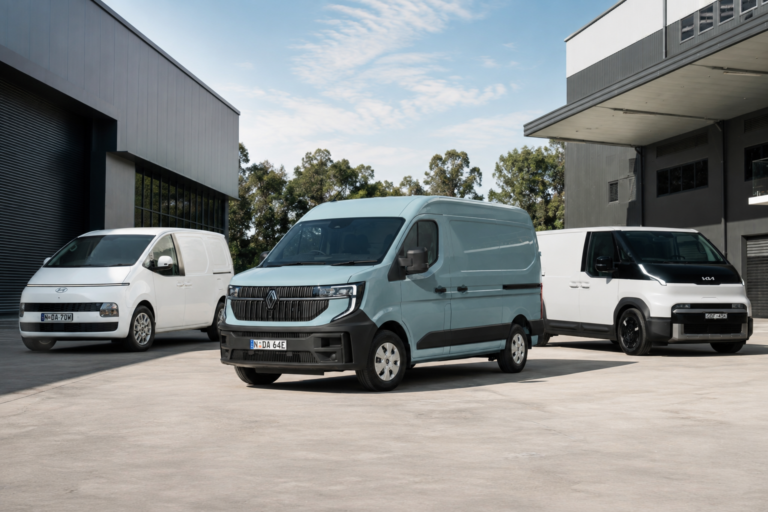
After recently driving the Hyundai STARIA Load, Kia PV5 and Renault Master, it is clear the van market is becoming more diverse. These three vehicles offer different sizes, powertrains and cargo solutions, giving fleet managers more options—but also more decisions to make.
The biggest lesson from comparing them is simple: there is no longer one van that can comfortably perform every fleet task.

Start with the job, not the van
Before comparing specifications, fleet managers need to understand where and how the vehicle will operate.
A van working in the inner city may regularly encounter underground car parks, narrow streets, tight loading zones and difficult kerbs. It needs to be compact, manoeuvrable and low enough to fit beneath height restrictions, particularly after ladder racks or other accessories are installed.
A suburban service vehicle may cover greater distances while carrying tools, parts or equipment throughout the day. In regional and rural areas, delivery points can be much further apart, requiring more cargo to be carried and making range, fuel availability and driver comfort increasingly important.
That is why the STARIA Load, PV5 and Master are not direct substitutes for one another. Each is better suited to a particular type of work.
Kia PV5: The electric city specialist
The Kia PV5 makes the strongest visual impression of the three.
Its modern styling, LED daytime running lights and full wheel covers give it a more contemporary appearance than the traditional commercial van. For businesses using vehicles as mobile advertising, that may carry more value than it first appears.
The PV5 is also the only one of the three currently presented as an electric-only proposition. That makes it particularly relevant for predictable metropolitan routes, courier work, local deliveries and service fleets returning to a depot each night.
Electric vans can be an excellent fit when daily distances are known and charging can be controlled. They also offer the potential for lower energy and servicing costs, along with quieter operation in residential and urban environments.
However, the duty cycle still needs to be examined closely. Payload, accessories, air-conditioning use and driving conditions can all influence real-world range. A van crossing multiple suburbs throughout the day without a reliable charging plan may need a different solution.
Inside, the PV5 has a pleasant cabin with generous storage and a well-presented dashboard. The main driver display feels relatively small, while functions such as fan speed and cabin temperature are incorporated into the touchscreen.
That delivers a modern appearance, although some drivers may prefer physical controls that can be adjusted without looking away from the road.
The PV5 has sliding doors on both sides as standard, improving access in loading docks and other controlled environments. At the rear, it uses twin barn doors without glass panels. Rearward visibility therefore relies on a camera displayed through the central screen rather than a conventional view through the rear-view mirror.
This may take some adjustment for drivers accustomed to looking directly through the rear doors.
A higher-roof version is also expected, which should broaden the PV5’s appeal beyond smaller urban delivery and service applications.
Hyundai STARIA Load: The practical all-rounder
The Hyundai STARIA Load occupies the middle ground in this comparison.
It is familiar, easy to drive and available with diesel or hybrid power, giving fleets a choice without forcing an immediate move to battery-electric operation.
The hybrid is particularly significant. It gives businesses an opportunity to reduce fuel use and tailpipe emissions while retaining the convenience of filling up at a service station. For fleets that cannot install charging infrastructure, or vehicles with unpredictable daily travel, that may be an easier operational transition.
Performance from the hybrid feels adequate, although the engine can become vocal when working harder. It also does not currently offer a towing option, which may immediately remove it from consideration for trades and service fleets that occasionally need to pull a trailer.
An electric STARIA Load is expected later, which will give Hyundai a broader powertrain range and allow fleets to select different versions for different operational roles.
The STARIA’s cabin is spacious and practical, with a larger driver display than the Kia. It also retains physical controls for climate functions, which can be easier to use while driving.
Like the PV5, it has sliding doors on both sides. At the rear, buyers can choose between twin barn doors or a lift-up tailgate.
That choice matters. A tailgate can provide some shelter from sun and rain while loading or working from the rear of the van. Barn doors may be better where the vehicle needs to reverse close to a loading dock, use ramps or accept palletised cargo.
Visually, the STARIA Load is beginning to look more conventional beside the newer Kia. Its halogen lighting and exposed steel wheels give it a more basic commercial appearance, although many fleets will place greater value on practicality, powertrain choice and operating suitability than exterior design.
Renault Master: Bigger van, bigger possibilities
The Renault Master is the largest vehicle in this group and is designed for fleets that need more space, greater cargo flexibility or specialist body configurations.
Its upright grille and heavier appearance give it the character of a small truck rather than an oversized passenger vehicle. That reflects its role as a serious working van.
The Master comes with a sliding door on the left-hand side as standard, with a right-hand door available as an option. This allows businesses to configure the vehicle around their loading requirements rather than automatically accepting doors on both sides.
For many roadside delivery operations, limiting access to the kerb side can also reduce the risk of workers stepping into traffic.
Twin rear barn doors are standard, matching the Master’s larger cargo role. Unlike the PV5, the doors include glass panels for direct rear visibility.
The Master’s cabin contains extensive storage, including space beneath the passenger seats, hooks for high-visibility clothing and wet-weather gear, and a folding centre seat that can become a workstation.
These details are important because a commercial vehicle is often more than transport. For many drivers it is a mobile office, lunchroom, storage facility and workshop.
The trade-off is cabin width and space around the driver. The dashboard is angled towards the driver and the controls are accessible, but the grab handles and cupholder sections can make the area feel tighter. Taller drivers may notice their knees sitting close to parts of the dashboard.
For now, the Master is diesel-powered, making it the most conventional choice of the three. An electric version is expected to expand the range, while cab-chassis availability creates further opportunities for motorhomes, service bodies and other specialist conversions.
Doors, racks and daily access matter
Powertrain attracts attention, but practical details often determine whether a van succeeds in service.
A fleet should consider whether it needs one or two sliding doors, a lift-up tailgate or barn doors, shelving, internal racks, a weather-protected workspace, pallet access or space for long equipment.
Height also needs to be assessed after accessories are fitted. A van that clears an underground car park in standard form may not fit once it has roof racks, ladders, conduit or other equipment onboard.
The cabin deserves the same level of scrutiny. Drivers may spend most of their working day inside the vehicle, so fleets should assess seat comfort, entry and exit, visibility, storage, device mounting, screen position and the ease of operating commonly used controls.
These factors influence productivity, fatigue and workplace safety just as much as engine output or cargo volume.
Electric will not replace diesel everywhere
Electric vans will become increasingly important, but they will not immediately replace diesel or hybrid vehicles in every application.
The PV5 demonstrates how well an electric van can fit controlled urban work. The STARIA hybrid offers a lower-emissions alternative for fleets that are not ready to depend on charging. The Master continues to provide the size, flexibility and long-distance convenience required for heavier or less predictable jobs.
As electric versions of the STARIA Load and Renault Master arrive, fleets will have even more powertrain choices within each size category.
The best option will depend on the daily route, payload, operating environment, charging access, towing requirements and whole-of-life cost—not simply whether one technology appears more advanced.
Three vans, three different strengths
The Kia PV5 is the style leader and the natural choice for fleets investigating electric urban delivery or service operations.
The Hyundai STARIA Load is the practical all-rounder, particularly in hybrid form, offering an easier transition towards lower-emissions fleet operation.
The Renault Master provides the greatest cargo and body flexibility, making it better suited to larger loads, regional work and specialist applications.
After three van launches in one year, it is clear the commercial vehicle market is finally moving beyond the idea that every business needs the same white diesel box.
The vans may still be white. The choices underneath are now very different.