

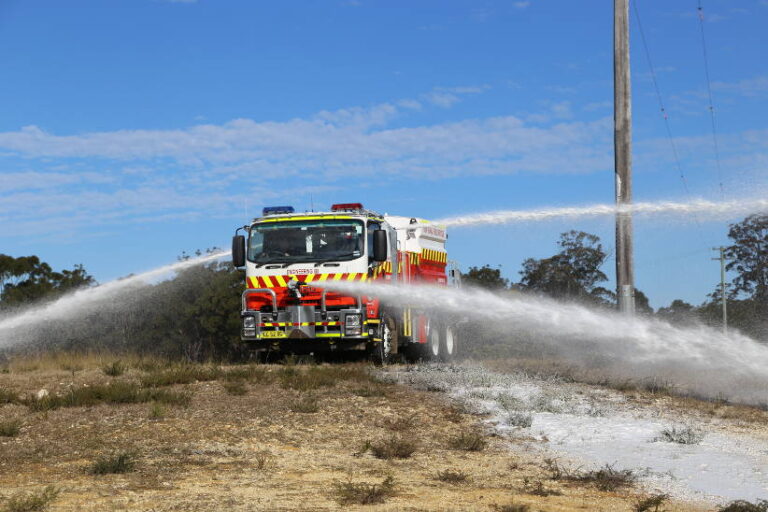
The NSW Government’s decision to transfer ownership of the Rural Fire Service ‘red fleet’ from local councils to the RFS will have significant implications for councils across NSW.
From 1 July 2027, ownership and management of more than 6,000 firefighting vehicles is planned to move from councils to the RFS. The reform will consolidate responsibility for the fleet under the State Government and remove a long-running issue for local government: councils owning assets they do not directly operate.

Councils will no longer own the assets
For many councils, the announcement will be welcomed. The current model has been described by local government representatives as no longer reflecting the practical reality of how the fleet is used. The RFS operates the vehicles, but councils have carried ownership, accounting and maintenance responsibilities.
That split has created financial and operational complexity. Firefighting vehicles are specialised, high-value assets that require consistent maintenance, technical knowledge, safety upgrades and lifecycle planning. For councils, particularly smaller regional and rural councils, carrying those assets on the balance sheet while not having operational control has been a source of concern.
Local Government NSW President Darcy Byrne described the change as “a big win for local government”, saying many councils facing financial constraints would be relieved to have the issue resolved.
Country Mayors Association Chairman Rick Firman also welcomed the decision, saying rural, remote and regional councils had worked with the Government to remove RFS assets from council books to reflect the current reality that the assets are operated by the RFS, not councils.
The financial impact will vary
The financial impact will vary from council to council, but the direction is clear. Councils will no longer own these assets, which means the vehicles will no longer sit on council balance sheets. This may reduce accounting complexity and remove the need for councils to manage asset values, depreciation and related reporting obligations for vehicles they do not operate as part of their own service delivery.
Finance teams will have their own role in the transition. Removing assets from the balance sheet will require clear processes, timing and guidance. Councils will need to understand the impact on financial statements, asset registers, depreciation, insurance, audit processes and long-term financial planning.
Servicing and maintenance will move to a new model
The operational impact will also be significant. If councils are no longer responsible for servicing and maintaining the RFS fleet, that work will shift into a new maintenance model led by the RFS.
The NSW Government has announced more than $29 million over two years to establish up to eight RFS regional maintenance hubs and providers, with a further $106 million over four years for critical maintenance and safety upgrades.
This creates a new opportunity for local businesses. The Government has said the hubs will support jobs and apprenticeships in regional communities, while strengthening local industry and improving fleet resilience. For many areas, that may mean specialist maintenance work moving into local supplier networks rather than being managed through council workshops.
Council workshops will need to plan ahead
For council workshop teams, the transition will need to be carefully managed. Some councils may currently undertake RFS vehicle servicing, inspections, repairs or coordination work. Removing that workload may create capacity in council workshops, but it may also affect workshop revenue, resource planning, technician workloads and the way councils structure their internal maintenance services.
Fleet teams will also need to prepare for the change. Even if councils are relieved to remove the assets from their ownership structure, there will still be transition work to complete. Councils will need to support asset data transfer, maintenance history, condition information, service records and local knowledge about each vehicle.
Councils remain emergency management partners
The change does not mean councils will no longer have a role in emergency management. Minister for Local Government Ron Hoenig said councils remain valued partners in protecting their communities, particularly in bushfire prevention, hazard reduction and emergency management. However, the reform is intended to provide clearer responsibility for the fleet itself.
For councils, the practical question is not whether the change is positive or negative. It is how well the transition is managed.
There will be work required to separate local government fleet management activities from RFS fleet responsibilities. This includes clarifying which assets are transferring, what records need to be provided, how maintenance arrangements will change, what happens to work currently performed by council workshops, and how councils will engage with the new regional maintenance hubs.
The State Government now carries the fleet maturity risk
The reform also creates a major responsibility for the State Government and the RFS. Centralising ownership of the red fleet will only deliver better outcomes if the right fleet management capability is built around it.
A fleet of more than 6,000 emergency service vehicles requires more than ownership control. It requires mature systems, skilled people, reliable asset data, clear maintenance standards, technical training, procurement discipline, replacement planning, risk management and whole-of-life cost control.
The risk for the State Government is assuming that structural reform alone will fix the problem. The ownership transfer is only the starting point. The long-term value for taxpayers will depend on the RFS building a high level of fleet management maturity and having the people, processes and systems to manage the fleet consistently across NSW.
A major transition over the next 12 months
For local councils, the announcement removes a long-running burden and provides greater clarity. For the RFS, it creates the opportunity to build a modern fleet management model that better matches the operational importance of the red fleet.
The next 12 months will be important. Councils will be engaged to support the transition and identify future maintenance opportunities. That engagement will need to include finance, fleet, workshop, asset management and emergency management teams so the transfer is practical, transparent and well planned.
Done well, the reform should reduce complexity for councils, create opportunities for regional businesses, and provide a stronger foundation for safe, reliable and consistent management of the RFS fleet.