
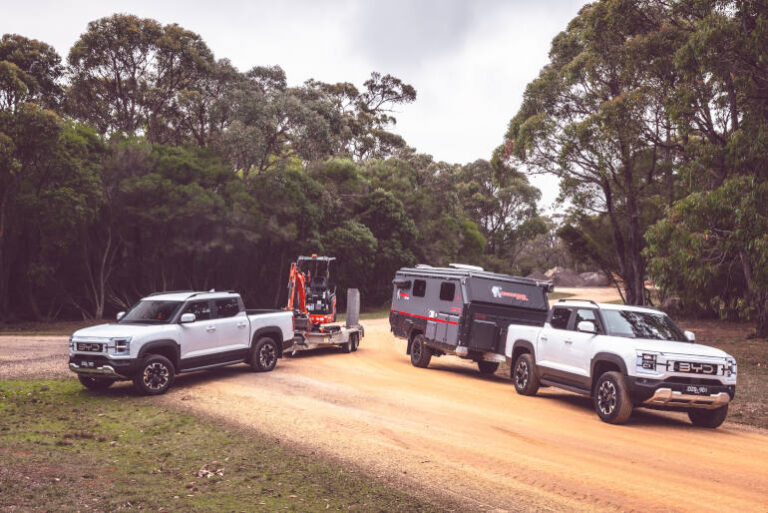
When BYD executives declared at the launch of the Shark 6 Cab Chassis that fleet would be a major growth area for the brand, it raised an obvious question among fleet buyers: is this a genuine long-term commitment, or simply the next stage of a rapid sales growth strategy?
In an exclusive interview following the launch, BYD Australia and New Zealand Chief Operating Officer Stephen Collins outlined the company’s fleet ambitions and, more importantly, the infrastructure and investment being put in place to support those ambitions.
While BYD remains best known for its success in the retail market, Collins said fleet is now becoming a strategic priority for the business.
“We built a fleet team late last year,” Collins explained.
“Working particularly with Eagers as one of our key dealer partners, if you combine our relatively small team with the Eagers team, I think we’ve probably got a team of 20 to 25 people working specifically on fleet opportunities.”
The investment is significant for a brand that only entered the Australian market a few years ago and suggests BYD is moving beyond simply supplying vehicles and hoping fleets will buy them.
Targeting Business Fleets, Tradies and Mining
According to Collins, the Shark 6 Cab Chassis has attracted interest from a diverse range of fleet customers.
“We’ve had a lot of enquiries from a whole variety of businesses who are doing a lot of B2B work,” he said.
“The second major area is sole traders, small businesses and tradies.”
However, one of the more interesting opportunities appears to be emerging from the resources sector.
“We’ve also had a lot of interest in the mining area on Shark through strong decarbonisation priorities in that sector,” Collins said.
“Some of them are starting to mandate no-fuel-on-site policies around their sites, so they’re interested in the Shark and pushing us very strongly to develop a full battery-electric version.”
The comments suggest BYD is already engaging with customers that have some of the most demanding operational requirements in Australia.
Evidence of Fleet Engagement
One of the common criticisms directed at new automotive brands is that vehicles are often designed for retail buyers first, with fleet requirements considered later.
Collins acknowledged that much of the Shark’s development work occurred before he joined the company, but confirmed that major fleet operators have been involved in discussions around future product development.
He revealed that mining companies have visited BYD headquarters in China to review prototype vehicles and discuss future vehicle requirements directly with senior management.
Closer to home, Collins pointed to infrastructure services company Ventia as one example of a fleet customer already engaging with BYD on the Cab Chassis program.
“I know that Ventia have placed a number of cab chassis orders and we’ve been in discussions with them for some time,” he said.
The increased payload and towing capability introduced on the Cab Chassis variant also suggest feedback from commercial customers has influenced product planning.
Fleet Success Depends on More Than Vehicles
Perhaps the most telling part of the interview was Collins’ acknowledgement that winning fleet business requires much more than competitive pricing.
“We know it’s a long-term proposition for us. It’s not a short-term play,” he said.
“We also know that a big part of it is total cost of ownership, parts supply and all the usual things that need to be ticked off.”
That statement is likely to resonate with fleet managers who often view aftersales support, parts availability and service capability as more important than purchase price.
Collins said BYD is actively investing in these areas.
“We’re working really hard to make sure that we can tick all those boxes and get on the shopping list of fleets that wouldn’t traditionally think about a PHEV or an EV.”
Supply Not Expected to Be a Constraint
One concern fleet buyers often have when considering newer brands is vehicle availability.
Collins was confident BYD can support large fleet orders.
“Supply is no problem,” he said.
“We’re not shy in holding stock on grass here in Australia.”
He added that even large fleet orders could be accommodated quickly through BYD’s manufacturing network.
“If we got a 500-car deal and had to order that from the factory, I think we could turn that around in a couple of months, no problem.”
For fleet buyers frustrated by supply shortages experienced during recent years, that capability could become a competitive advantage.
Connected Vehicle Opportunity
Another area where BYD may have an opportunity to differentiate itself is vehicle connectivity.
Collins confirmed the company is already trialling connected fleet data solutions with the New Zealand Government using third-party provider Compass IoT.
Because BYD vehicles are connected from the factory, he believes much of the functionality currently delivered through aftermarket telematics systems could eventually be provided directly through the vehicle platform.
“Anything that the vehicle can observe can be fed through to this portal,” Collins said.
“We can actually offer a genuine solution.”
For fleet managers increasingly focused on vehicle utilisation, driver behaviour, maintenance planning and compliance reporting, factory-integrated telematics could become an important consideration.
Actions Will Matter More Than Words
The interview suggests BYD’s fleet ambitions are backed by more than marketing statements.
The company has established a dedicated fleet team, is working with major dealer partners, is engaging directly with large fleet operators, has developed fleet-specific product variants and is investing in connected vehicle capabilities.
However, fleet markets are traditionally conservative. Winning meaningful market share will depend on proving long-term reliability, maintaining parts supply, supporting resale values and delivering consistent service outcomes over many years.
Collins appears to recognise that challenge.
For now, BYD has clearly signalled that fleet is part of its long-term strategy. The next few years will determine whether the company can convert that ambition into sustained fleet market success.
- People Moves in August
 The fleet and automotive industry is always moving — and so are the people helping to shape its future. Each month, we recognise the professionals stepping into new roles, taking on fresh challenges and bringing new ideas, experience and leadership to organisations across the sector. Here’s some of the latest career moves and appointments across
 - People Moves in JulyA new world of opportunity and excitement awaits the fleet and automotive professionals taking the next step in their careers. At a time of unprecedented disruption—driven by electrification, technology, changing customer expectations and new mobility models—fresh perspectives and experienced leadership have never been more important. The people featured in our latest People Moves are embracing
- People Moves in JuneCongratulations to everyone stepping into a new role across the fleet and automotive industries. New opportunities bring fresh challenges, new relationships and the chance to make a genuine difference in an industry that keeps businesses, communities and Australia moving. Back your experience, stay curious and enjoy the journey ahead. Steve Kemp has started a new
- Tim Crilly outlines JAC Motors plans for fleet and PHEV utesJAC Motors Australia is stepping up its fleet ambitions, with newly appointed Head of Fleet Tim Crilly outlining a strategy built on relationships, whole-of-life costs and a growing range of electrified utes. Speaking with Fleet News Group at the Melbourne Motor Show 2026, Crilly said fleet customers remain a critical focus for the brand as
- Smartgroup Appoints New Chief Customer OfficerSmartgroup has appointed Simon Haidar as Chief Customer Officer and a member of its Executive Leadership Team, strengthening its leadership team across customer growth, sales and account management. Haidar joins Smartgroup from McMillan Shakespeare, where he held senior leadership roles across sales, product, novated leasing and customer growth. He brings experience across salary packaging, novated