

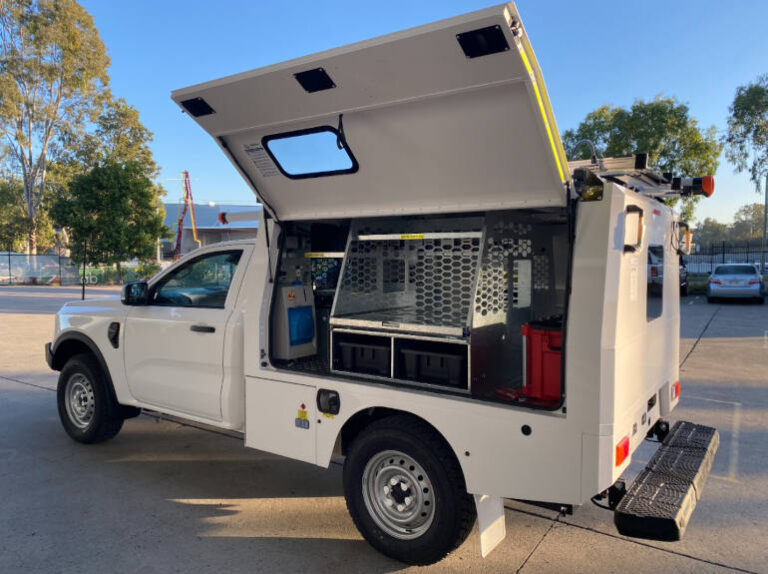
When choosing between vans and utes for fleet applications, the Australian market faces a different reality than its European counterparts. According to JP Shelburn, Managing Director of XL Service Bodies, this difference is driven by geography, safety, and payload demands — and fleet managers need to plan accordingly.
European Trends Don’t Translate to Australia
In Europe, vans dominate many commercial fleets, particularly in urban environments. But as JP explained, what works in the UK or Germany isn’t necessarily right for Australia.
“In Europe, they are prolific,” he said of vans. “They don’t really do utilities in Europe, especially in the UK and Germany. But the reason for that is they are not Australia. They don’t have to travel 300 to 400 kilometres to do their job.”
Here, fleet vehicles often face long distances between job sites — and many operate in regional or remote areas where operators may need to carry large volumes of equipment, consumables, and even camping gear.
“A lot of our vehicles do remote work where these guys camp in swags sometimes,” JP said. “When you’re doing that, you need to carry a lot more inventory. You’re limited with inventory in a van.”
Load Safety and Separation
Another key difference between vans and utes with service bodies is the level of load safety and driver protection in the event of an incident.
“We’ve had several incidents where our vehicles have been in T-bone accidents or rollovers,” JP explained. “The locks we engineer are basically automotive grade. They do rollovers and the doors will not open — they’re bulletproof. They’re theft-proof to a degree, and your contents are separated from the cab.”
In contrast, while vans may offer a bulkhead to separate the cargo area, this is often less robust in extreme events. From an occupational health and safety (OHS) and insurance standpoint, having a physically separate load area in a ute and service body provides an added level of risk mitigation.
Weight and Load Compliance Risks
JP also pointed out that vans in Australia are frequently operated at or above their payload capacity — which can create compliance risks under Chain of Responsibility (CoR) legislation.
“Vans are often overloaded,” he said. “They do have a purpose — it really depends on the application. But they’re not going to have a ton payload evenly distributed over two axles and be correctly loaded.”
By comparison, a properly specified ute and service body offers superior payload management and weight distribution — critical for meeting OHS and legal obligations.
Application First, Vehicle Second
For JP, the choice between vans and utes should always begin with a clear understanding of the operational task.
“That’s my take on vans versus utilities,” he said. “In Australia’s operating environment, you’ve got to consider the application first — and where the vehicle needs to go.”
With fleets under increasing pressure to reduce risk and improve compliance, JP’s advice is timely. For many Australian applications — especially those requiring remote operations, high payloads, or enhanced load security — the ute with a service body remains the most versatile and compliant option.




